Marine view — History & Facts
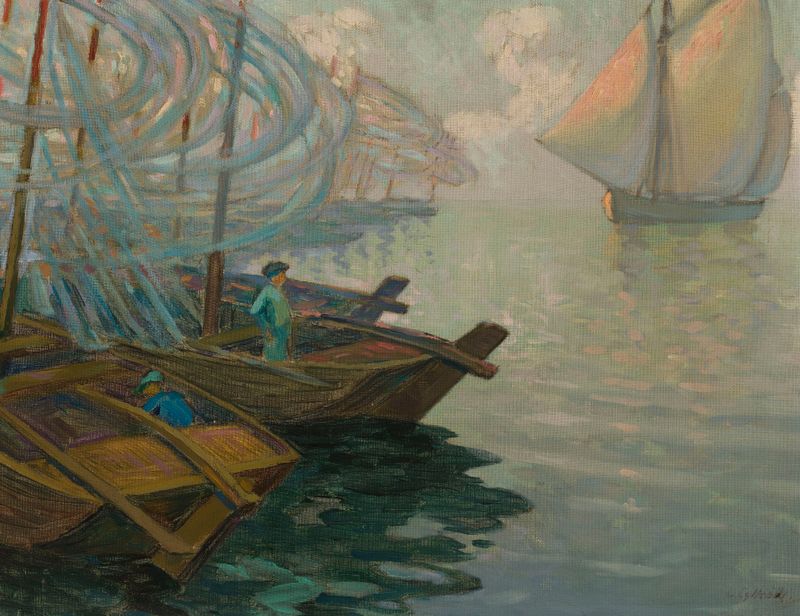
Did the painter know this moment would outlive them? A quiet ache of nostalgia swells within the heart as we gaze upon Marine View. Focus on the horizon, where the soft strokes of blue meld seamlessly with the misty sky. The brushwork is delicate, evoking a sense of peace, while the gentle ripples of water dance below, reflecting this tranquil expanse. Notice how the painter employs a subtle gradient of color, blending cool tones with warmer hints that suggest the sun's embrace at dusk.
This delicate interplay draws us into a serene world, inviting contemplation. Delve deeper into the piece, and you'll find traces of longing woven through the tranquil scene. The absence of figures hints at solitude, as if the landscape itself breathes with the weight of memories. The distant ships that barely break the horizon evoke a sense of journeys taken and those yet to come, whispering of stories untold.
Each brushstroke captures not just a view, but the very essence of time and place, creating a bridge between the moment and the viewer's introspection. Ludwik Cylkow painted Marine View during a period when he was deeply engaged with the themes of nature and human emotion. Active in the late 19th century, he found himself amidst a burgeoning interest in Impressionism, capturing fleeting moments in a world on the brink of modernity. This quiet piece reflects both his personal journey and the wider artistic movement, as artists began to explore the ephemeral beauty of life and the landscapes that cradle it.