Marshland Landscape with a Hunter — History & Facts
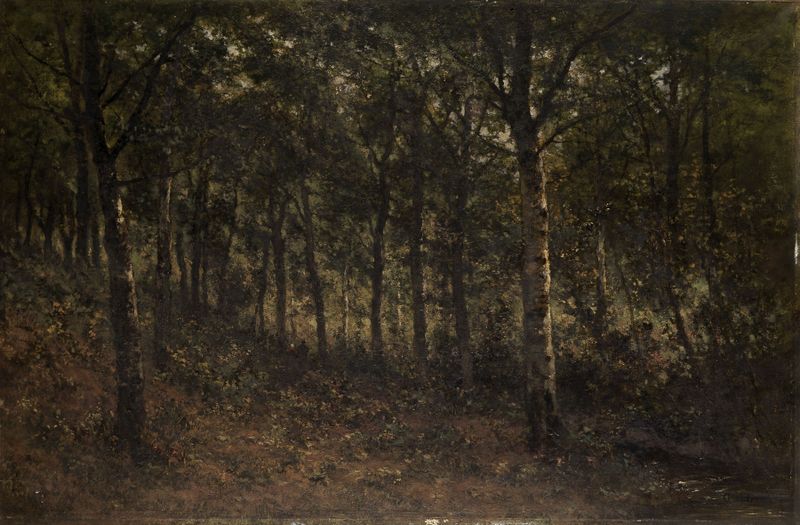
In the delicate stillness of a marshland, a moment hangs suspended, inviting us to delve deeper into nature’s grand tapestry. Look to the left at the soft, flowing grasses that sway gently in the breeze, their verdant hues contrasting against the muted browns of the earth. The brushstrokes weave an intricate dance, a harmony of texture that draws the eye toward the solitary figure of the hunter, poised in the frame's center. Notice how the light breaks through the clouds, casting a gentle glow upon the scene, illuminating the hunter's contemplative expression and creating a sense of quiet anticipation. In this landscape, contrasts emerge: the vibrant life of the marsh juxtaposed with the stillness of the hunter, who seems both a part of the environment and yet distinctly separate from it.
The subtle ripples in the water reflect an inner tumult, evoking the tension between humanity and nature. This duality transforms the scene into an exploration of our relationship with the wild, where awe and introspection coexist in a fleeting moment. Charles Pauli painted this piece in 1878 during a time when the Impressionist movement was gaining traction across Europe. Living in France, he was influenced by the evolving perceptions of light and nature, striving to capture the ephemeral qualities of the world around him.
His work reflects a period of experimentation, as artists sought to convey emotion and atmosphere in fresh and innovative ways, embracing both realism and impressionism to portray the beauty of everyday scenes.