Woodland — History & Facts
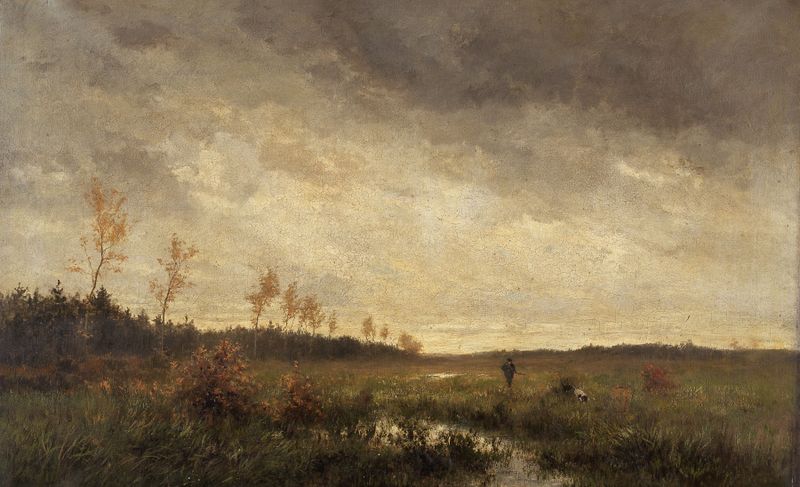
In the stillness of Woodland, the viewer is drawn into an embrace of nature, yearning for the whispers of the trees and the secrets they guard. The rich tapestry of greens invokes a longing that transcends words, inviting contemplation of the spaces where we have loved and lost. Look to the left at the vibrant foliage, where sunlight filters through the leaves, creating a dance of light and shadow on the forest floor. The painter’s meticulous brushwork captures each blade of grass and each leaf with a realism that pulls you into the scene.
Notice how the deep, earthy tones contrast with the lighter highlights, enhancing the sense of depth and the mystery of the woodland. The composition leads the eye deeper into the trees, suggesting an inviting yet elusive path that beckons the viewer to explore further. There’s a poignant sense of nostalgia woven through the artwork. The interplay of light and shadow symbolizes the duality of joy and sorrow, reflecting the bittersweet nature of memory.
The gentle curves of the branches provide a sense of shelter, evoking feelings of safety, while the distant, almost obscured clearing hints at a past yearning for connection and the inevitable passage of time. It’s as if the woodland itself mourns for what once was, creating an emotional resonance that lingers beyond the canvas. In 1879, while creating Woodland, Charles Pauli was immersed in the artistic movements of Romanticism and Realism, both of which sought to evoke deep emotional responses and present the natural world with authenticity. Working in France, he was influenced by the lush landscapes and burgeoning impressionist techniques of his contemporaries.
This period of transition in art was marked by a desire for genuine expression, a desire captured beautifully in this serene, contemplative piece.