Matinée de fin d’hiver — History & Facts
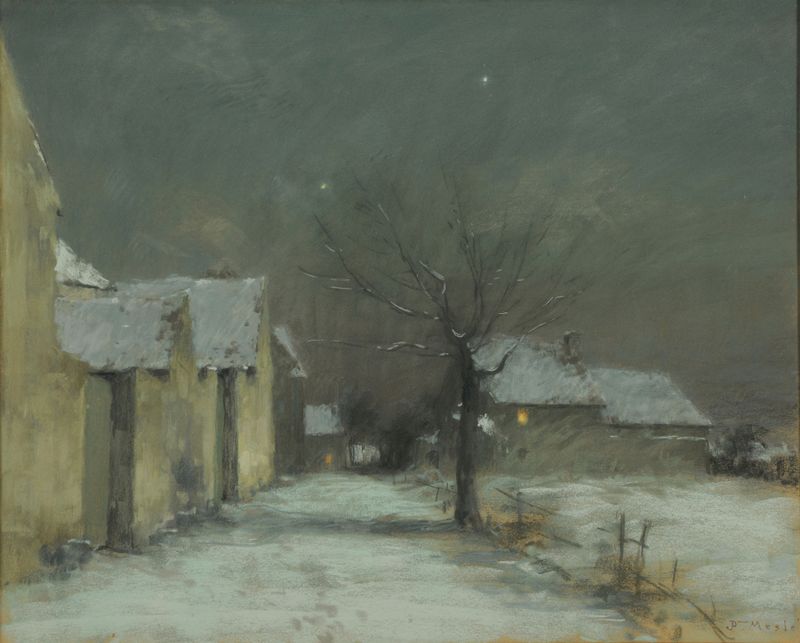
Could a single brushstroke hold eternity? In Matinée de fin d’hiver, the fleeting nature of loss is encapsulated in a moment where time seems to stand still, beckoning the viewer to pause and reflect. Look to the center where a solitary figure stands against a wintry landscape, their silhouette stark against the soft, muted tones of white and gray. The brushstrokes, a delicate interplay of soft edges and sharp lines, reveal a world both inviting and somber. Notice how the light, diffused through layers of transparent paint, creates a gentle atmosphere, casting an ethereal glow that juxtaposes the coldness of the season.
The subtle hints of color in the sky—pale blues and soft lilacs—draw the eye upward, suggesting hope amidst despair. Within this serene composition, the figure’s solitude speaks volumes, embodying the weight of unspoken grief. The horizon, nearly indistinguishable from the ground, blurs the boundaries between earth and sky, invoking a sense of introspection and ambiguity. Each detail, from the craggy branches extending towards the heavens to the barren ground beneath, emphasizes a poignant contrast: the beauty of nature persists even in the face of loss, highlighting the interplay between absence and presence. Joseph-Paul Meslé created this work around 1895, during a period marked by the rise of Impressionism and its subsequent evolution.
Nestled in the heart of France, he was influenced by the emergent stylistic trends that sought to capture emotion through color and light. As the world around him transformed, the artist poured his own reflections into this piece, grappling with the transient nature of life and the traces it leaves behind.