Neige et clair de lune à Chamigny — History & Facts
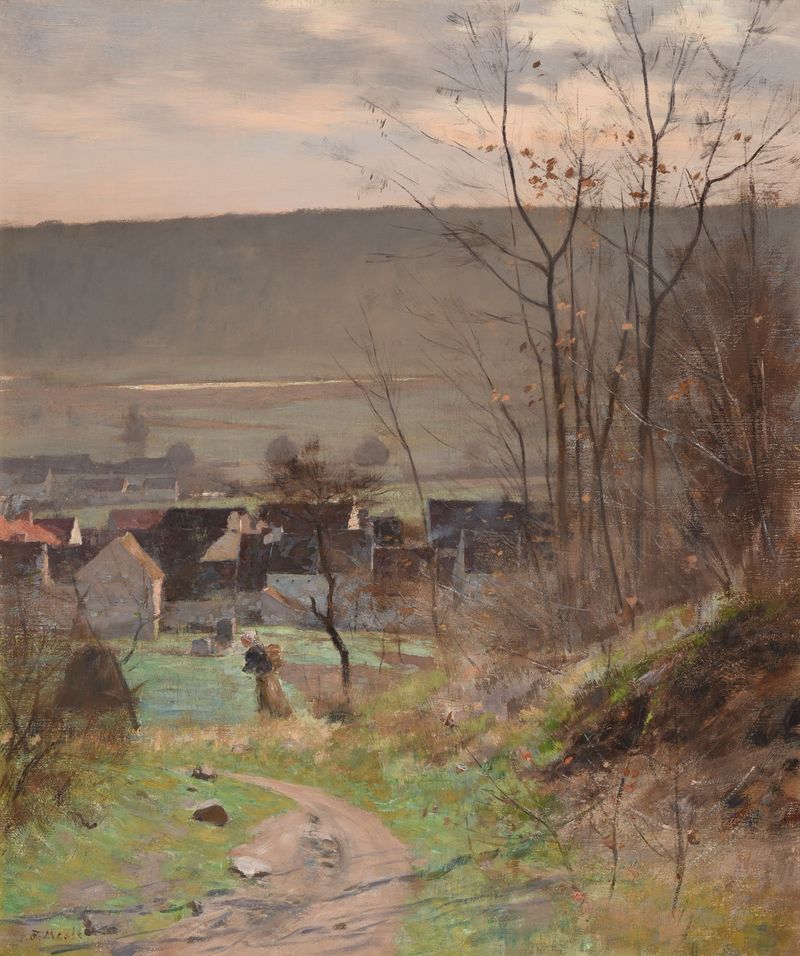
How does one capture the essence of rebirth in a moment suspended between seasons? This painting embodies that transitional spirit, where winter's chill meets the promise of renewal—a silent conversation between what has passed and what is yet to come. Look to the center, where the gentle undulation of snow blankets the landscape, shimmering under the ethereal glow of moonlight. The cool, soft blues and whites create a serene atmosphere, while the sharp contrasts between light and shadow define the contours of the trees and ground. Notice how the moon's silvery sheen casts elongated shadows, suggesting a world both inviting and mysterious, drawing the viewer into the heart of a silent night. Beneath the tranquil surface lies a tension between stillness and the pulse of life.
The snow, a symbol of both death and beauty, holds the promise of awakening that awaits in the spring. The dark, skeletal branches suggest a quiet yet potent resilience, reminding us of nature's cycles. Each detail—a glimmer of light, a shadow's edge—whispers the interconnectedness of endings and beginnings. During a period of artistic exploration, Joseph-Paul Meslé created this work in a time when Impressionism was gaining prominence and artists were increasingly drawn to the interplay of light and color in nature.
The exact date remains uncertain, yet it reflects a transitional spirit in art, echoing the desire for a deeper connection to the environment and the emotions it evokes.