Matlock High Tor, Derbyshire — History & Facts
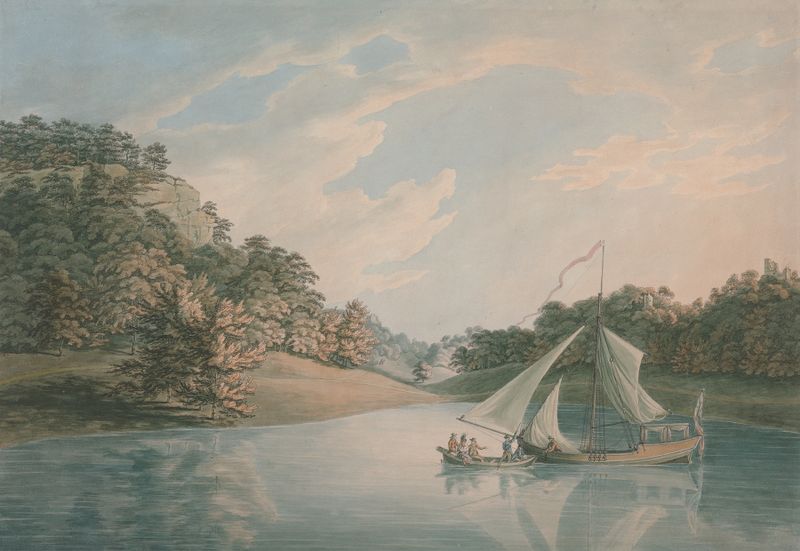
Is this a mirror — or a memory? The landscape stretches before us, inviting reflection on the interplay of nature and nostalgia that permeates every brushstroke. Focus on the tranquil waters of the river at the foreground, where the soft blues and greens blend seamlessly, creating a serene surface that echoes the sky's gentle hues. Notice how Emes captures the rolling hills of Derbyshire, their lush textures contrasting against the smoothness of the water. The composition draws the eye along the river's path, leading us past a quaint village nestled against the backdrop of the craggy cliffs above, all bathed in the warm glow of an afternoon sun. Delve deeper into the painting's emotional fabric.
The juxtaposition of the still water and the rugged hills evokes a sense of longing, as if each ripple carries whispered memories of those who walked these lands. The quiet village stands as a silent witness to the passage of time, embodying both the beauty and transience of life in the countryside. Shadows dance across the landscape, hinting at untold stories that intertwine with the natural beauty, inviting us to contemplate our relationship with the past. In 1786, John Emes painted this idyllic scene amidst a burgeoning Romantic movement, which sought to capture the sublime qualities of nature.
Residing in England during a transitional period, he was influenced by the Enlightenment and the growing appreciation for the picturesque in art. The tranquility and depth of Matlock High Tor are reflective of his artistic journey, harmonizing personal sentiment with the broader artistic currents of his time.