The Lake, Hawkstone Park, Shropshire — History & Facts
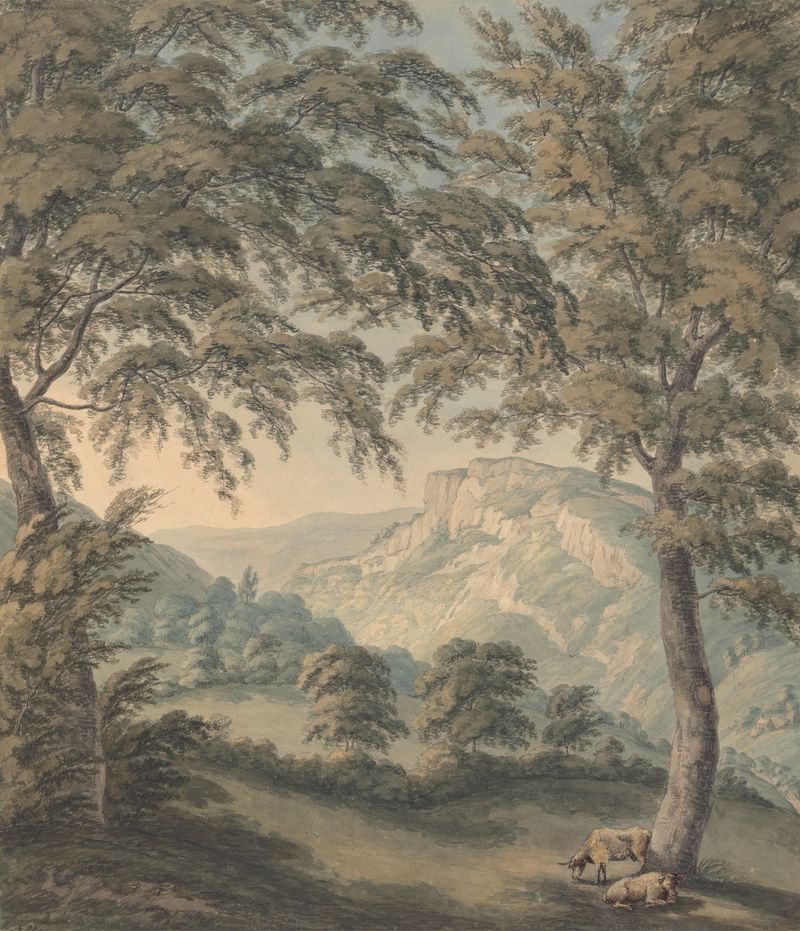
Could beauty survive in a century of chaos? In a world ravaged by unrest and uncertainty, The Lake, Hawkstone Park, Shropshire stands as a serene testament to nature's quiet resilience amid the tumultuous human condition. Look to the foreground, where the tranquil waters mirror the gentle undulations of the surrounding landscape. The soft greens and browns of the trees contrast beautifully with the azure sky, creating a harmonious palette that draws the viewer's eye. Notice the precise detailing in the leaves and the delicate ripples on the lake's surface, a testament to Emes’ skilled brushwork.
This composition invites contemplation, allowing the viewer to feel a sense of peace enveloped in nature's embrace. Yet, beneath this idyllic scene lies an undercurrent of tension. The stillness of the lake speaks of moments before chaos, hinting at the violence that could disrupt this tranquility. The juxtaposition of serene nature against the historical backdrop of late 18th-century Britain, marked by political and social upheavals, adds a layer of complexity.
Each ripple on the water symbolizes the potential for disruption, while the vibrant colors evoke hope amidst uncertainty. Created in 1790, John Emes painted this work during a time when Britain was grappling with the aftermath of the American Revolution and the stirrings of the French Revolution. It was an era where the power dynamics were shifting dramatically, and artists were beginning to explore themes that reflected societal change. Emes, known for his romantic landscapes, captured this moment while seeking to depict the beauty that persists even as the world teeters on the brink of chaos.