Meadow Brook — History & Facts
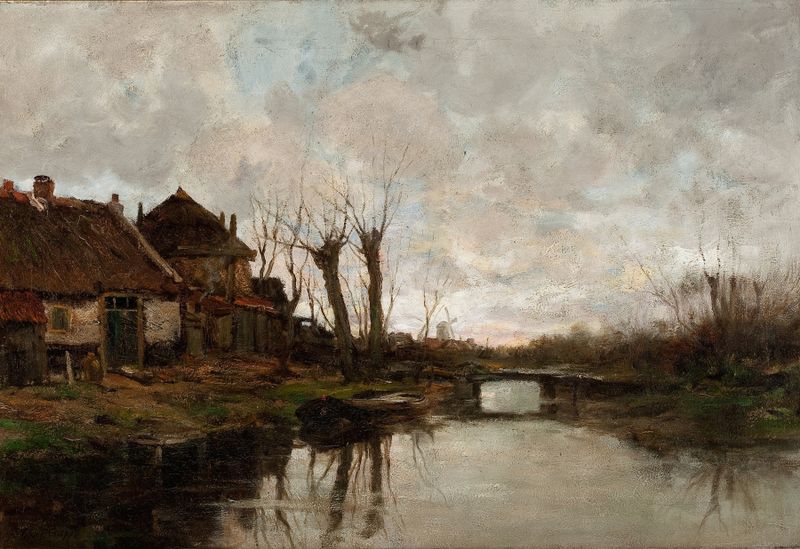
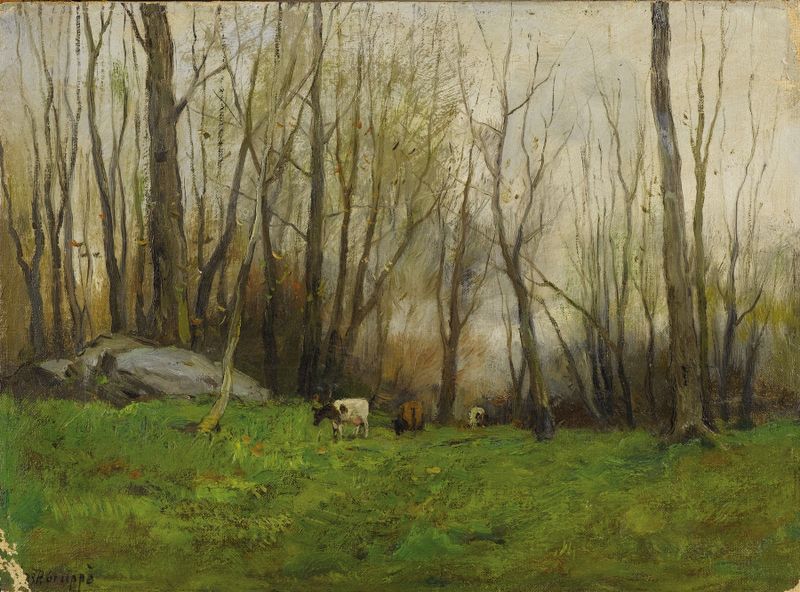
Did the painter know this moment would outlive them? In Meadow Brook, the tranquil balance between nature and artistry breathes life into the canvas, a testament to the fleeting yet enduring beauty of the world. Look to the left, where soft greens and warm earth tones converge, forming a gentle brook that winds through the landscape. Notice how the light filters through the trees, casting delicate shadows that dance across the water’s surface, each ripple reflecting the ethereal essence of the scene. The meticulous brushwork reveals layers of texture, inviting the viewer to feel the coolness of the water and the warmth of the sun. The emotional tension in this piece lies in the juxtaposition of calm and vibrancy.
The serene flow of the brook, with its quiet whisper, contrasts sharply with the lush foliage, bursting with life and color. This duality speaks to a harmonious balance—a moment where tranquility coexists with the energy of nature, inviting contemplation and introspection. The fleeting beauty of the scene suggests both permanence and transience, a reminder of the preciousness of life. In 1912, Charles Paul Gruppe, immersed in the American Impressionist movement, painted Meadow Brook during a period marked by a growing fascination with landscapes and the natural world.
Living in the artistic hub of New York, he sought to capture the essence of his surroundings, drawing inspiration from the light and atmosphere of the time, as well as from his peers who were experimenting with color and form. This work encapsulates both a personal journey and a collective artistic evolution.