
Mill on a Torrent — History & Facts
What if beauty was never meant to be finished? In Mill on a Torrent, the viewer encounters a moment suspended in time, where nature's relentless flow meets the delicate structure of human endeavor. This interplay evokes a profound sense of melancholy, suggesting that all human creations, no matter how grand, are ultimately ephemeral against the backdrop of the natural world. Look to the left at the sturdy mill, its weathered stones softened by the mist from the rushing waters. Notice how the light filters through the trees, casting dappled shadows that play upon the surface of the water, creating a shimmering contrast between the solidity of the mill and the fluidity of the torrent.
The artist’s brushwork combines precision with a painterly texture, allowing the viewer to feel the coolness of the air and the hum of the water, inviting an intimate connection with the scene. Delve deeper into the canvas, and you’ll uncover layers of emotional tension. The turbulent water symbolizes nature’s power and unpredictability, contrasting with the steadfastness of the mill, which stands as a testament to human resilience. Yet, the mill's slight decay hints at abandonment and the inevitable decline of all things crafted, serving as a poignant reminder of the transient nature of life and labor. Herzog painted this evocative scene in 1871, during a time when he was deeply engaged with the Romantic movement, which emphasized the beauty and power of nature.
Living in Germany, he was influenced by the picturesque landscapes of his surroundings and the socio-political changes sweeping Europe. This period marked a shift in artistic focus towards emotional expression and the sublime, which is palpably felt in his work, encapsulating both beauty and a sense of loss.
More Artworks by Hermann Ottomar Herzog
Browse all →
Snow-Capped Peaks
Hermann Ottomar Herzog
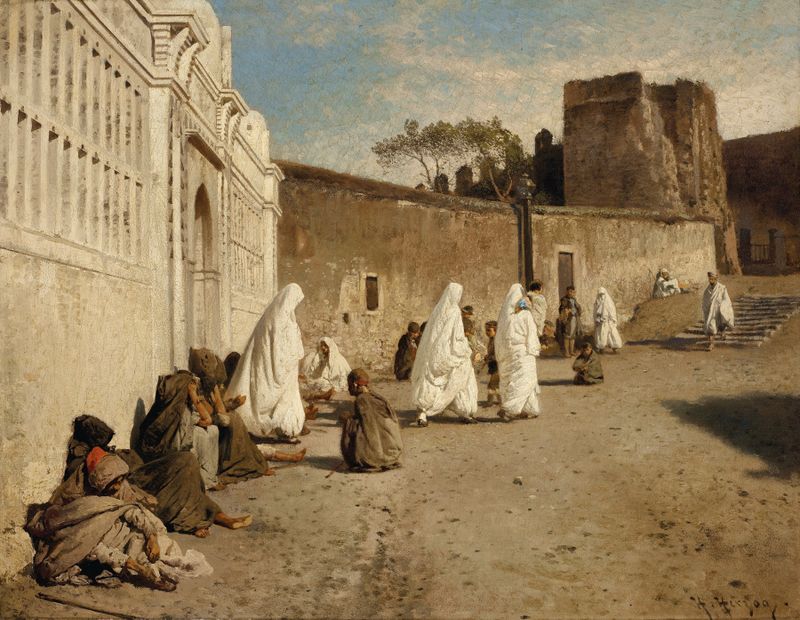
Entrance into the Alhambra, Spain
Hermann Ottomar Herzog

Hafen in Ostende
Hermann Ottomar Herzog
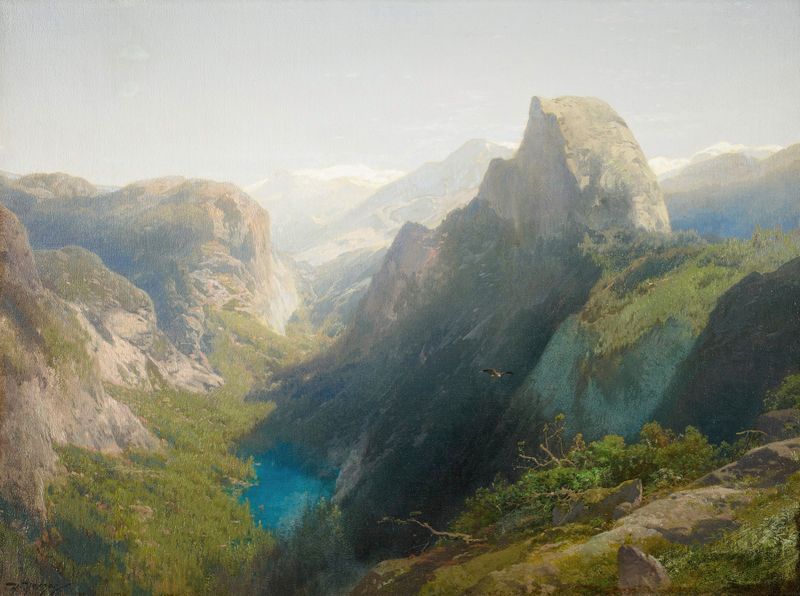
Mirror Lake, Yosemite
Hermann Ottomar Herzog
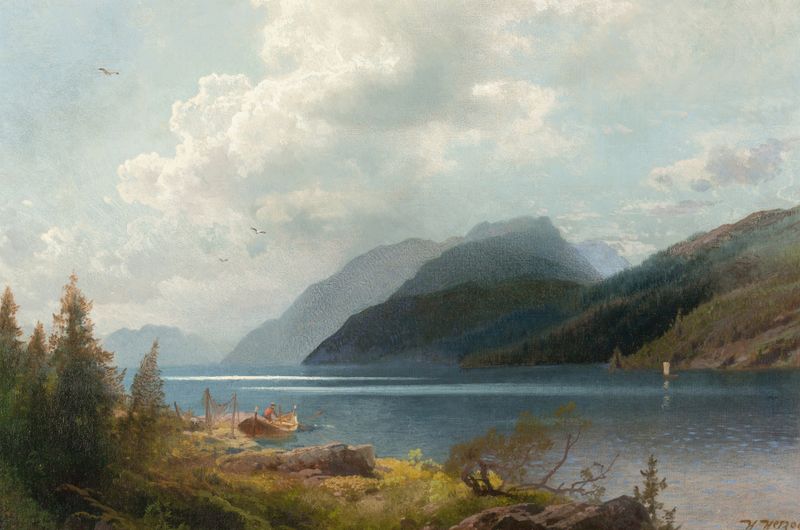
Mountain Lake, Sagne Fjord, Norway
Hermann Ottomar Herzog
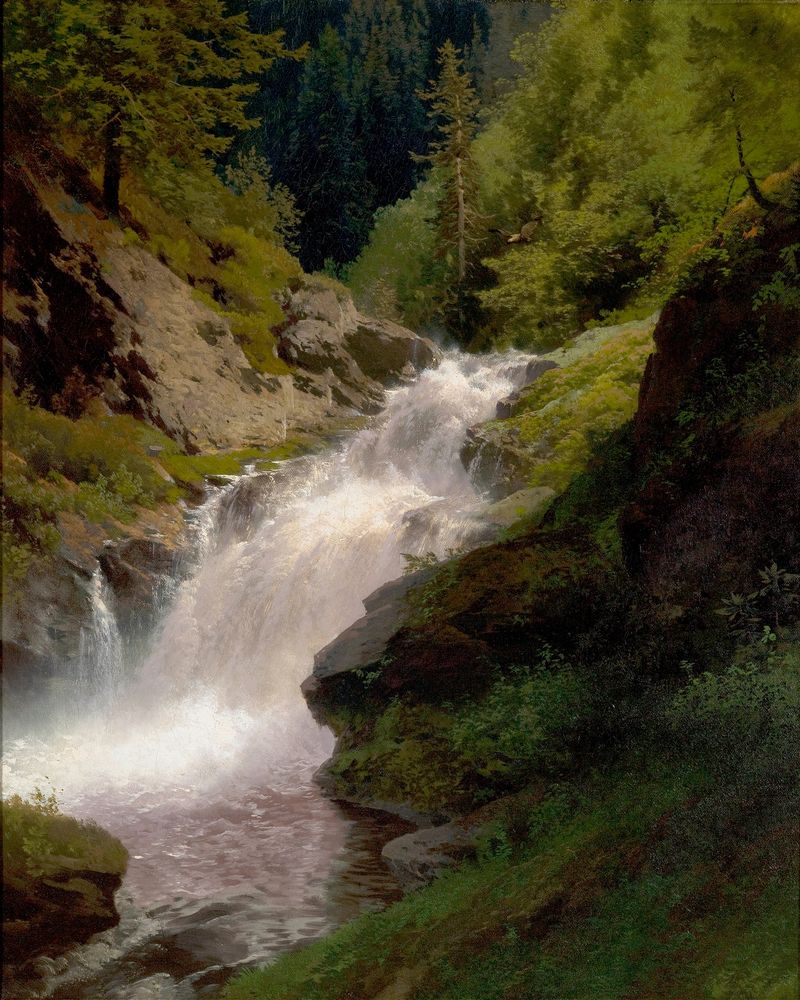
Winona Falls
Hermann Ottomar Herzog
A Moonlit Harbor
Hermann Ottomar Herzog

The Rippling River
Hermann Ottomar Herzog

Alpine Landscape Mountain Hut
Hermann Ottomar Herzog
The Return from Fishing
Hermann Ottomar Herzog





