Målning — History & Facts
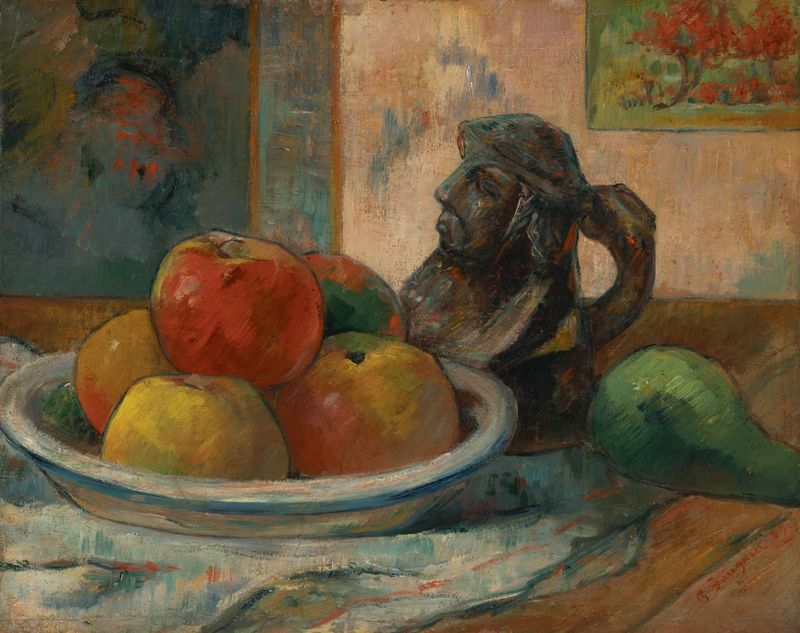
Could beauty survive in a century of chaos? The answer lies intricately woven into the vibrant tapestry of Målning. Created in 1569, this piece speaks to the tension between the fleeting nature of time and the permanence of artistic expression. Focus on the lavish spread of food in the foreground, where colors burst forth with an exuberance that belies the darker currents of the world outside the canvas. Notice how the rich reds and deep greens not only attract the eye but invite you to linger, as if celebrating abundance in defiance of the chaos beyond.
The figures, rendered in delicate detail, are engaged in their own interactions, each glance and gesture encapsulating a moment of personal narrative amid the larger story unfolding around them. Hidden within the abundance is a stark contrast between the feast depicted and the shadows that loom beyond. The vibrant fruits and glistening meats invite indulgence, yet they stand in stark juxtaposition to the potential decay that time brings. Each element serves as a reminder of the transient pleasures of life, while the surrounding area hints at the instability and uncertainty of the era.
The stillness of the feast acts as both a celebration and a premonition, suggesting that even in moments of joy, the specter of chaos is never far away. Pieter Aertsen painted Målning during a time of significant social upheaval in Europe, marked by religious wars and shifting power dynamics. Living in Antwerp, he was part of a burgeoning artistic movement that sought to blend realism with allegorical meaning. This work reflects his keen awareness of the world around him, capturing the dual nature of existence in an era defined by conflict and change.