
Art movement · 15th–16th century · Flanders and Germany
Northern Renaissance Art and Paintings
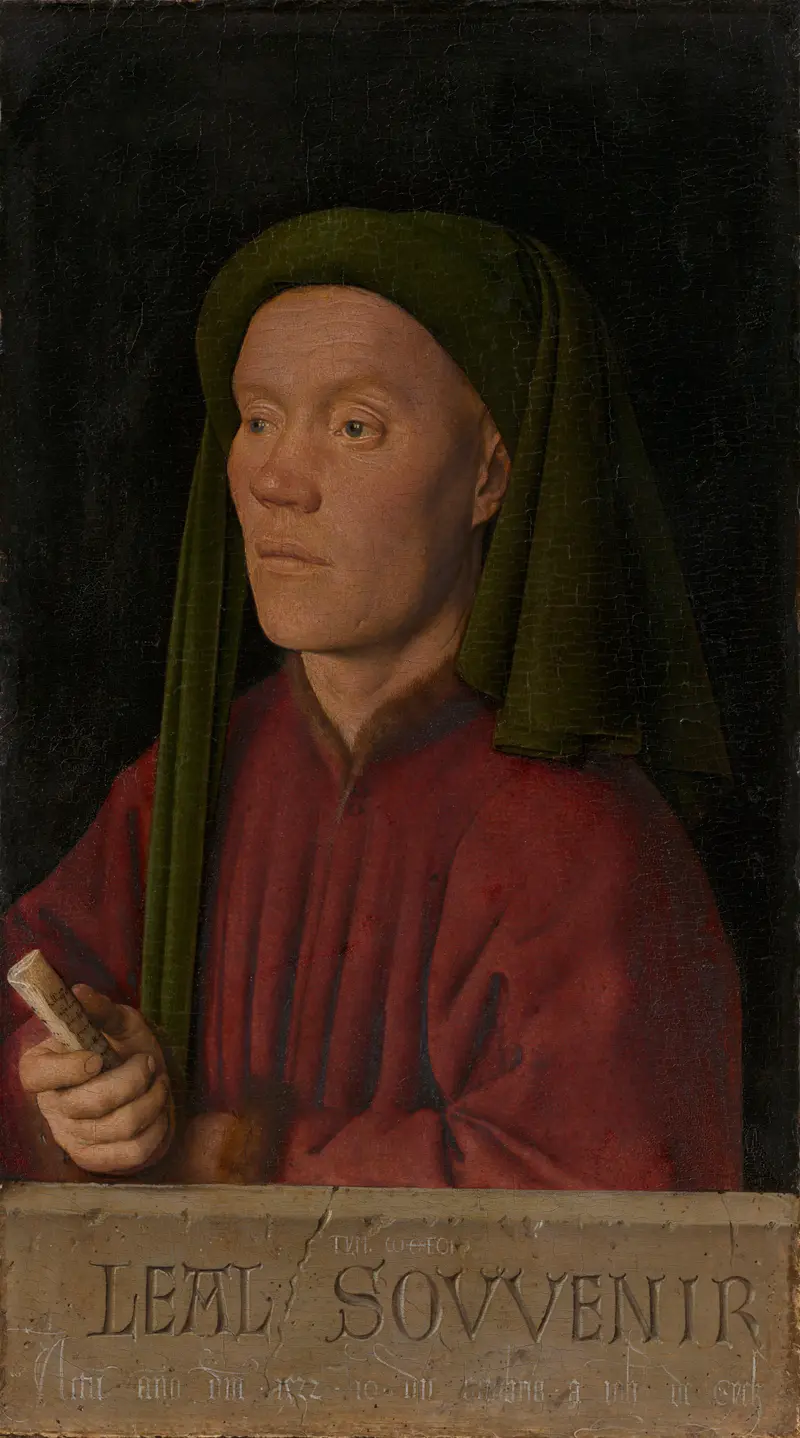
The Northern Renaissance is an art movement that began in the southern Netherlands (Flanders) in the early 1400s and spread to Germany, France and England in the 1500s. Its painters used oil paint in thin, translucent glazes to record faces, fabrics, light and landscape in minute, lifelike detail, and from about 1500 they joined that to Italian ideas of proportion and perspective. Its painters include Jan van Eyck, Rogier van der Weyden, Hieronymus Bosch, Albrecht Dürer, Hans Holbein the Younger and Pieter Bruegel the Elder.
In Bruges in 1434, Jan van Eyck signed The Arnolfini Portrait on the back wall, above a convex mirror: “Jan van Eyck was here.” The National Gallery in London bought it in 1842 for 600 guineas; it was the gallery's first Netherlandish painting.
Browse 3,679 Northern Renaissance paintings and artworks below, all public domain and free to download.
Selected and written by Pavel MazuelasUpdated November 5, 2026
Part of Art Movements and Painting StylesRelated: Renaissance, Dutch Golden Age, Famous Portrait Paintings
All Northern Renaissance paintings and artworks
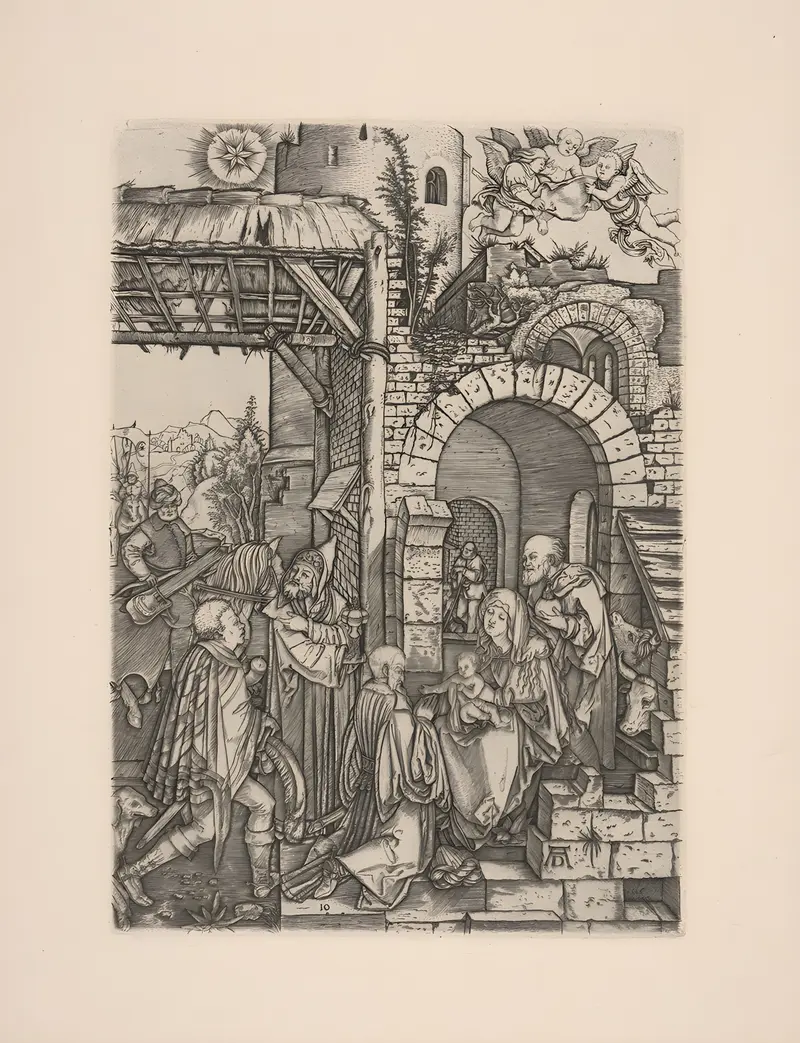
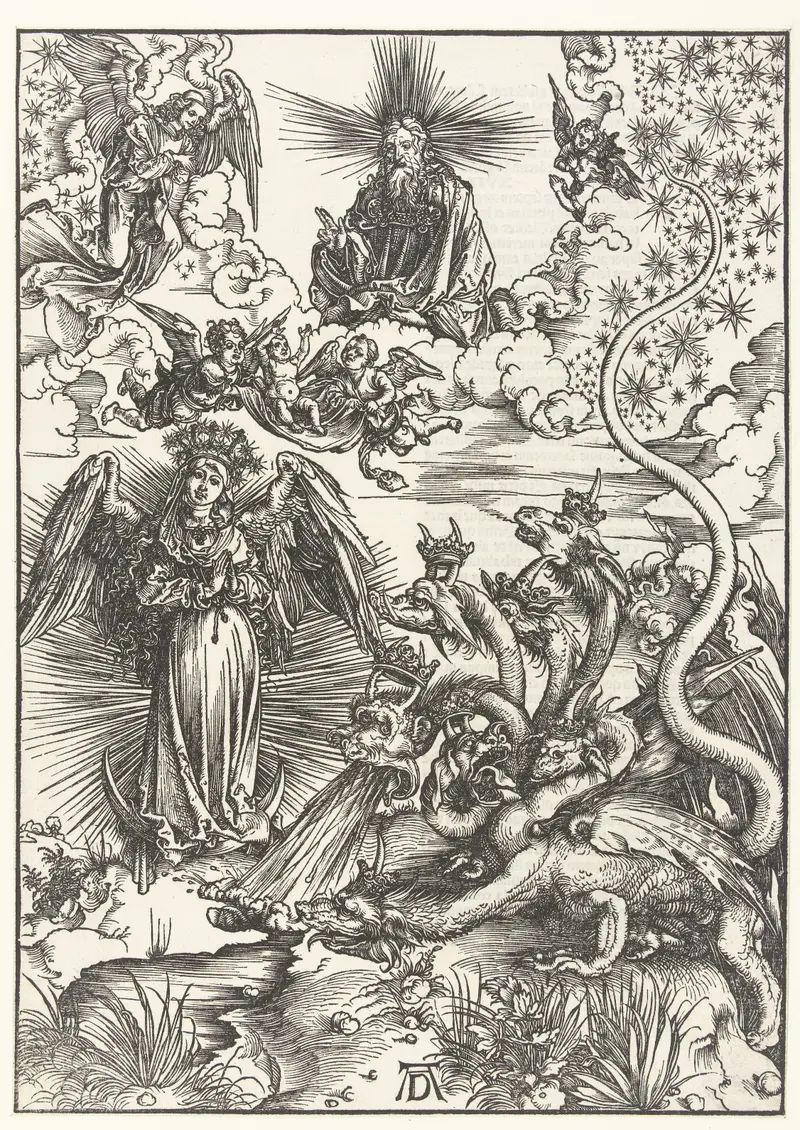
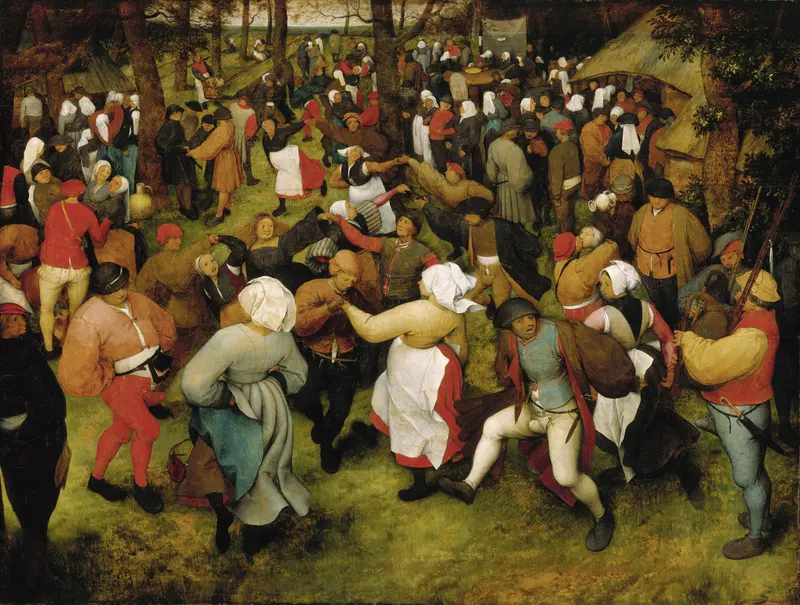
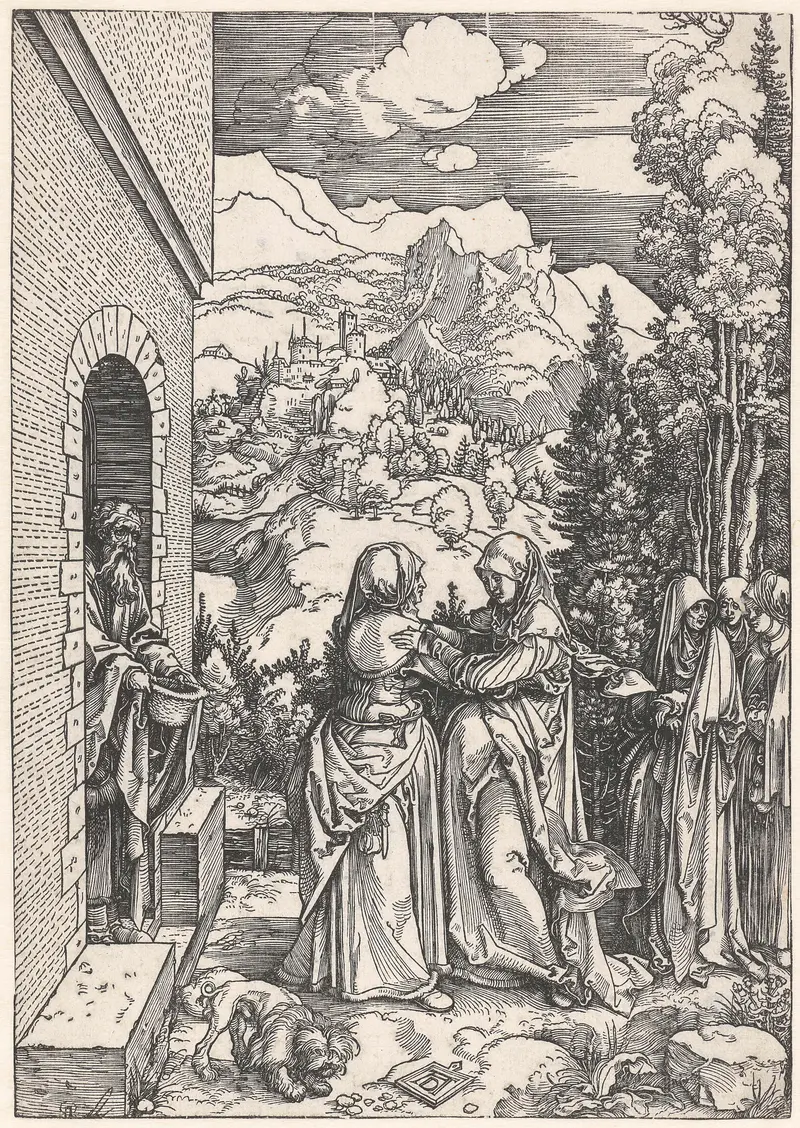
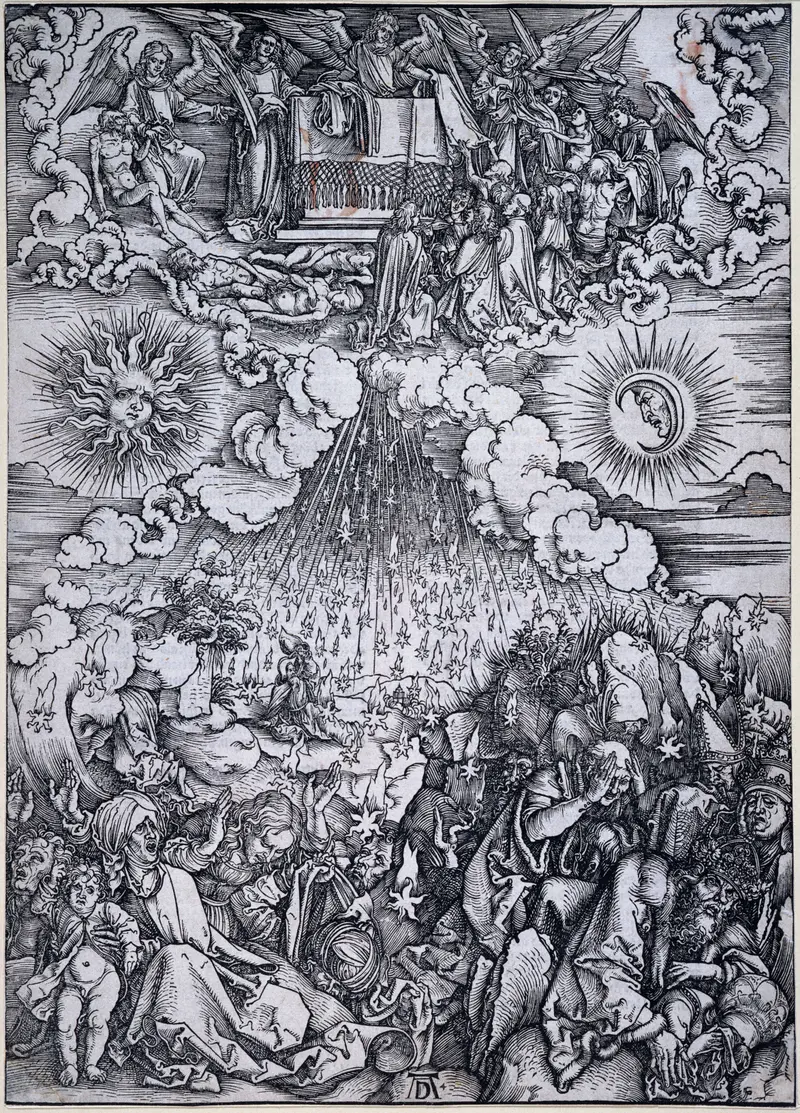
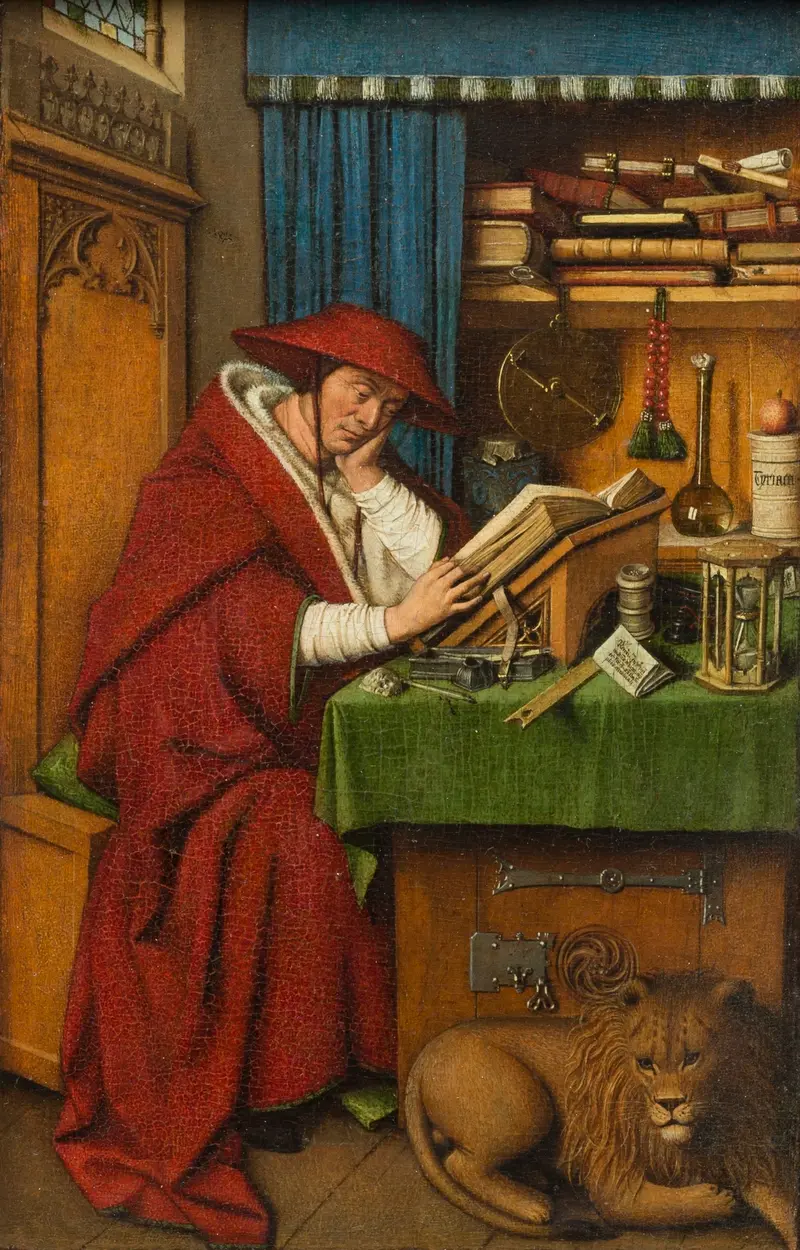
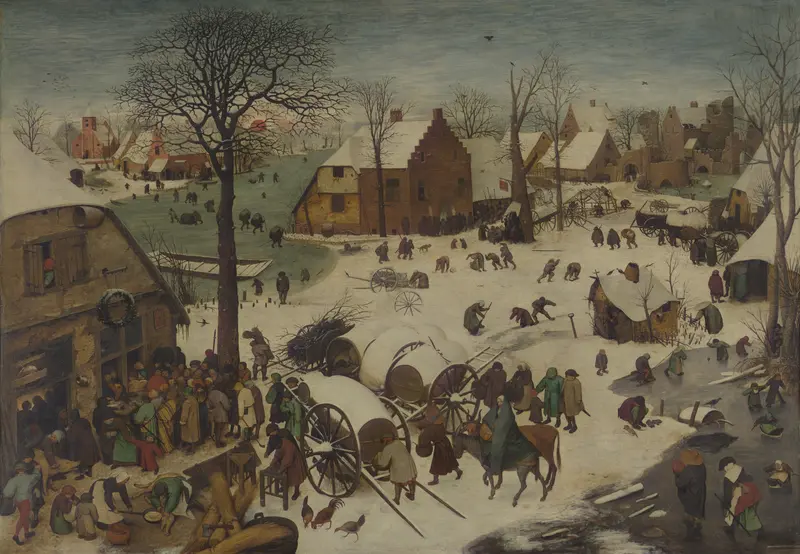
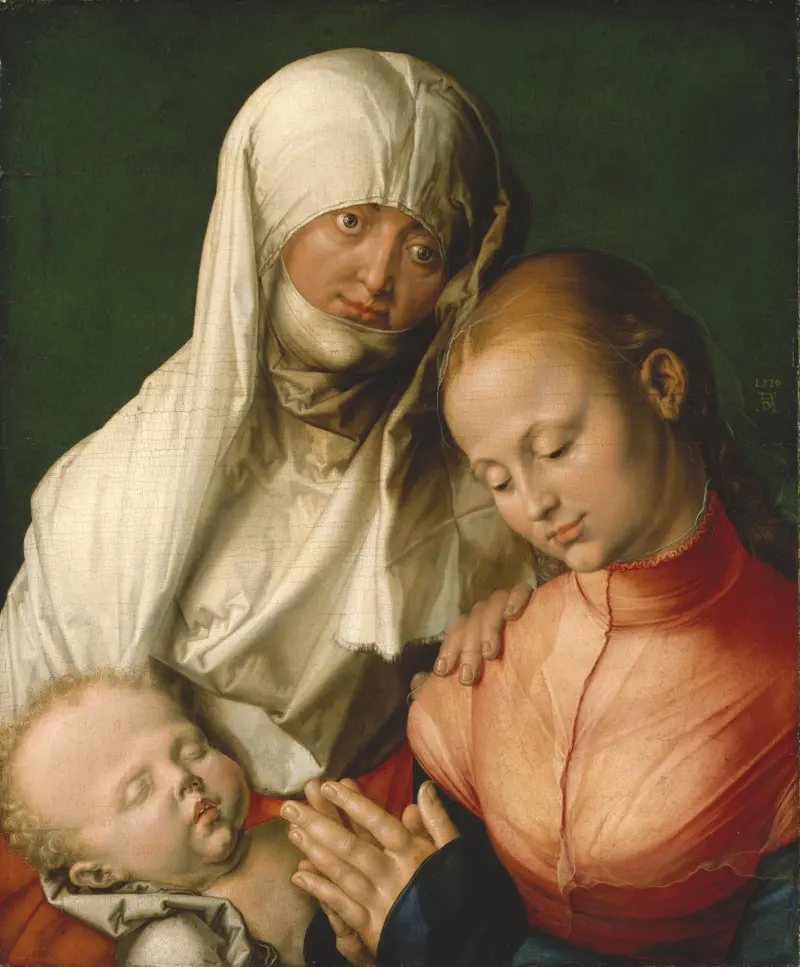
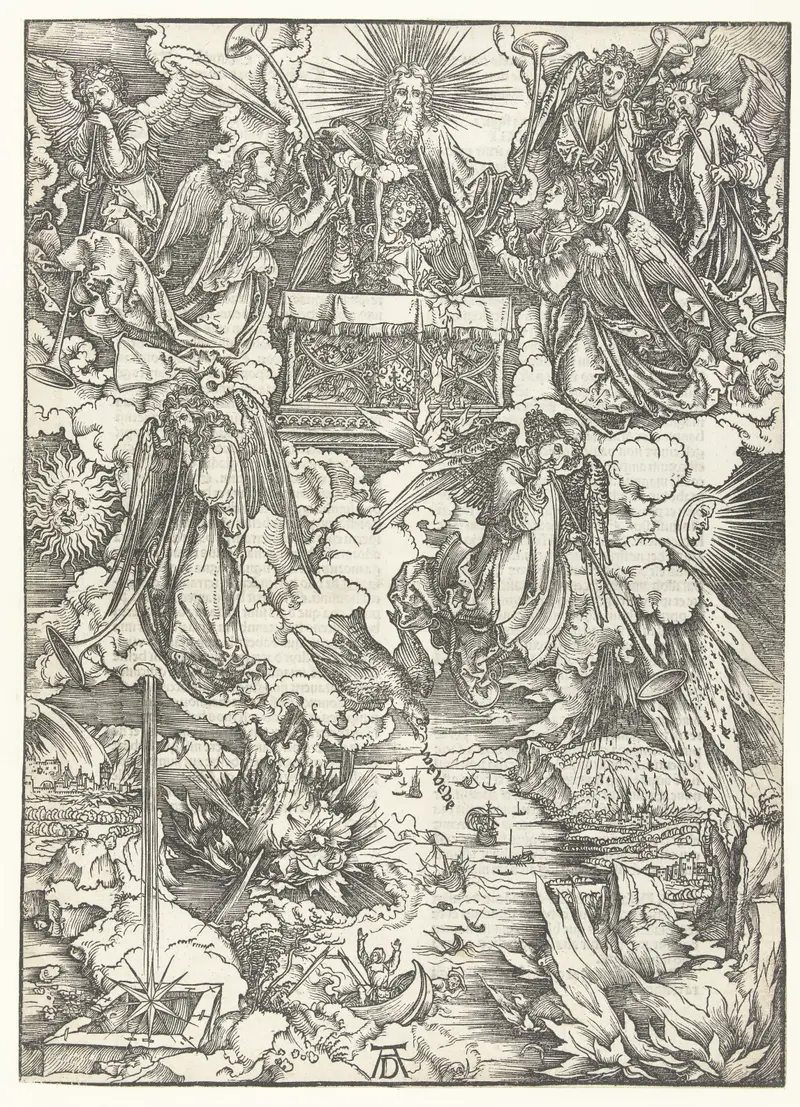
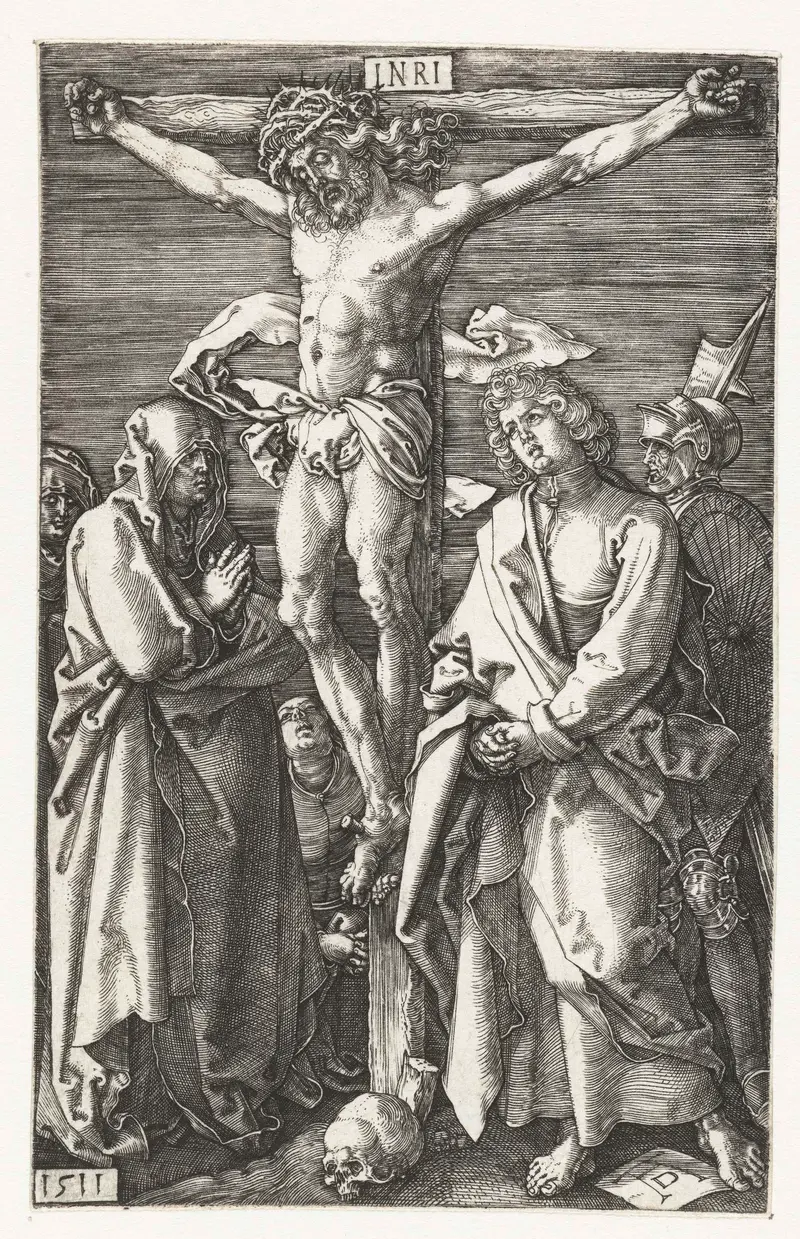
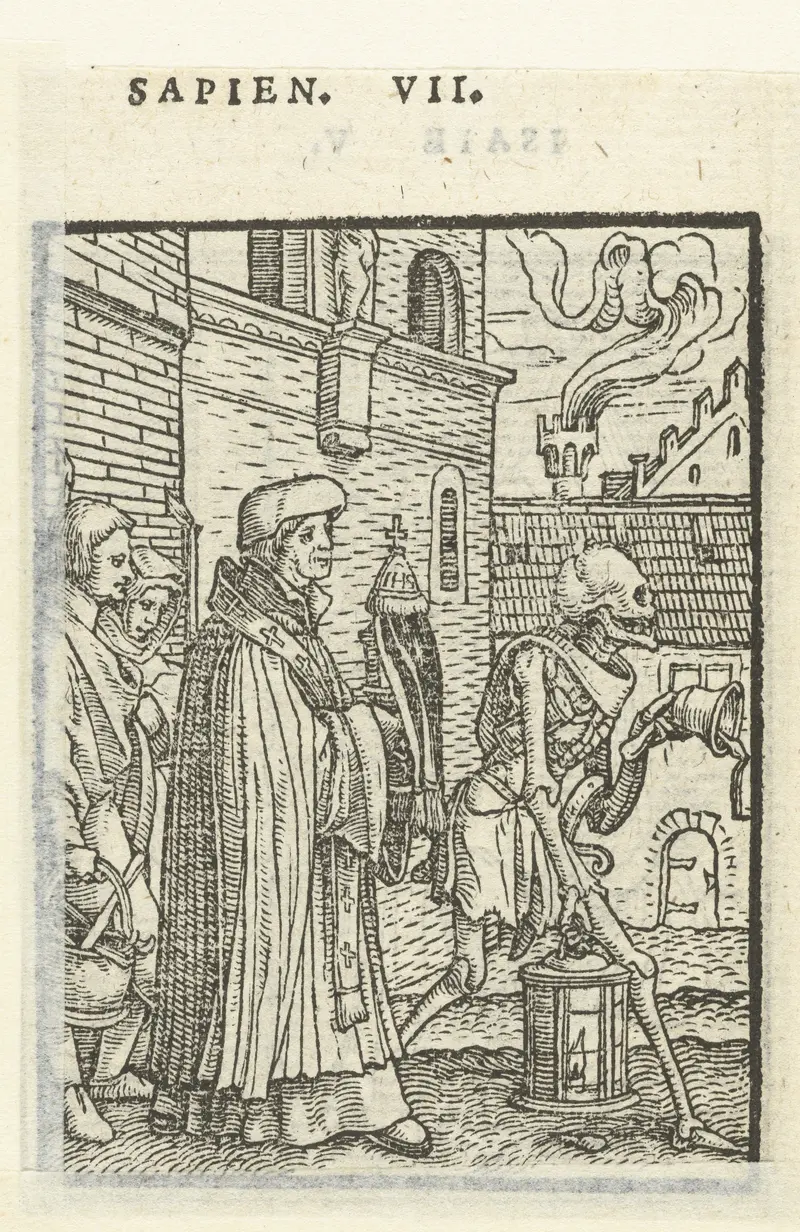
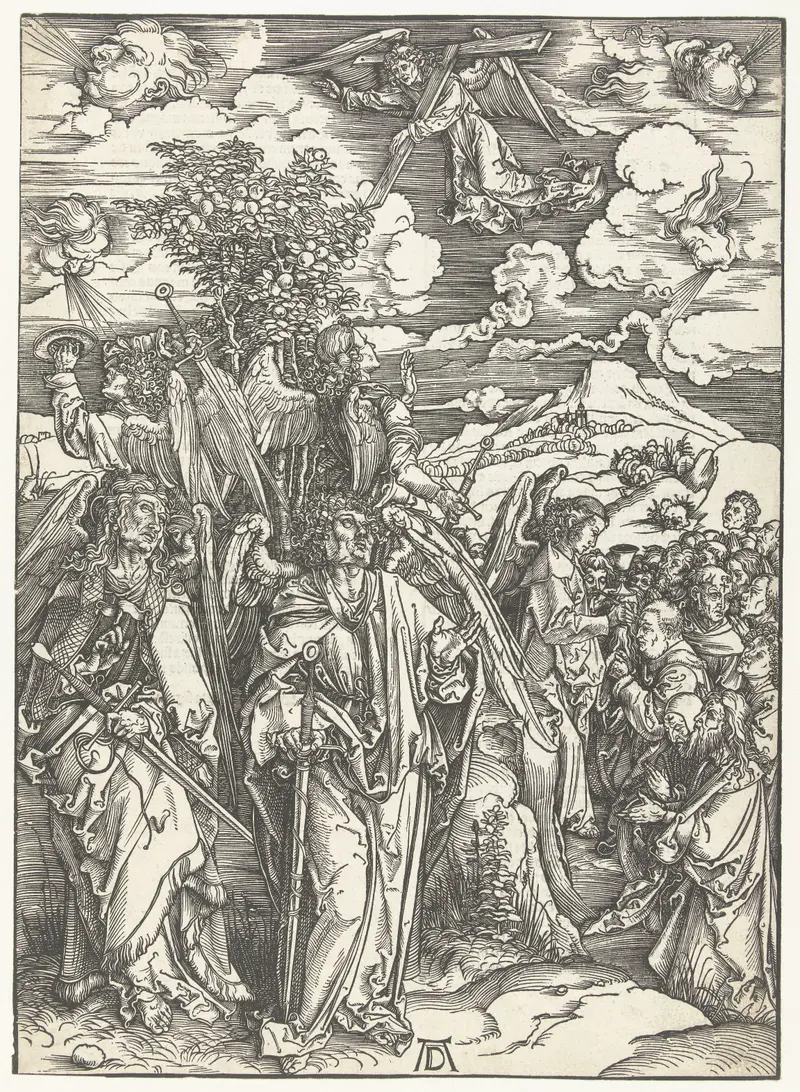
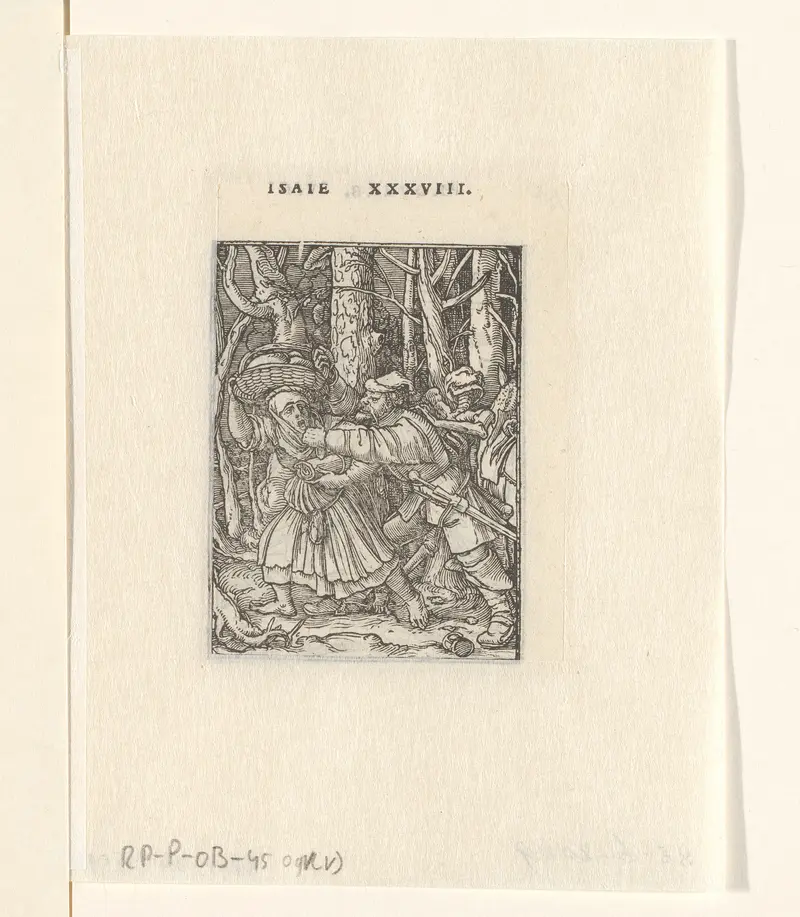
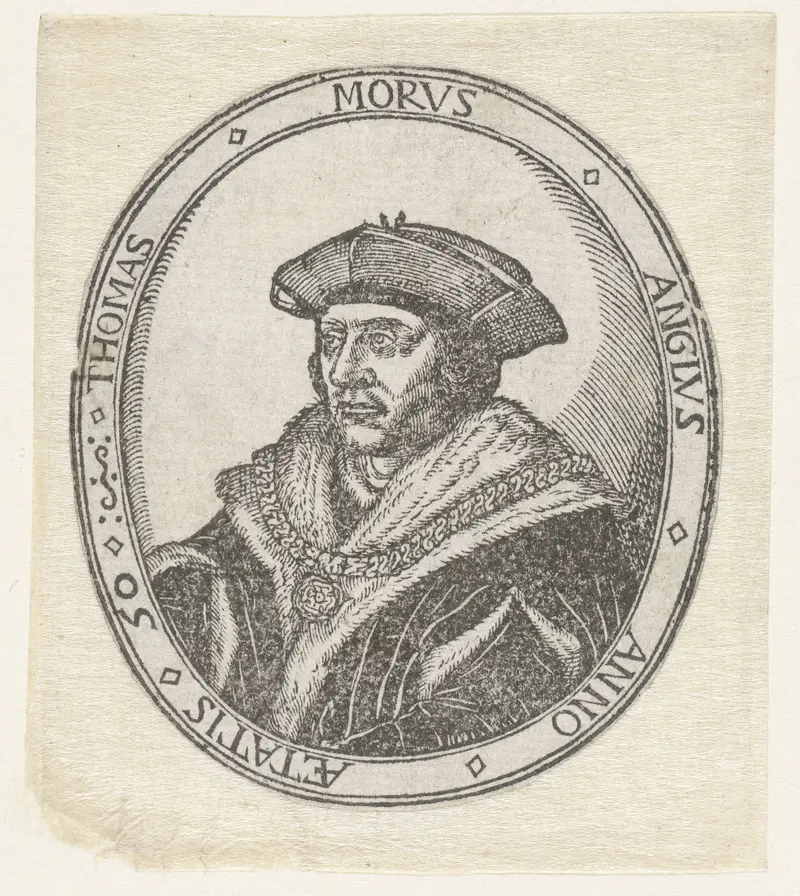
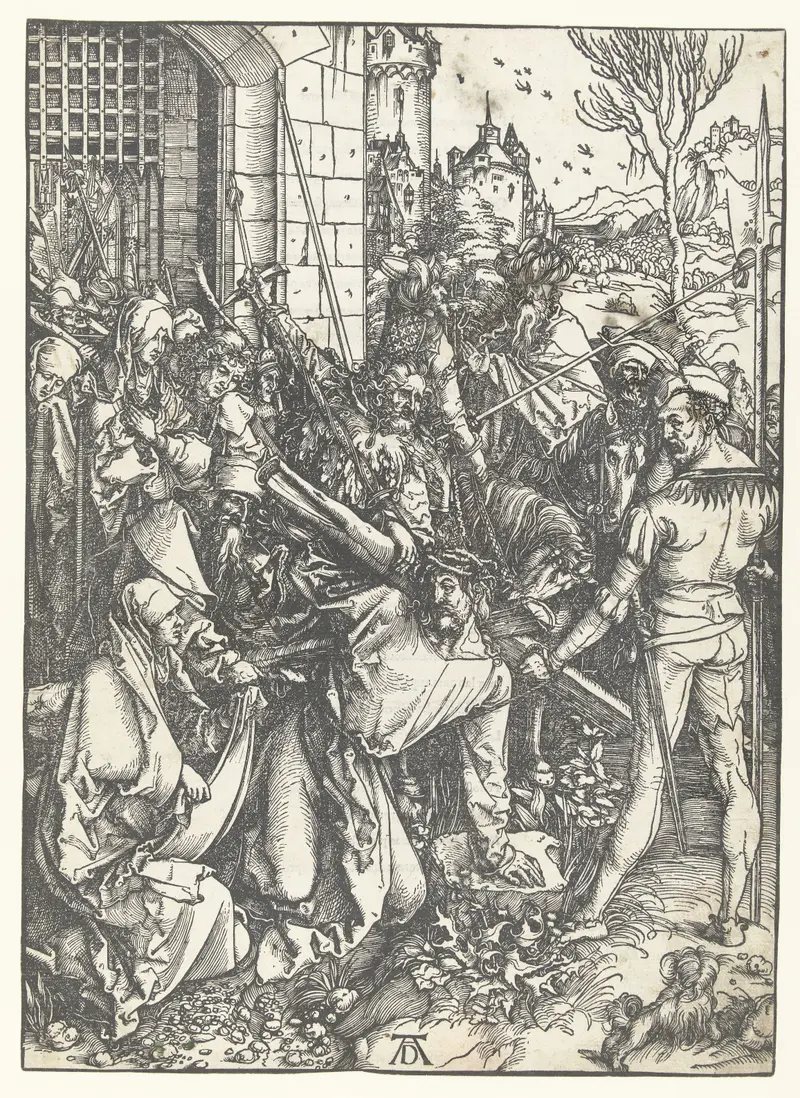
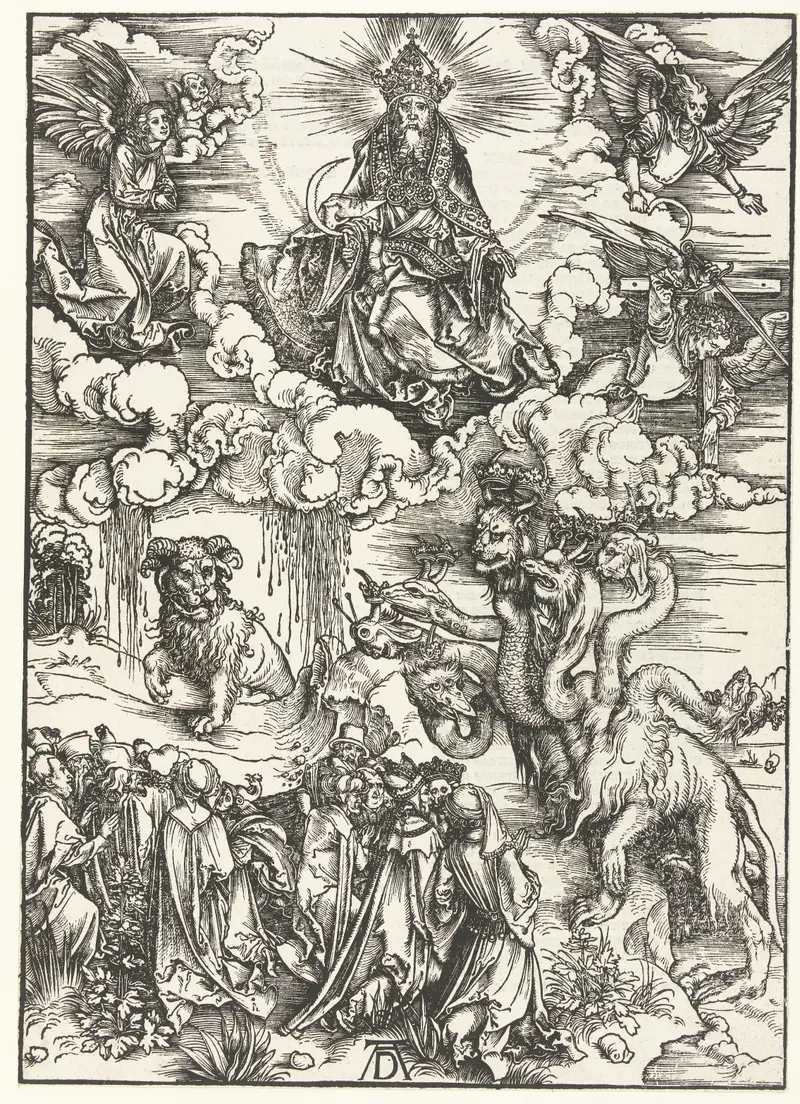
Religious scenes and portraits, with many engravings and woodcuts by Dürer, Lucas van Leyden and their contemporaries, plus landscapes and peasant scenes. All public domain, free to download.












Famous Northern Renaissance paintings
The best-known Northern Renaissance paintings, from Bruges and Ghent to Antwerp, Nuremberg and London. Click any painting to see it up close and download it free.
 The Garden of Earthly DelightsHieronymus Bosch
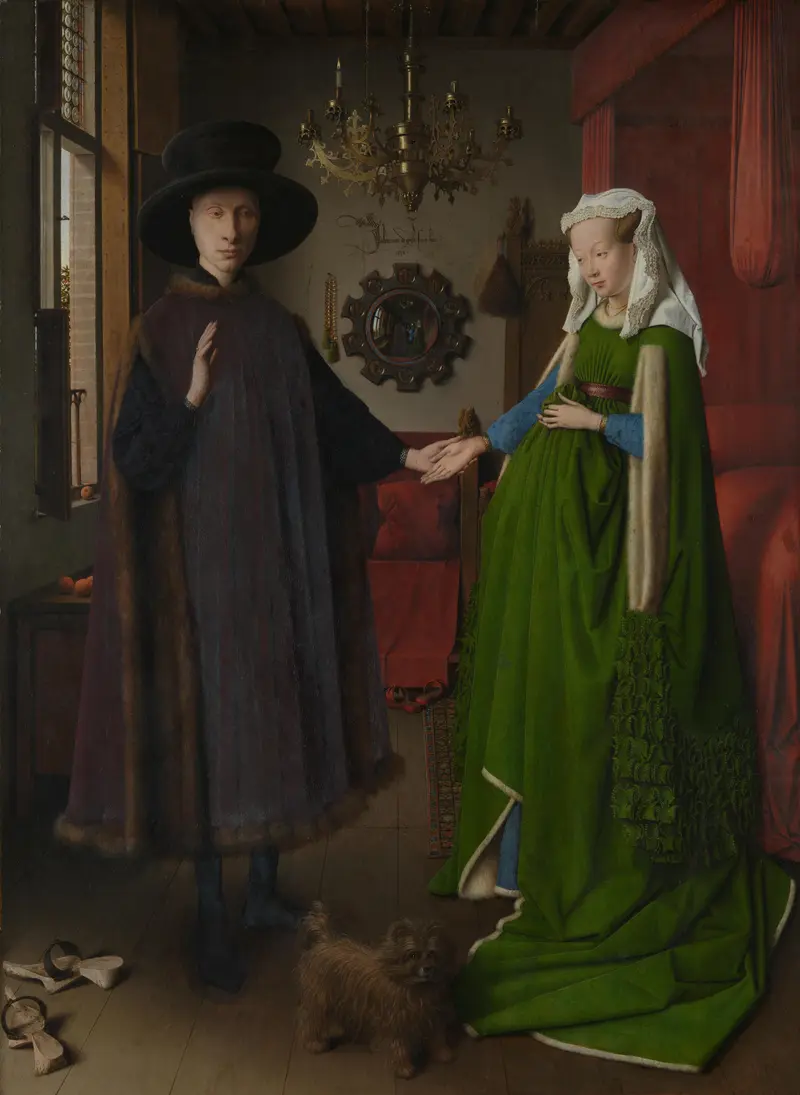 The Arnolfini PortraitJan van Eyck
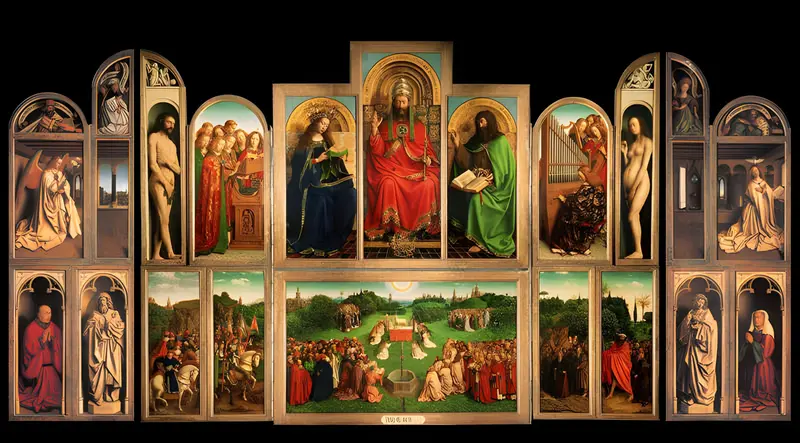
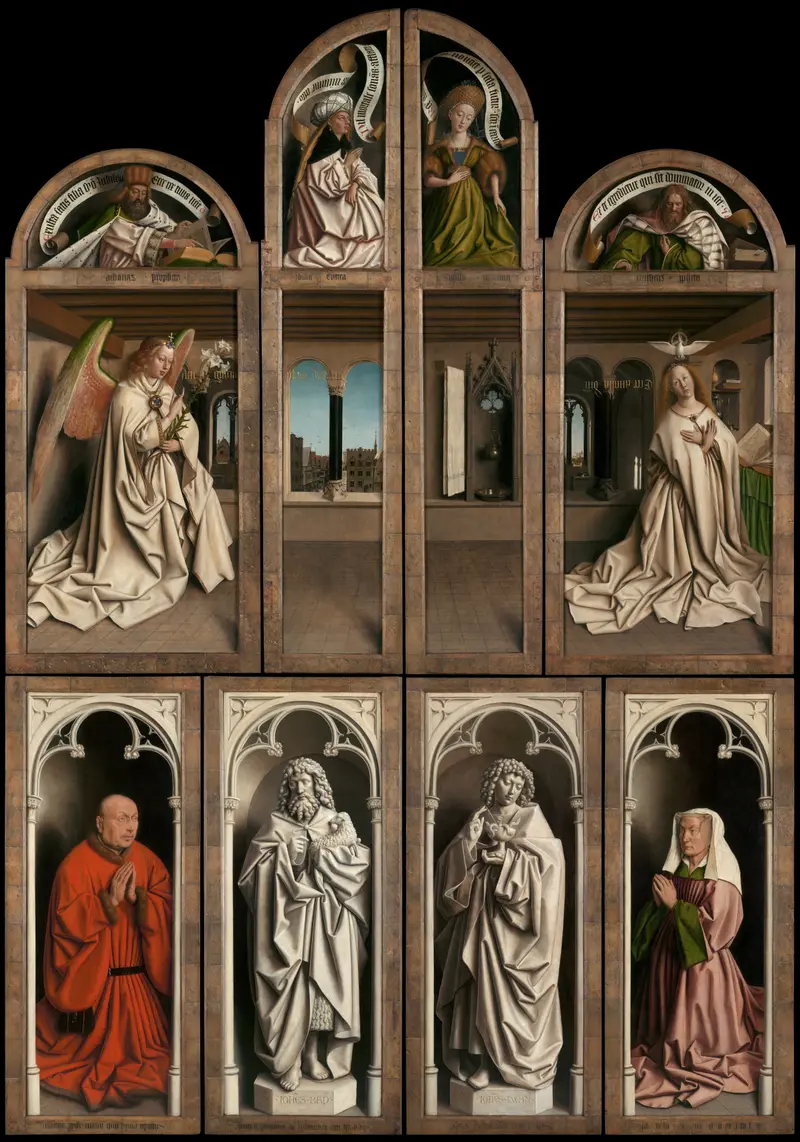
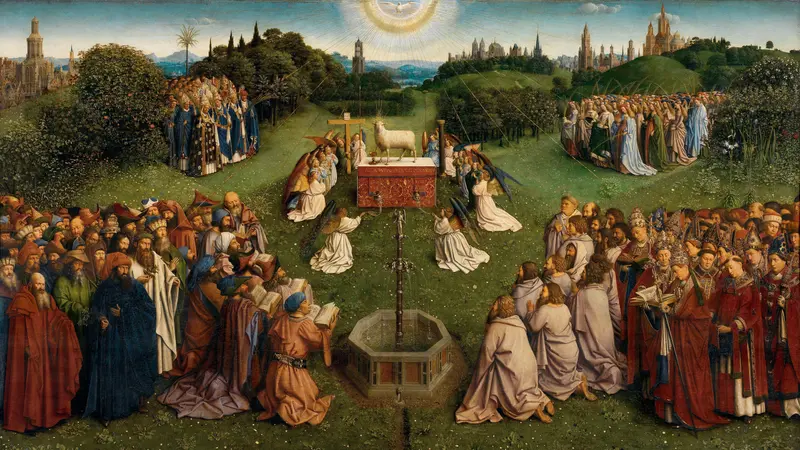 The Ghent Altarpiece (Adoration of the Mystic Lamb)Hubert and Jan van Eyck
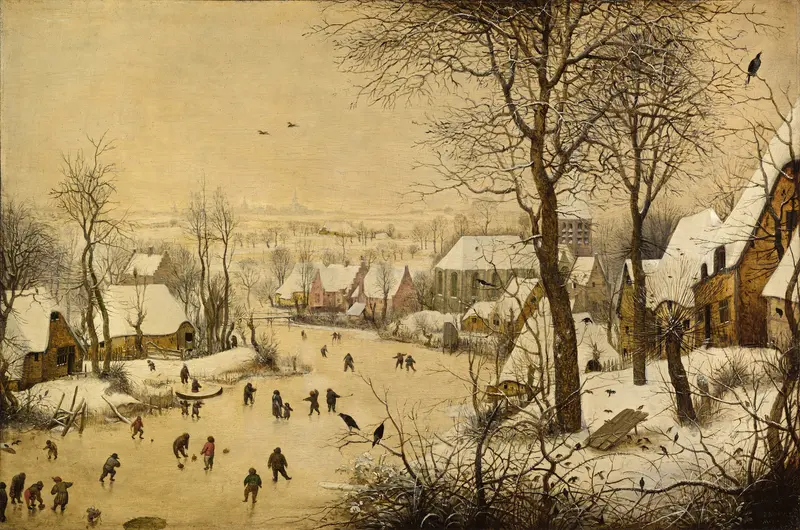
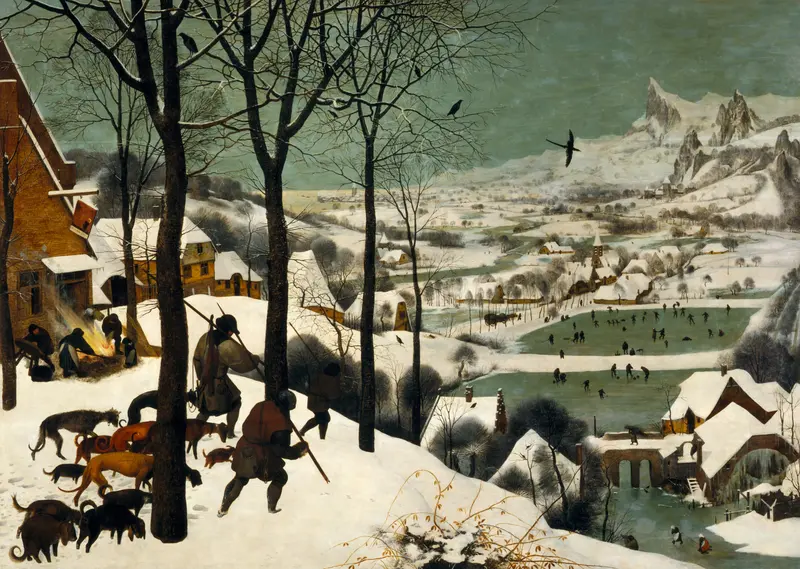 The Hunters in the Snow (Winter)Pieter Bruegel the Elder
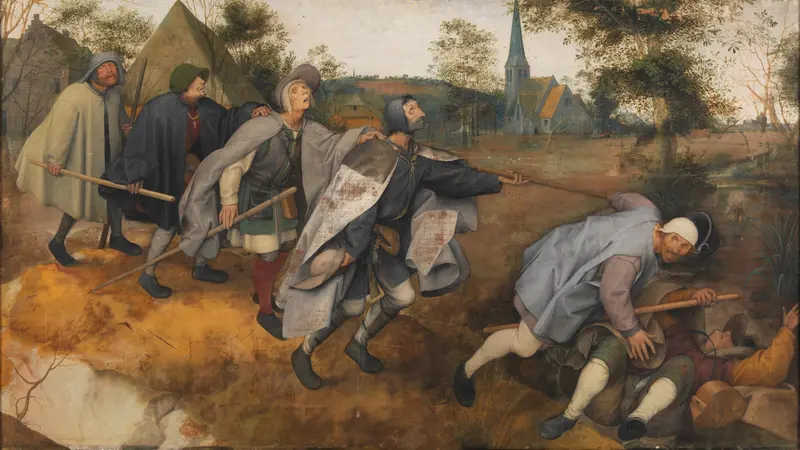
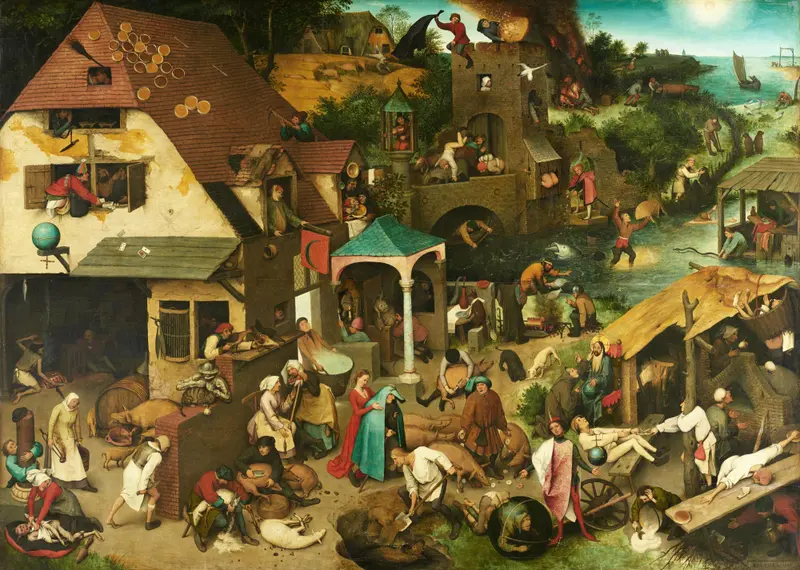 Netherlandish ProverbsPieter Bruegel the Elder
 The Tower of BabelPieter Bruegel the Elder
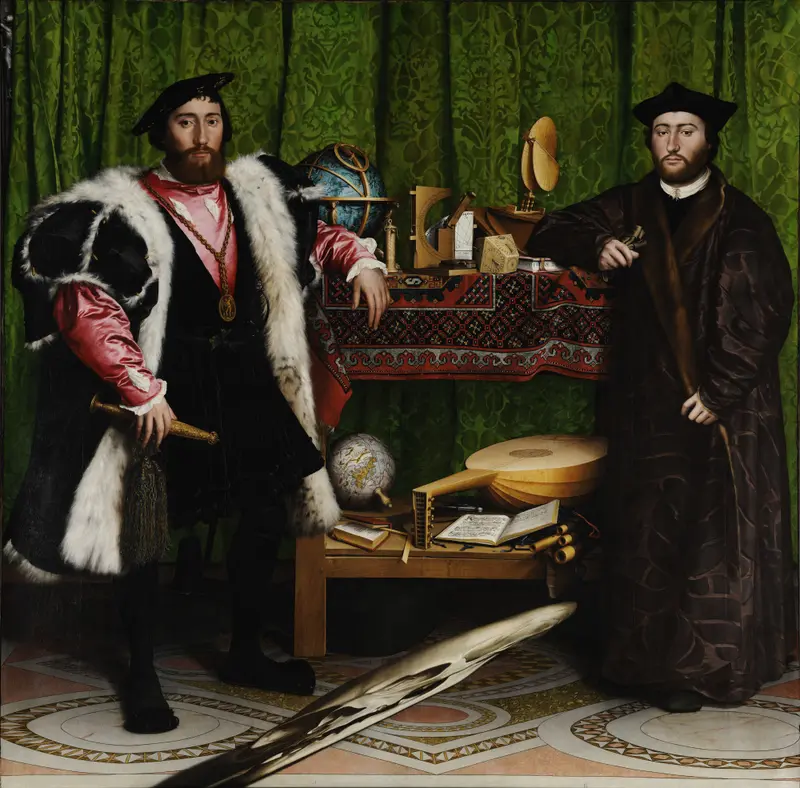 The AmbassadorsHans Holbein the Younger
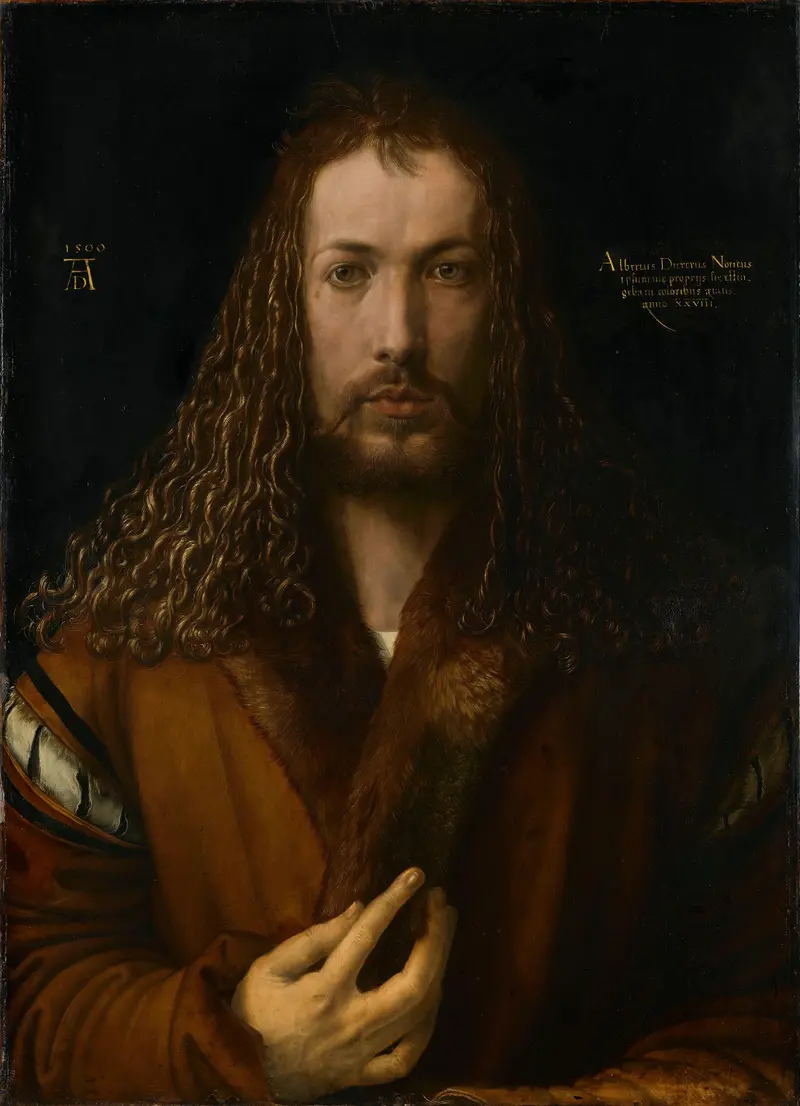 Self-Portrait with Fur-Trimmed RobeAlbrecht Dürer
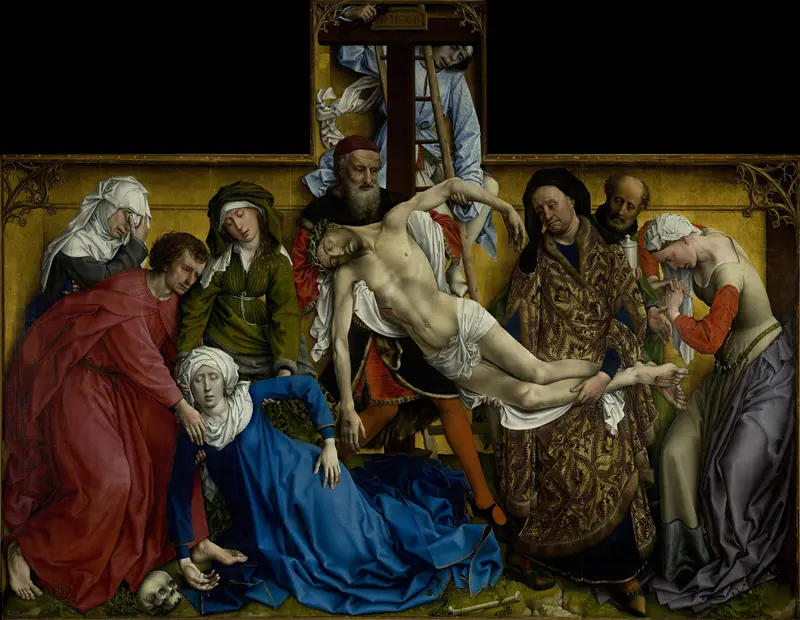 The Descent from the CrossRogier van der Weyden
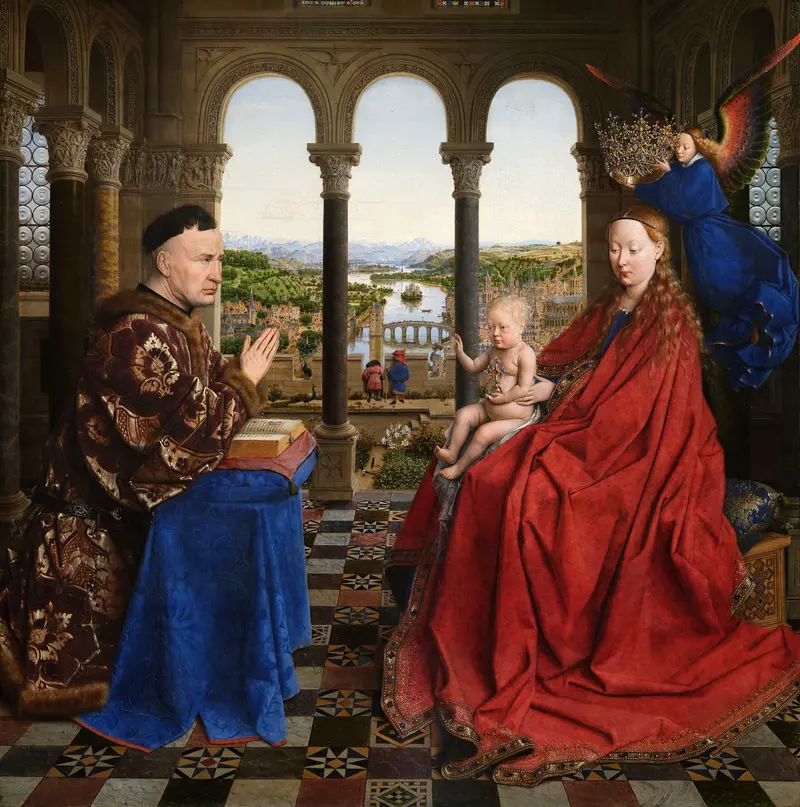 The Virgin of Chancellor RolinJan van Eyck
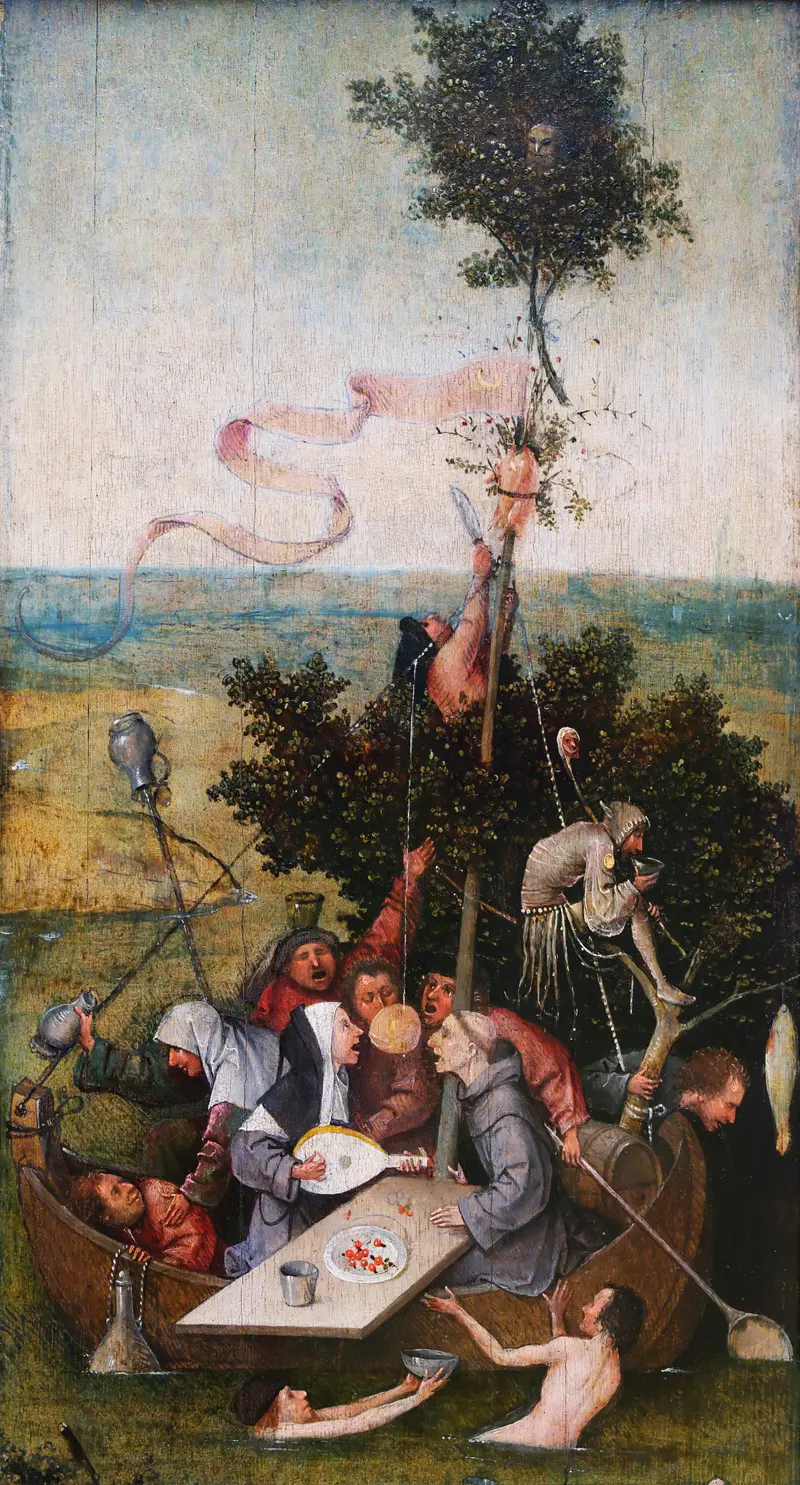 The Ship of FoolsHieronymus Bosch
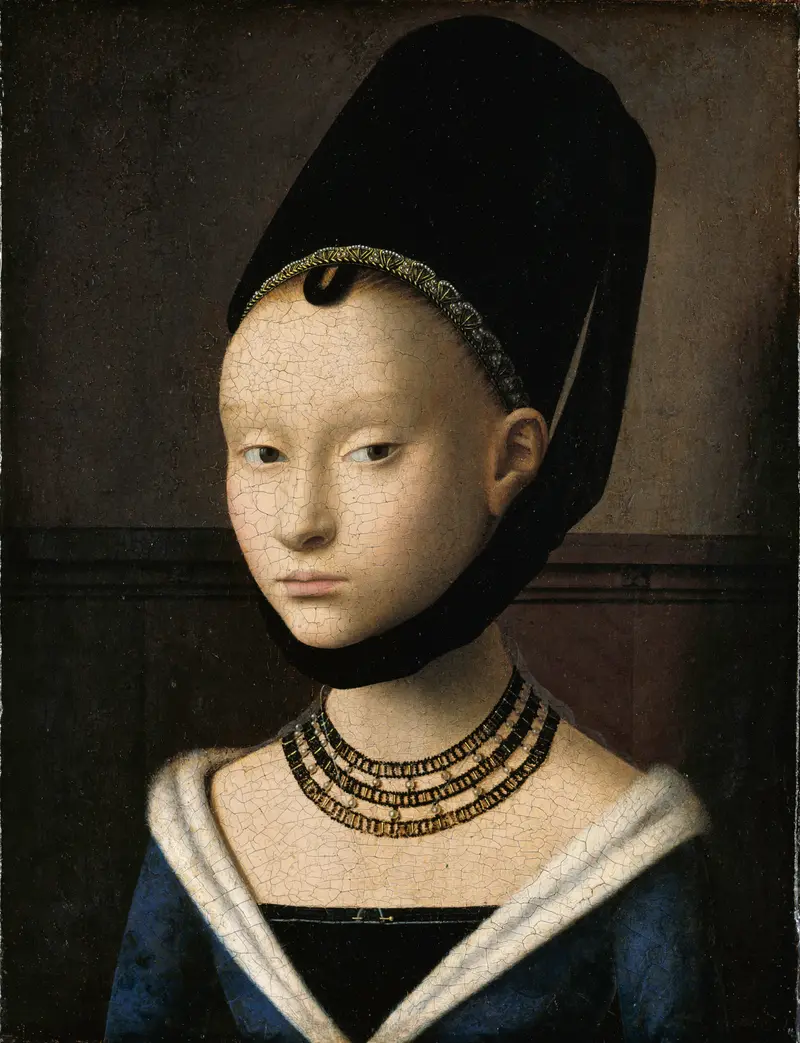 Portrait of a Young GirlPetrus Christus
Northern Renaissance painters
Ten painters at the heart of the Northern Renaissance, from Bruges and Antwerp to Nuremberg, Wittenberg and London. Each link opens all their works.
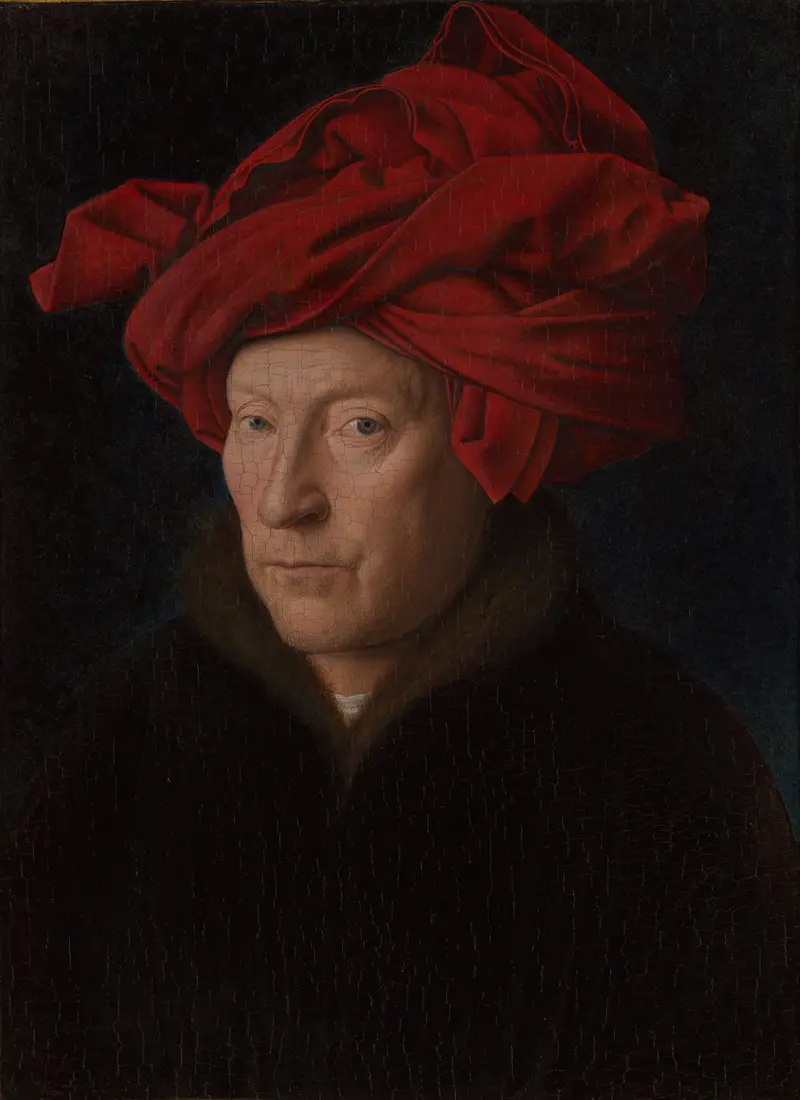 Jan van EyckActive 1422, died 1441. Painter to Philip the Good, Duke of Burgundy, working in Bruges from 1425; credited with a style of minutely realistic surfaces and natural light, built up in translucent oil glazes.
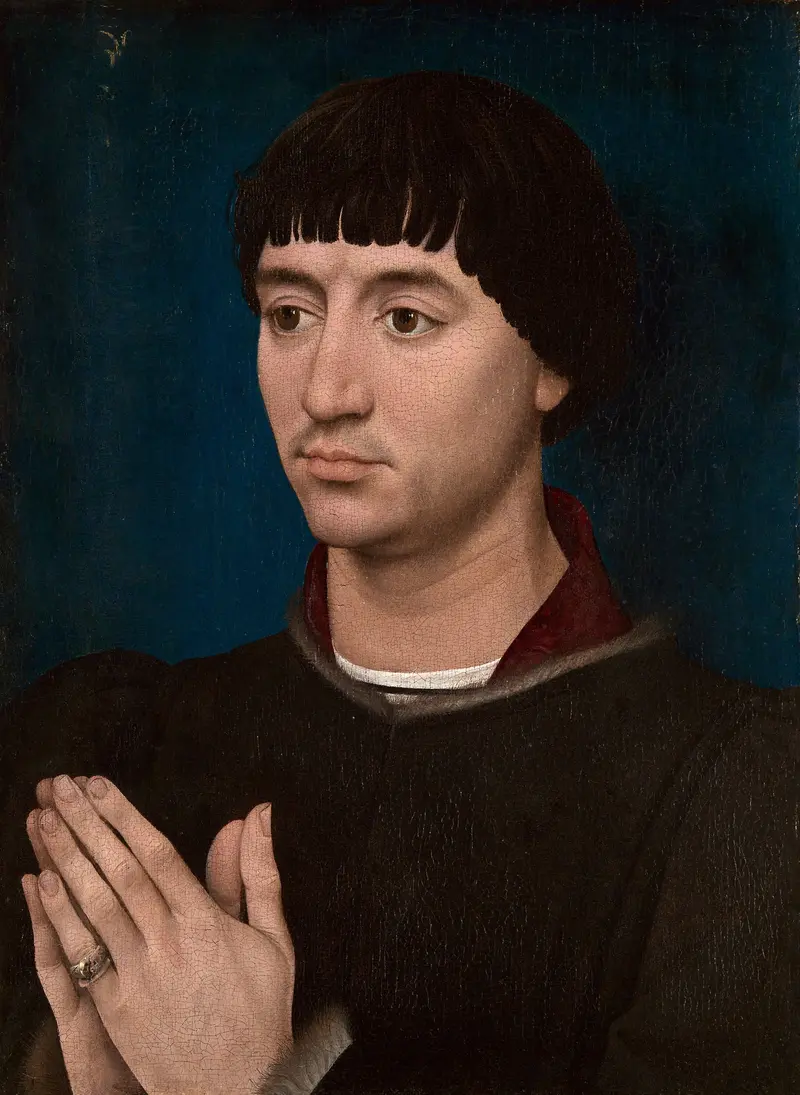 Rogier van der WeydenAbout 1399–1464. Trained with Robert Campin in Tournai and became painter to the city of Brussels in 1435; internationally famed for the naturalism of his detail and his expressive pathos.
 Hans MemlingActive 1465, died 1494. Born in Germany, he was the leading artist in Bruges from 1465 until his death; his work is strongly influenced by Rogier van der Weyden.
 Gerard DavidActive 1484, died 1523. The last great 15th-century painter from Bruges in the tradition of realism founded by Van Eyck; a subtle colorist known for his evocative landscapes.
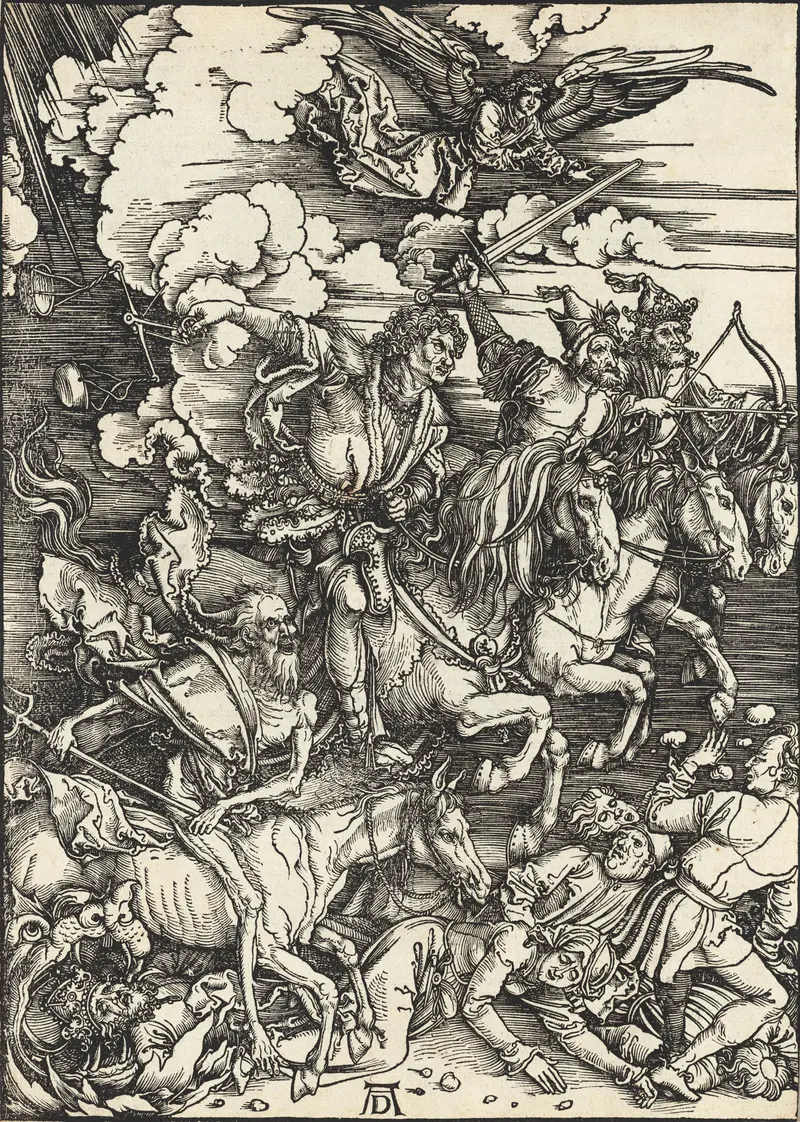
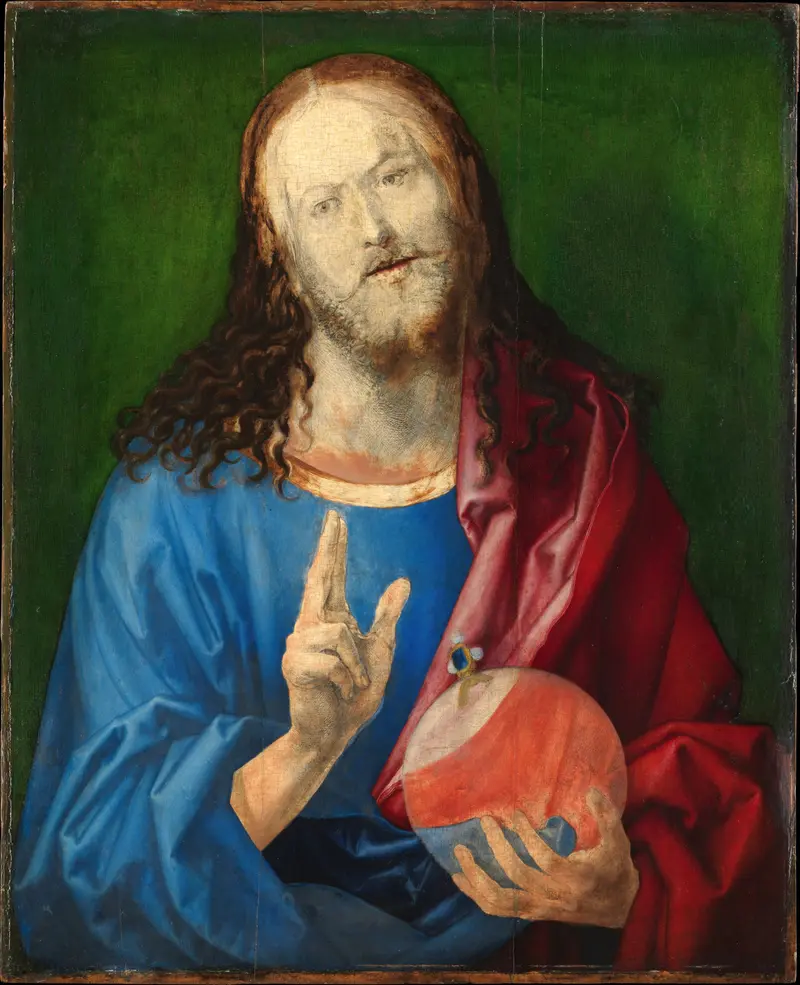 Albrecht Dürer1471–1528. Painter, printmaker and theorist from Nuremberg, whom the National Gallery calls the archetypal Renaissance artist of Northern Europe; his prints influenced many Italian artists.
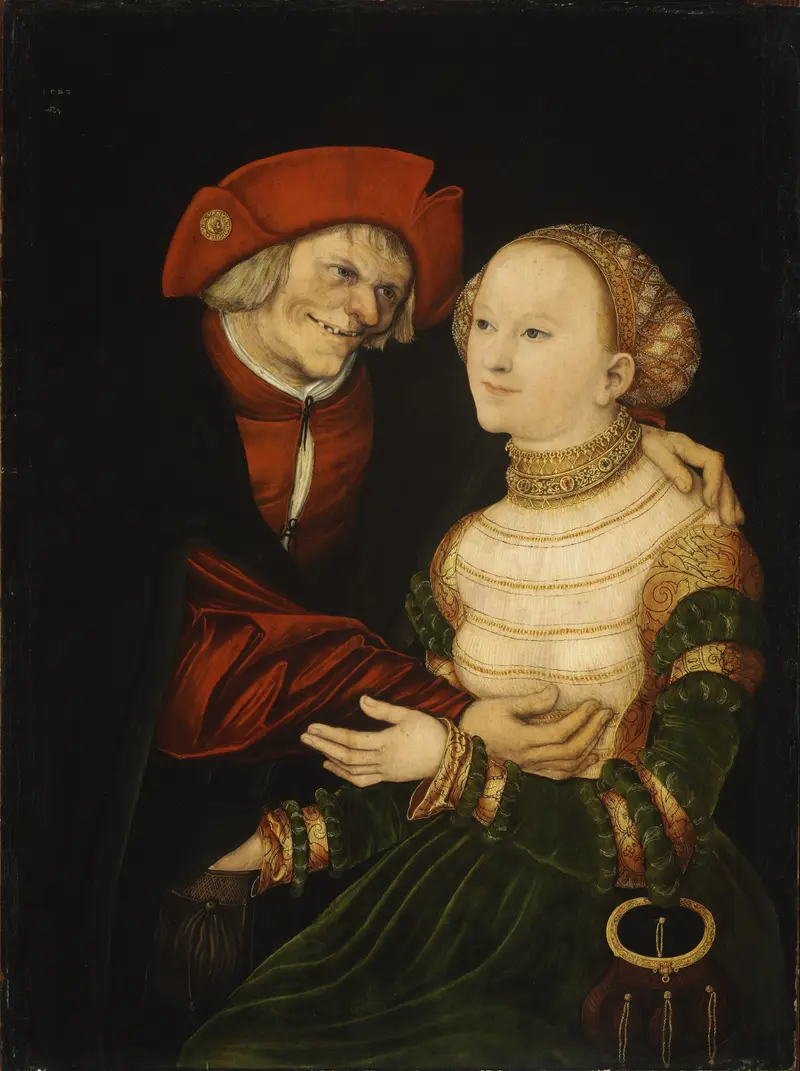 Lucas Cranach the Elder1472–1553. Court painter to the Electors of Saxony at Wittenberg from 1505 and the chief artist of the Reformation; he painted altarpieces, portraits, myths and nudes.
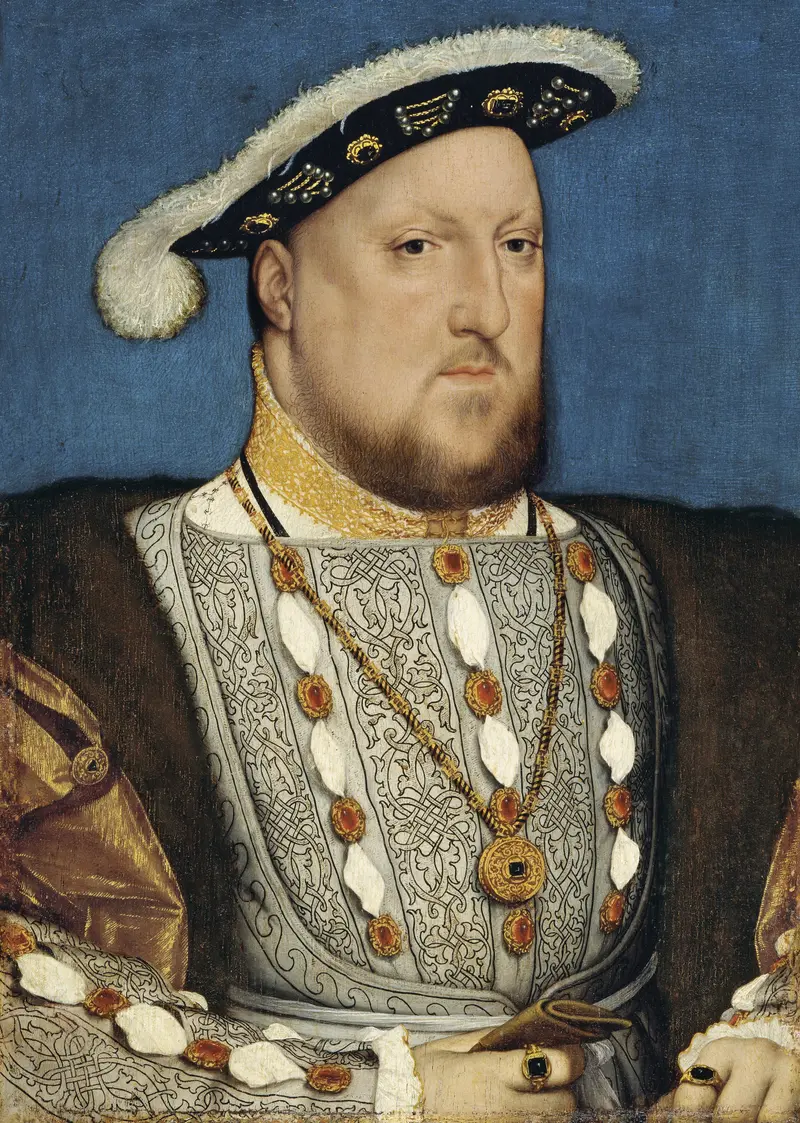 Hans Holbein the Younger1497/8–1543. Born in Augsburg, he worked in Basel and then at the Tudor court in London; one of the most accomplished portraitists of the 16th century.
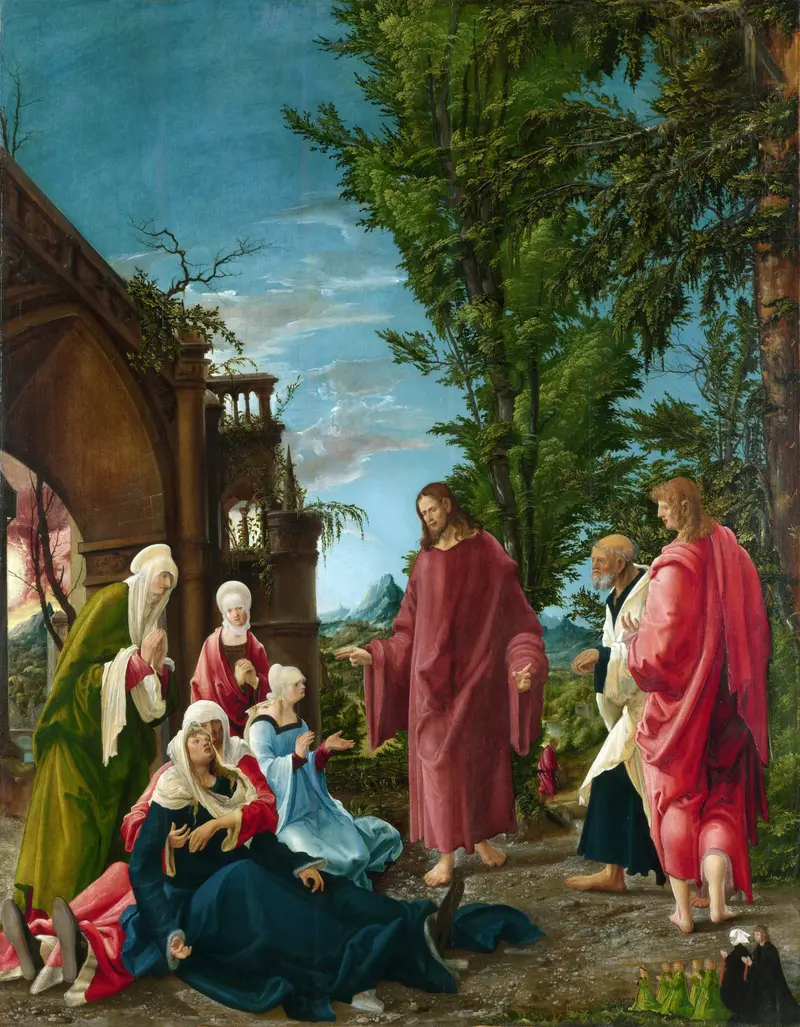 Albrecht AltdorferShortly before 1480–1538. Painter, printmaker and architect in Regensburg on the Danube, often grouped with the Danube School; the National Gallery calls him one of the most outstanding landscape painters.
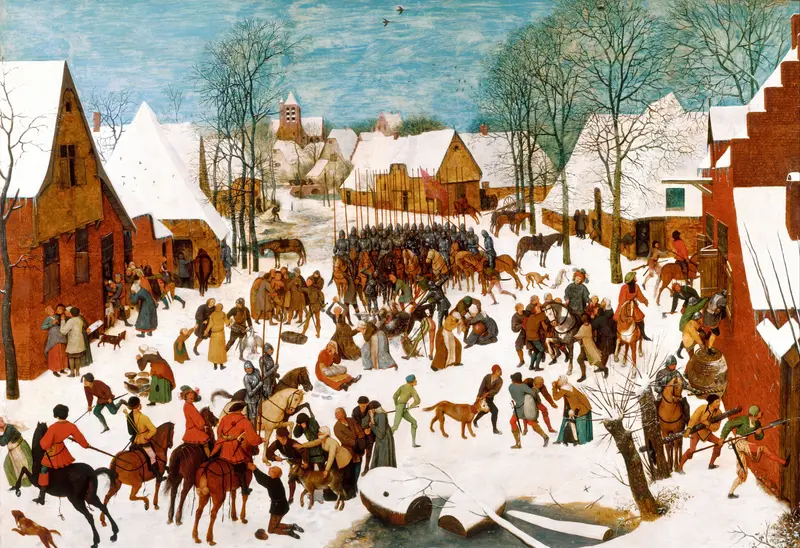
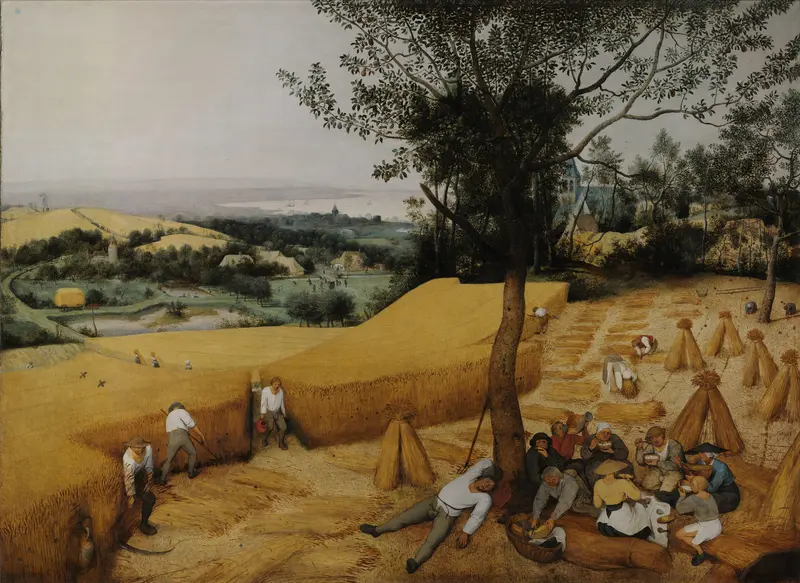 Pieter Bruegel the ElderActive 1550/1, died 1569. Famous for his landscapes and for scenes crowded with anecdotal detail; the Kunsthistorisches Museum calls him the most progressive landscape painter of the 16th century.
 Quentin Massys1465/6–1530. Born in Louvain, he was the leading painter in Antwerp in the early 16th century, a portraitist as well as a religious painter, and supplied figures for Joachim Patinir's landscapes.
Early Netherlandish and Flemish paintings
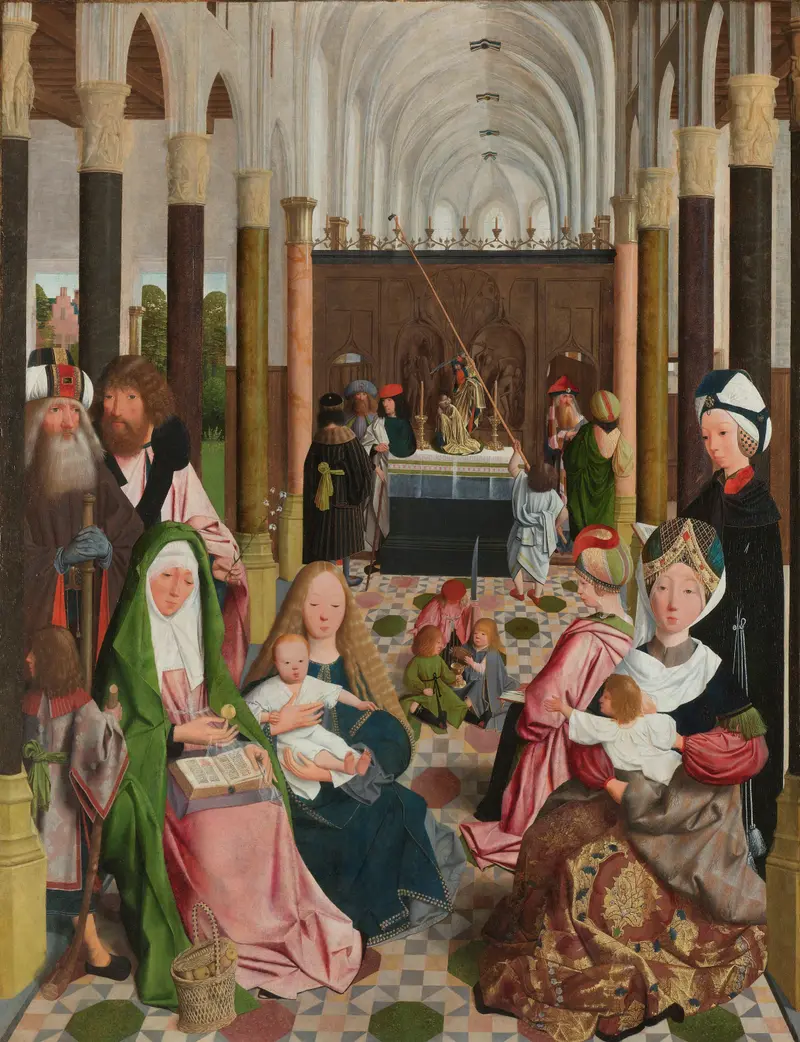
Early Netherlandish painting, which the Dutch call the Flemish Primitives, is the art of the southern Netherlands in the 15th and early 16th centuries, the Getty's art vocabulary says. Robert Campin and Jan van Eyck founded its realistic style of oil painting, the National Gallery in London notes, and painters such as Dieric Bouts, who was strongly influenced by Rogier van der Weyden, carried it on.
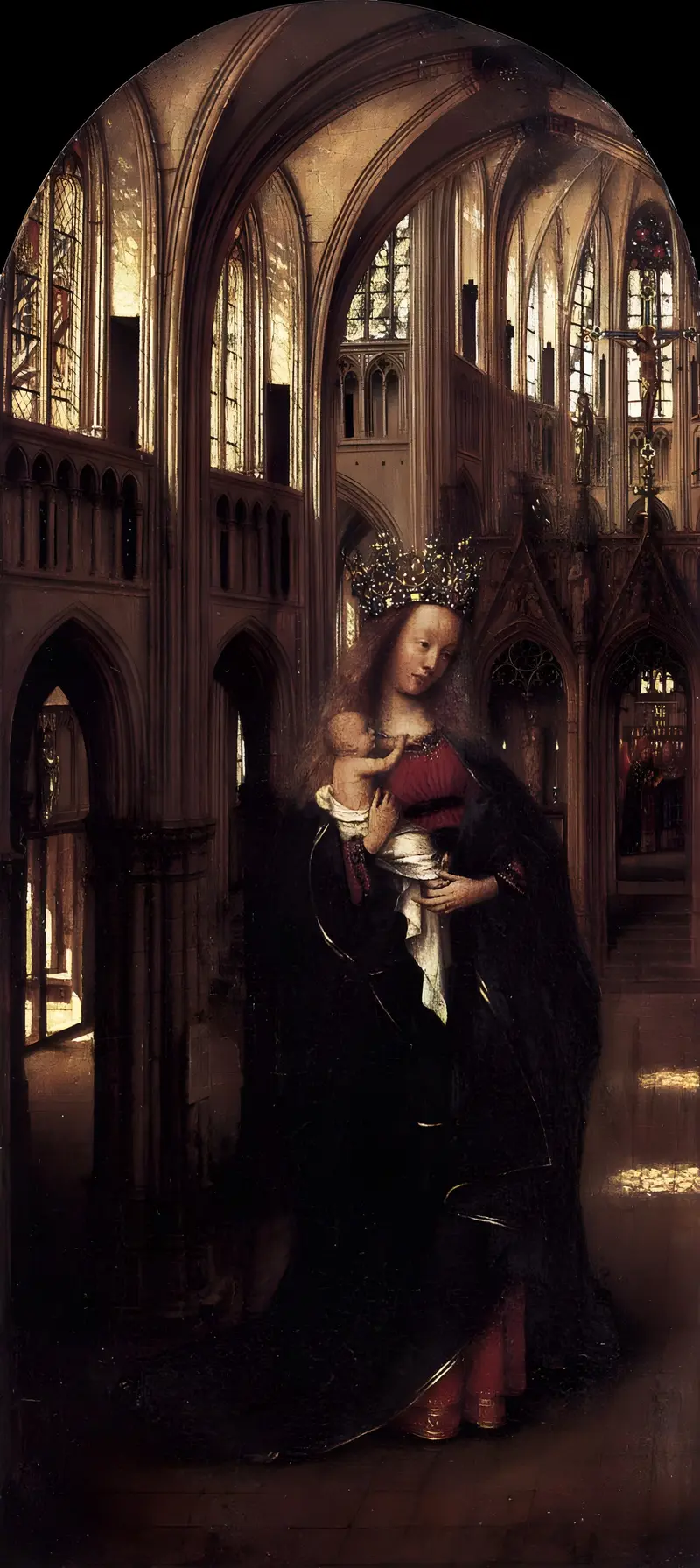


Albrecht Dürer's famous works
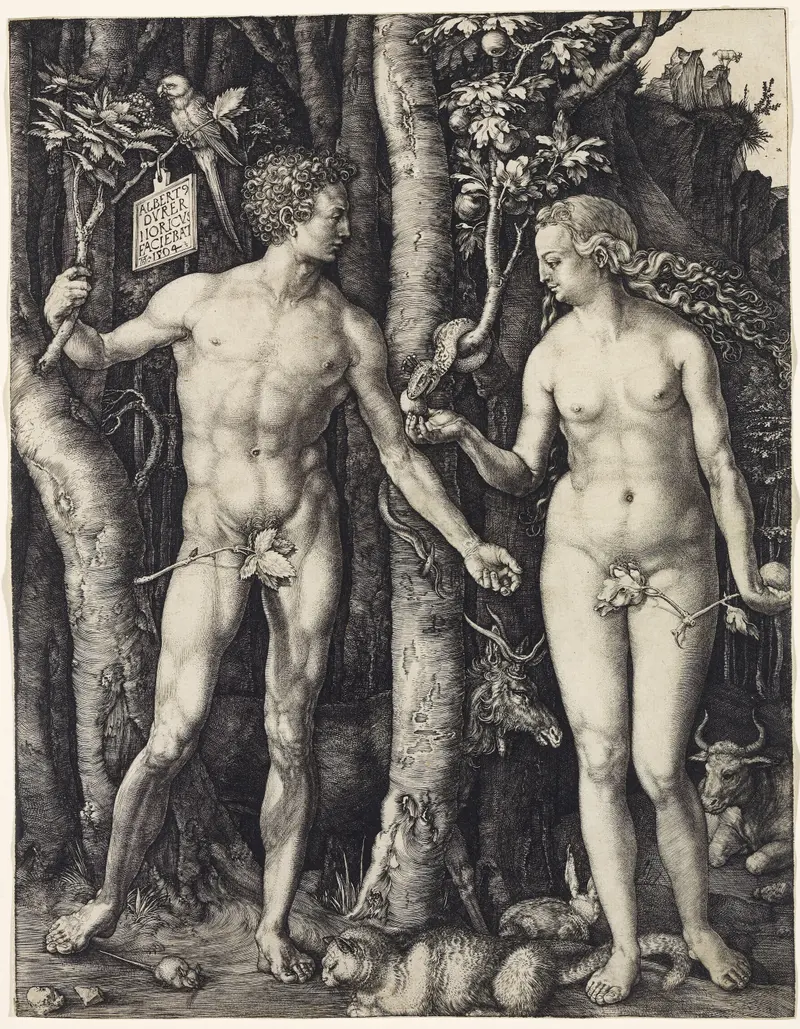
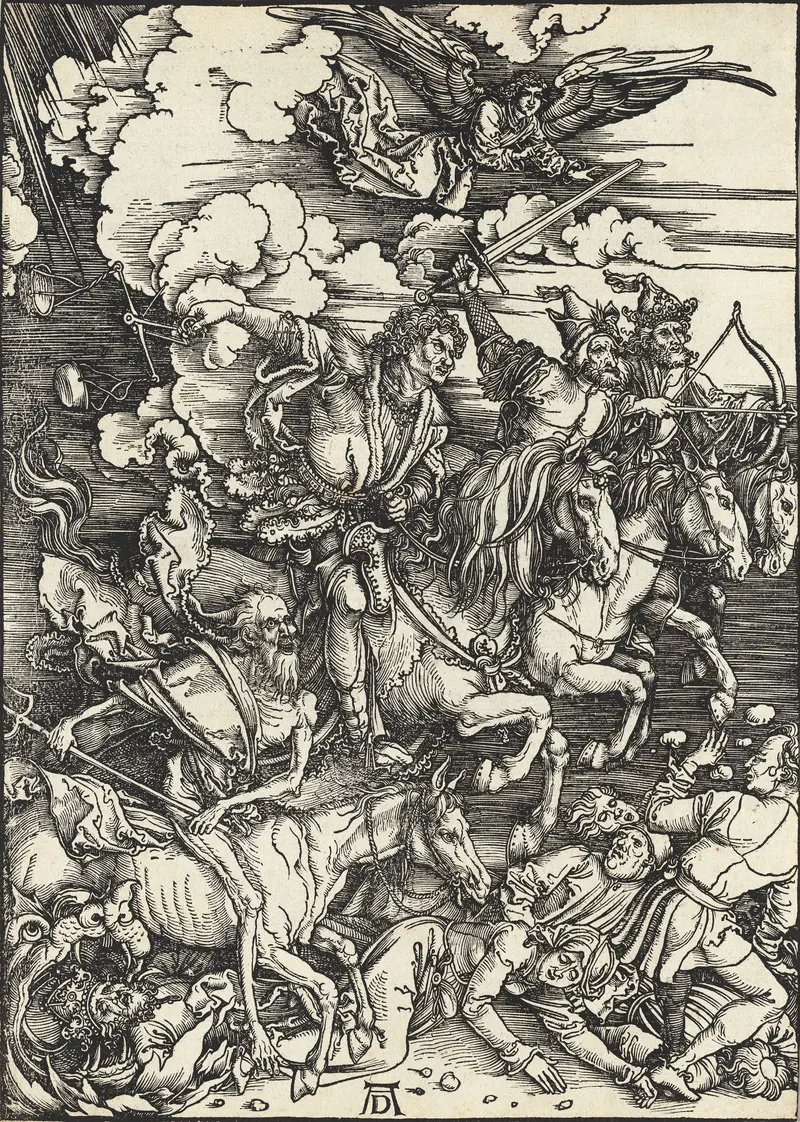
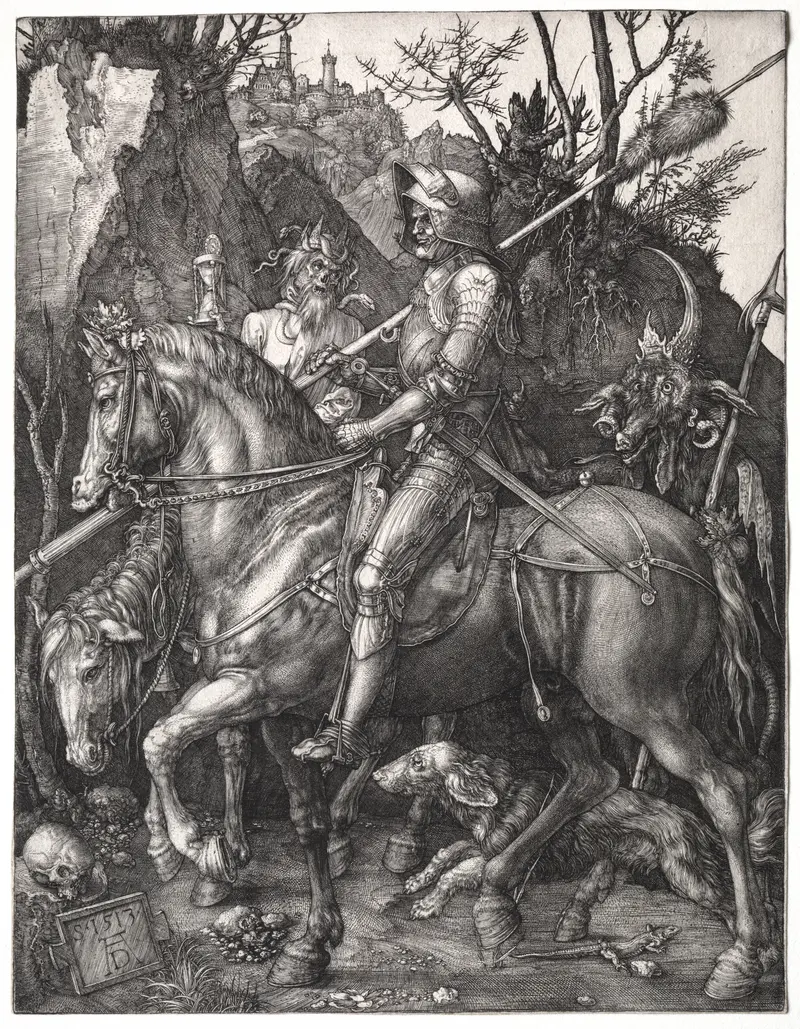
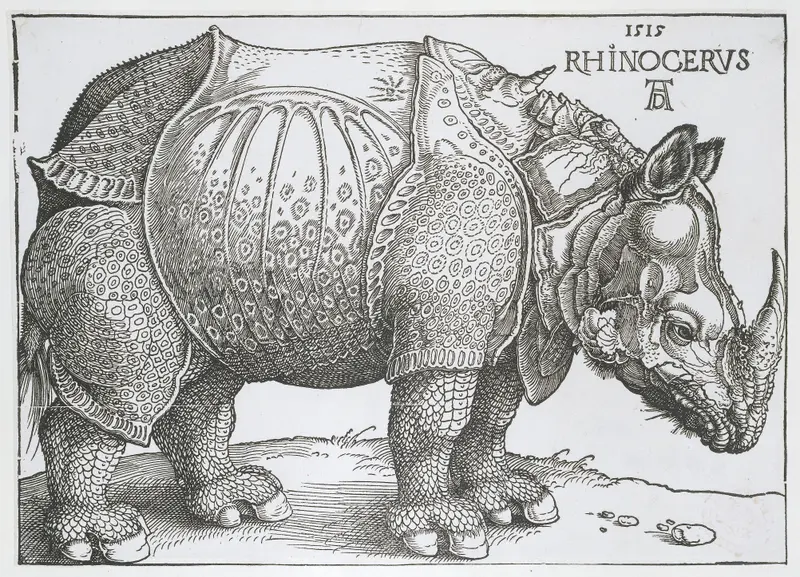
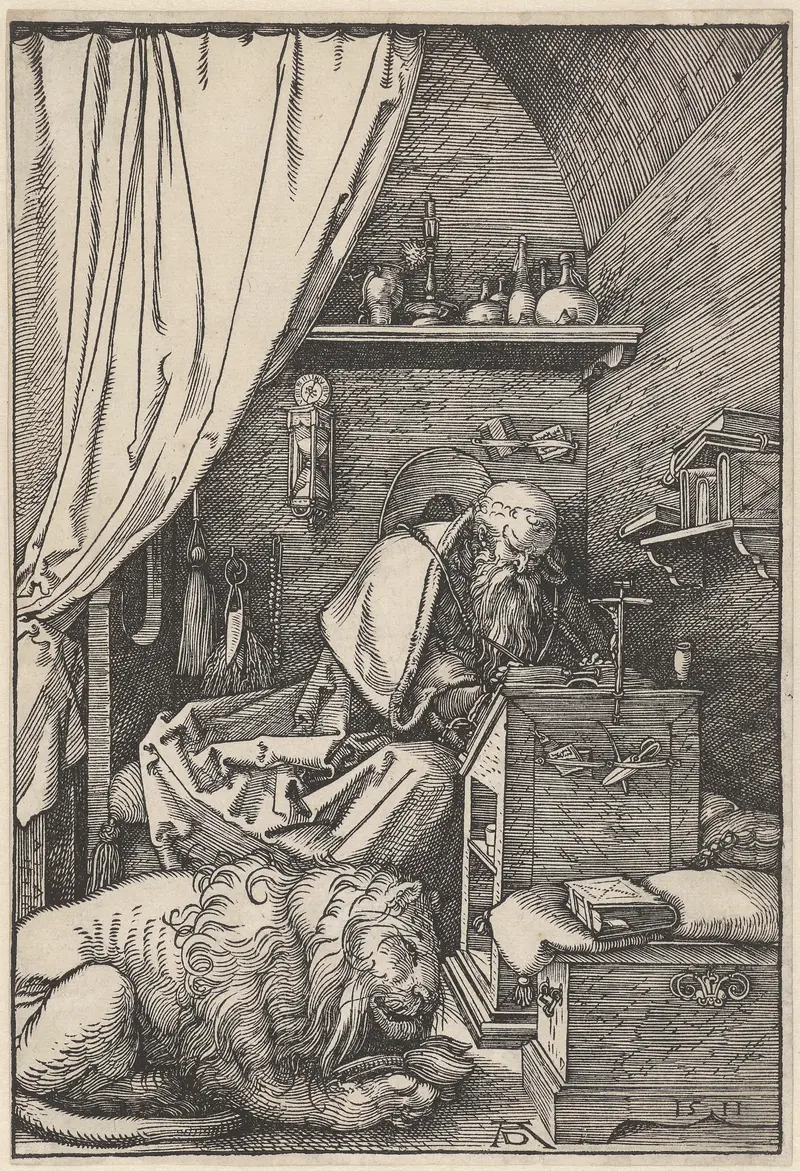
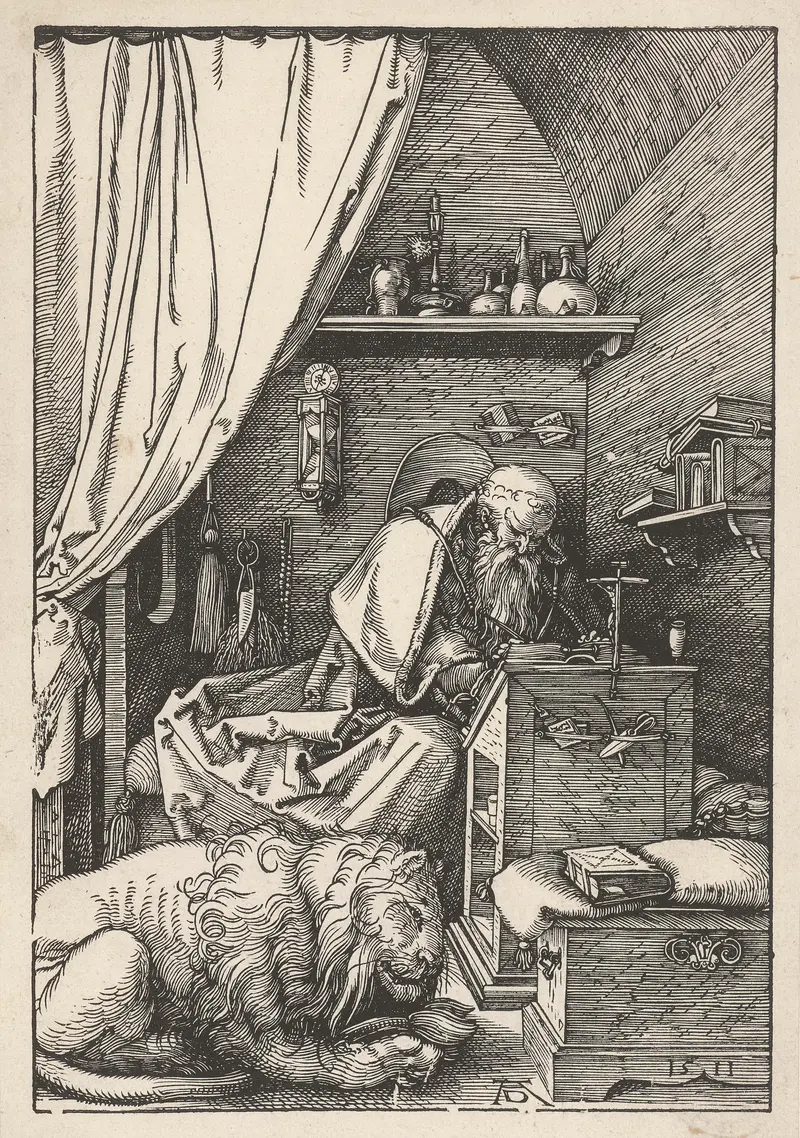
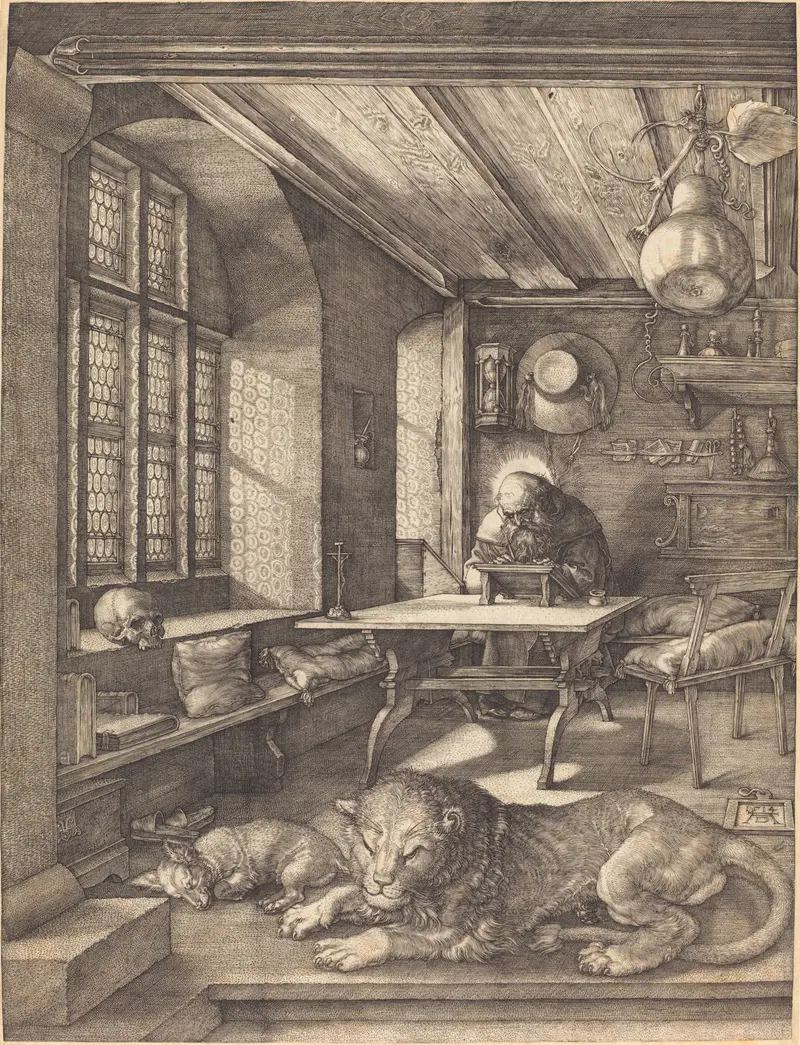
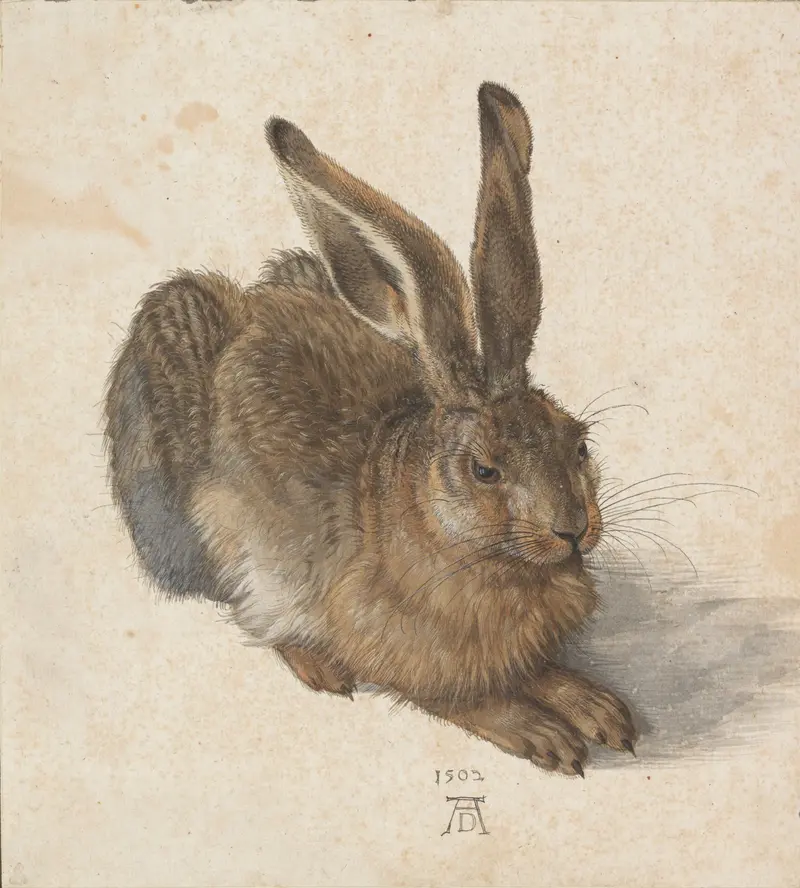
Dürer was a painter and printmaker, and the National Gallery in London says he influenced many Italian artists through his prints. These are engravings and a woodcut, Adam and Eve (1504), Knight, Death, and the Devil (1513), Saint Jerome in His Study and Melencolia I (1514) and the Rhinoceros (1515), with the Young Hare, a watercolor of 1502 that the Albertina prizes for its extraordinarily realistic depiction.

Northern Renaissance portraits
Jan van Eyck painted Burgundian courtiers, local nobles, churchmen and merchants, the National Gallery in London notes, and Antonis Mor spent most of his career as court portraitist to the Habsburgs. In 16th-century England, the Museo Thyssen-Bornemisza says, portraiture was the most popular genre of all.
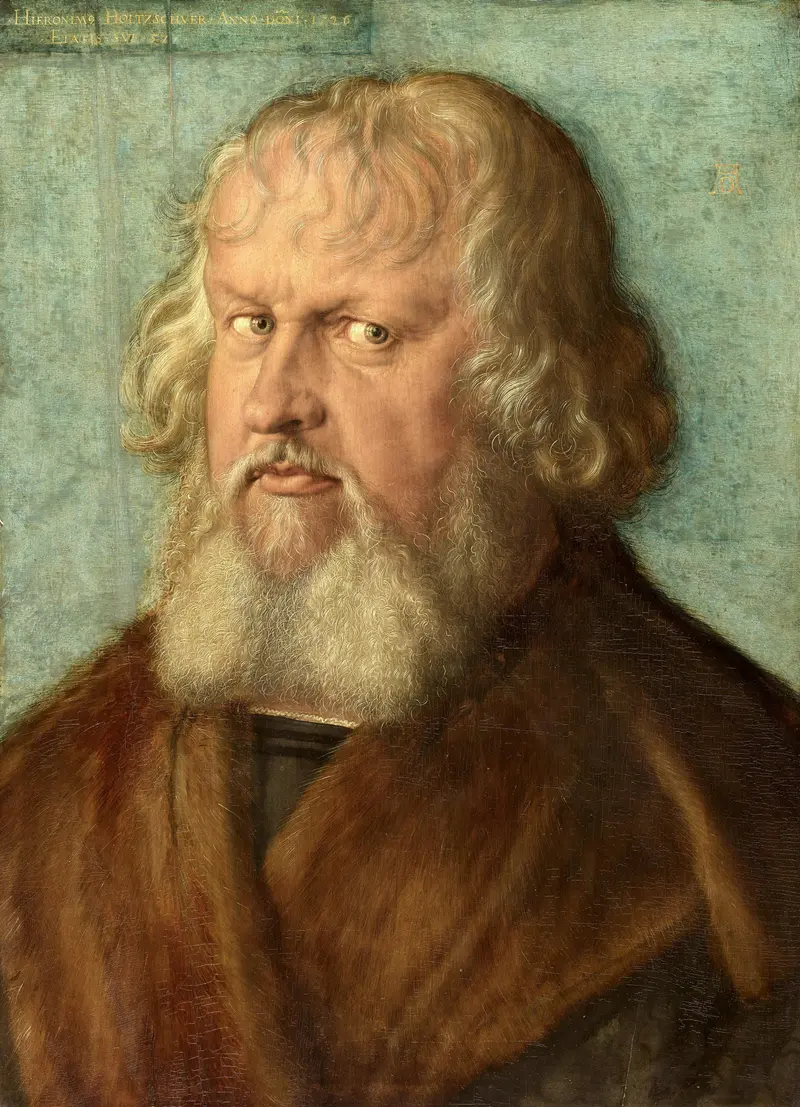
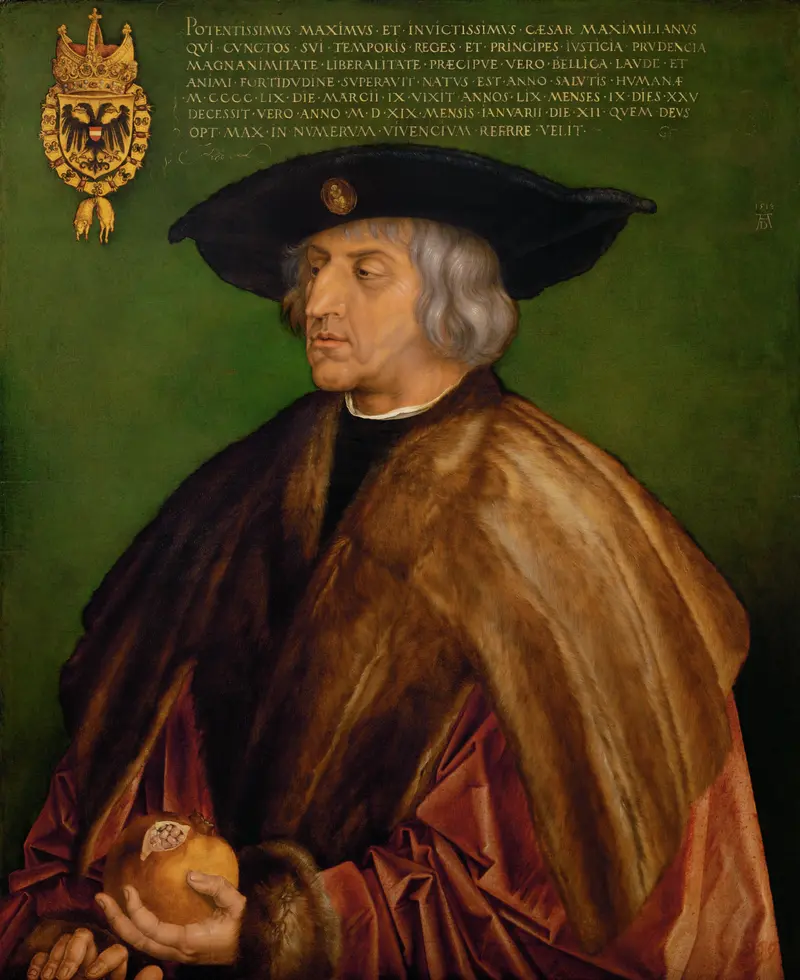
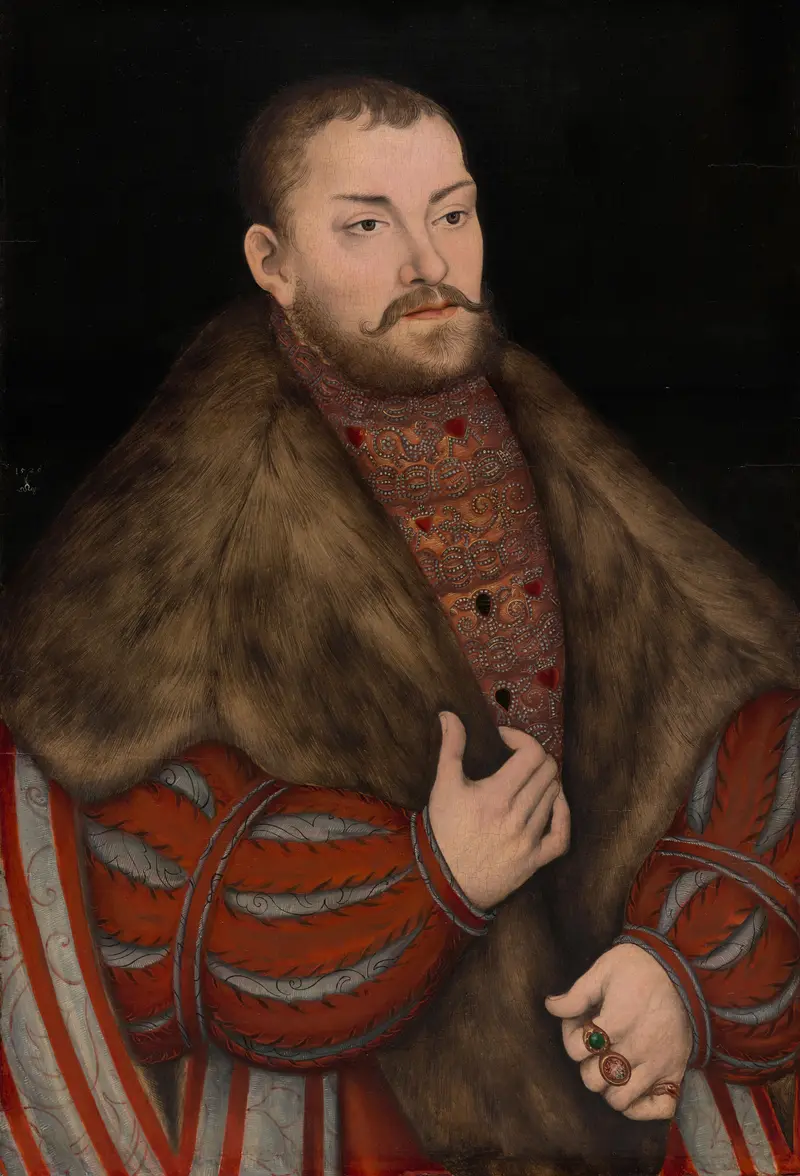
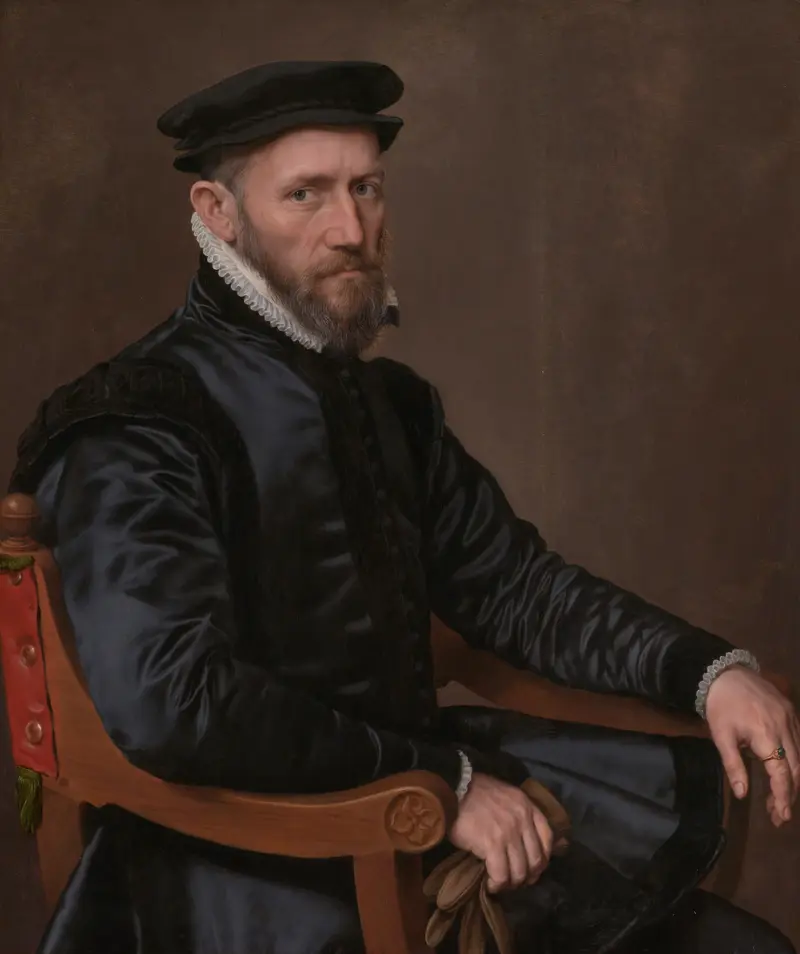
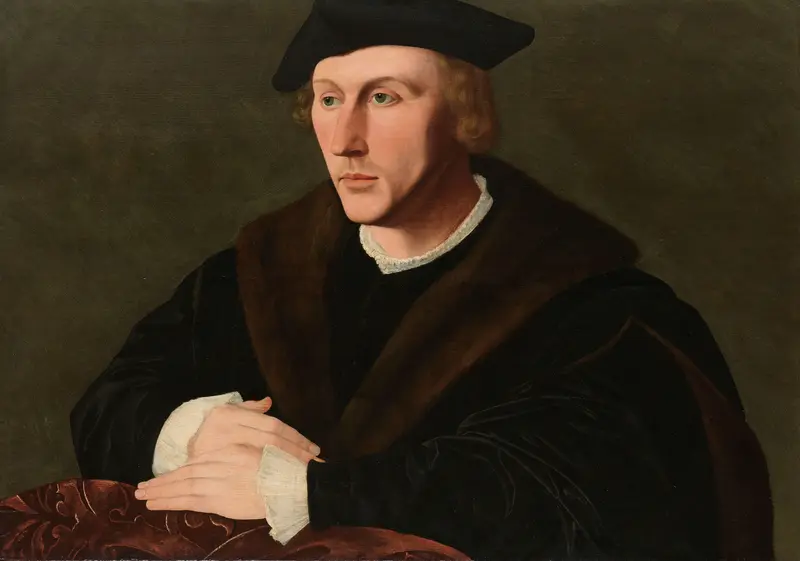
Characteristics of Northern Renaissance art: how to recognize it
Every surface closely observed
Van Eyck painted oranges reflected in the polished window frame and amber beads that cast both shadows and reflections on the wall. The National Gallery in London credits him with a style of minutely realistic surfaces and natural light, built up in translucent glazes of oil paint.
The Arnolfini Portrait, Jan van Eyck
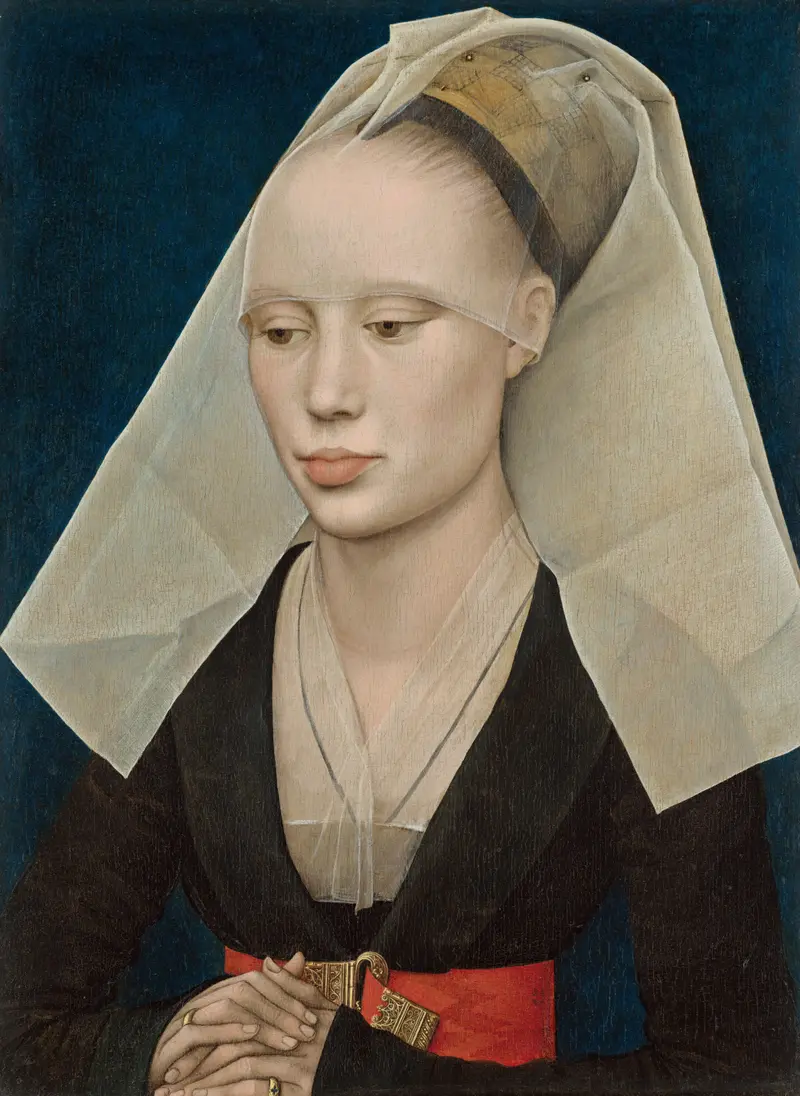
Light through layers of oil
Light falls along the creases of the sheer veil and gentle shadows model the lady's face, while her gold buckle is painted with meticulous precision, the National Gallery of Art notes. Oil, the Harvard Art Museums explain, let painters layer pigments in translucent glazes blended into a seamless finish.
Portrait of a Lady, Rogier van der Weyden
Meanings hidden in objects
Holbein's globes, instruments, broken lute string and hymn book have been read as an essay on the religious and political turmoil of 16th-century Europe, the National Gallery in London says, and the slanting shape on the floor is a skull that only appears when seen from the lower right.
The Ambassadors, Hans Holbein the Younger
Fantastic, disturbing visions
Bosch filled his panels with hybrid creatures, giant fruit and naked crowds. The National Gallery in London says he is famous for their fantastic and disturbing detail and for an original, often macabre visual symbolism; the Surrealists later cited him as a precursor.
The Garden of Earthly Delights, Hieronymus Bosch
Landscape takes over
Bruegel puts the hunters on a hill and lets the frozen valley, skaters and Alpine peaks unfold below them. The Kunsthistorisches Museum calls him the most progressive landscape painter of the 16th century and notes that the scene is invented, joining Alpine mountains to Flemish buildings.
The Hunters in the Snow, Pieter Bruegel the Elder
Faces that meet your gaze
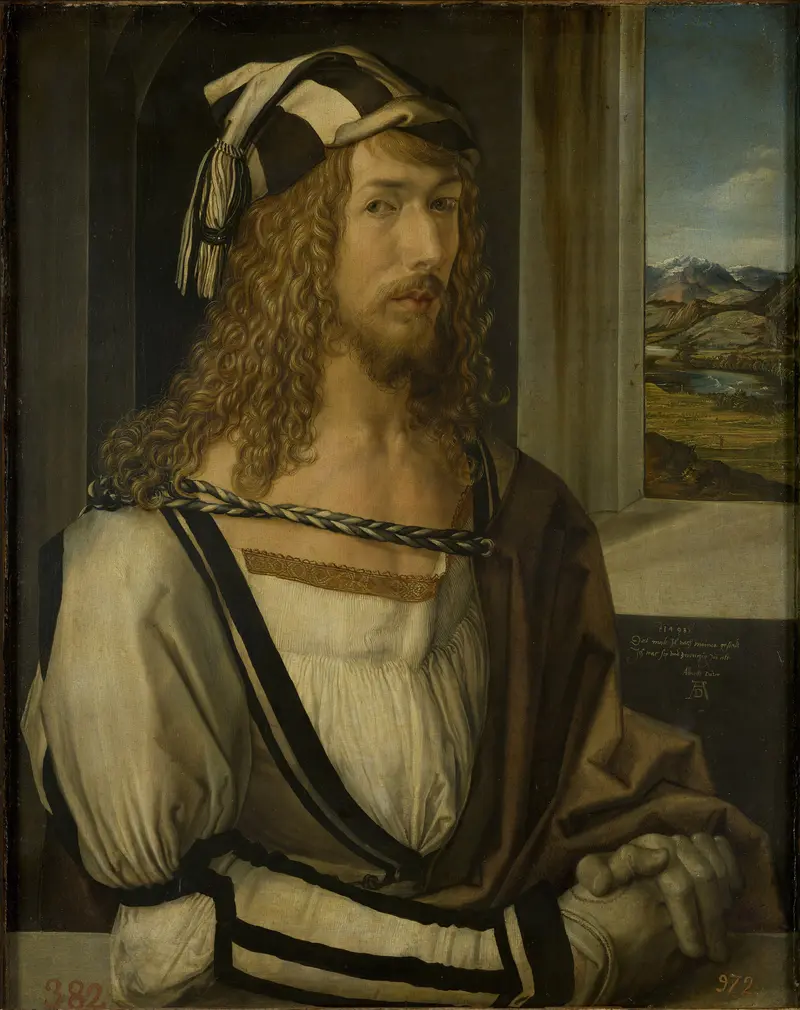
Dürer painted himself face-on, his hand raised like Christ blessing in an icon. The Alte Pinakothek calls it probably the most unusual self-portrait in the history of art for its frontality and meticulous execution, and says the direct gaze and the hand speak of seeing and making.
Self-Portrait with Fur-Trimmed Robe, Albrecht Dürer
Before and after the Northern Renaissance
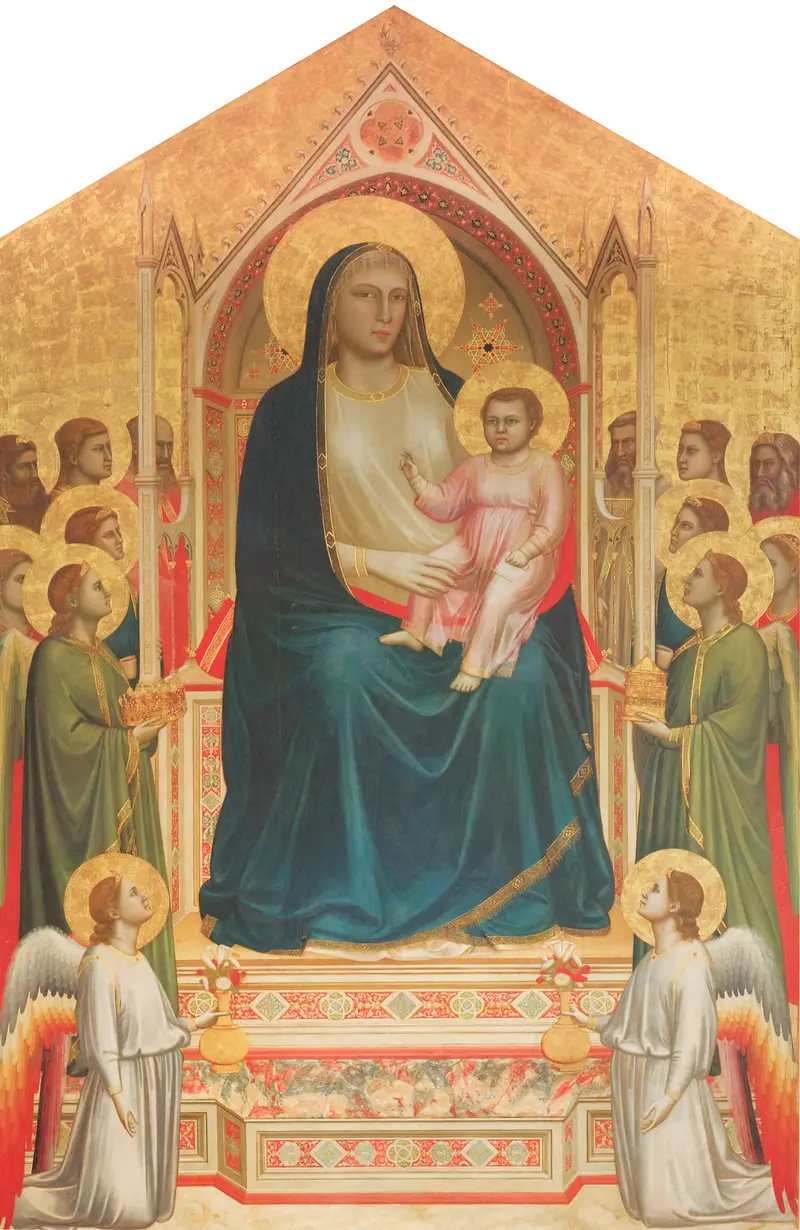 Gothicc. 1150–1500s
 Renaissancec. 1400–1600
- Northern Renaissance15th–16th century
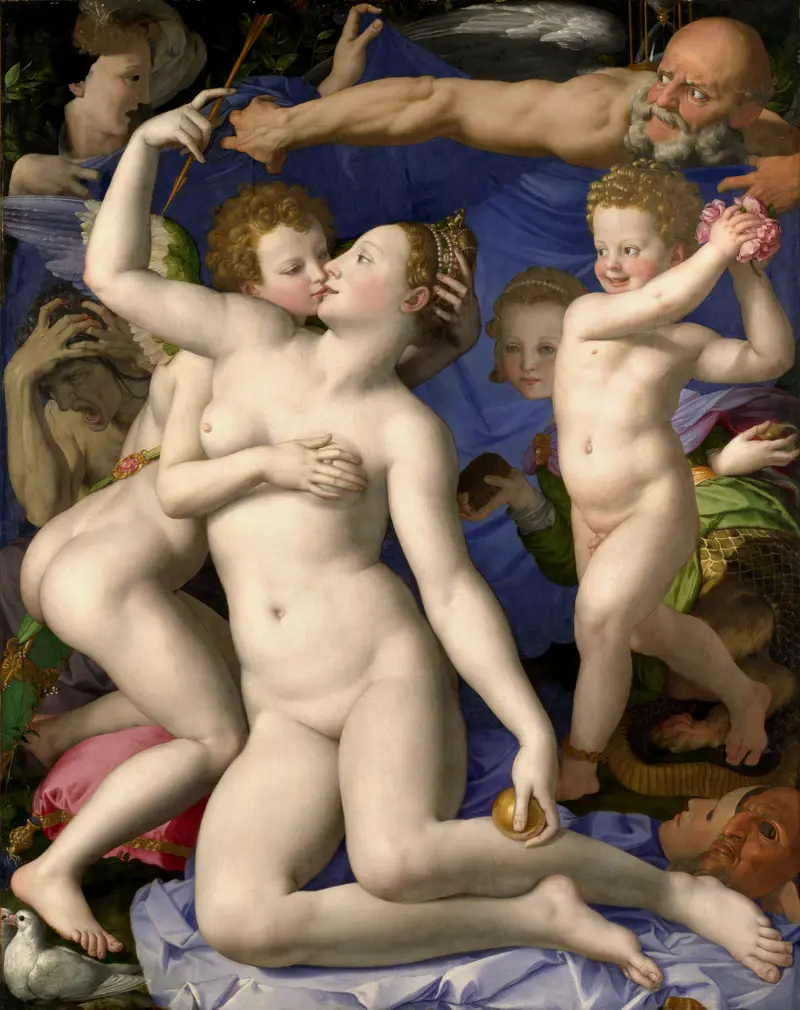 Mannerismc. 1520–1600
 Dutch Golden Age17th century
Northern Renaissance vs Italian Renaissance and Gothic
| Compared | Gothic | Northern Renaissance | Italian Renaissance |
|---|---|---|---|
| When | c. 1150–1500s | 15th–16th century | c. 1400–1600 |
| Where | Northern France, then western Europe and Italy | Flanders and the Netherlands, Germany | Italy: Florence and Rome |
| Figures | Elongated figures in flowing drapery | Real people in minute detail, down to fur, jewels and wrinkles | Lifelike, idealized figures after Greek and Roman models |
| Paint and light | Gold grounds and rich color | Oil paint in translucent glazes, natural light on every surface | Linear perspective, natural light, balanced compositions |
| Famous example | Giotto, Ognissanti Madonna | Van Eyck, The Arnolfini Portrait | Leonardo, Mona Lisa |
| Key artists | Giotto, Simone Martini, Giovanni di Paolo | Van Eyck, Bosch, Dürer, Holbein, Bruegel | Leonardo, Michelangelo, Raphael |
List of Northern Renaissance paintings and their artists
The Northern Renaissance paintings above: who painted them, when, and where each one is today.
Show the listHide the list
| Painting | Painted by | Year | Medium | Size | Located in | City |
|---|---|---|---|---|---|---|
| The Garden of Earthly Delights | Hieronymus Bosch | c. 1490–1500 | Oil and grisaille on oak panels | 185.8 × 172.5 cm (73.1 × 67.9 in) (center panel) | Museo del Prado | Madrid |
| The Arnolfini Portrait | Jan van Eyck | 1434 | Oil on oak | 82.2 × 60 cm (32.4 × 23.6 in) | National Gallery London | London |
| The Ghent Altarpiece (Adoration of the Mystic Lamb) | Hubert and Jan van Eyck | completed 1432 | Oil on oak panels | about 375 × 520 cm (open) | St Bavo's Cathedral, Ghent | Ghent |
| The Hunters in the Snow (Winter) | Pieter Bruegel the Elder | 1565 | Oil on wood | 117 × 162 cm (46.1 × 63.8 in) | Kunsthistorisches Museum | Vienna |
| Netherlandish Proverbs | Pieter Bruegel the Elder | 1559 | Oil on oak panel | 117 × 163 cm (46.1 × 64.2 in) | Gemäldegalerie Berlin | Berlin |
| The Tower of Babel | Pieter Bruegel the Elder | 1563 | Oil on oak panel | 114 × 155 cm (44.9 × 61 in) | Kunsthistorisches Museum | Vienna |
| The Ambassadors | Hans Holbein the Younger | 1533 | Oil on oak | 207 × 209.5 cm (81.5 × 82.5 in) | National Gallery London | London |
| Self-Portrait with Fur-Trimmed Robe | Albrecht Dürer | 1500 | Oil on lime panel | 67.1 × 48.9 cm (26.4 × 19.3 in) | Alte Pinakothek | Munich |
| The Descent from the Cross | Rogier van der Weyden | before 1443 | Oil on panel | 204.5 × 261.5 cm (80.5 × 10³ in) | Museo del Prado | Madrid |
| The Virgin of Chancellor Rolin | Jan van Eyck | c. 1430–1435 | Oil on oak | 66 × 62 cm (26 × 24.4 in) | Louvre Museum | Paris |
| The Ship of Fools | Hieronymus Bosch | after 1491 | Oil on oak | 58 × 33 cm (22.8 × 13 in) | Louvre Museum | Paris |
| Portrait of a Young Girl | Petrus Christus | c. 1470 | Oil on oak panel | 29 × 22.5 cm (11.4 × 8.9 in) | Gemäldegalerie Berlin | Berlin |
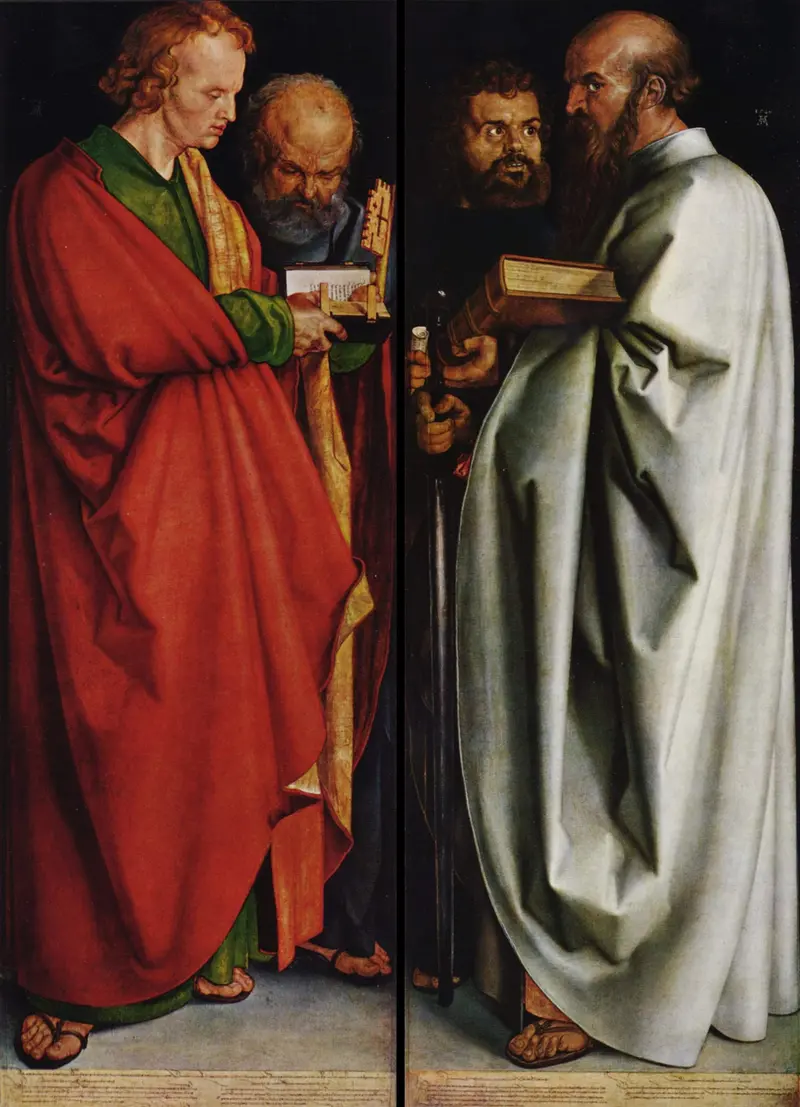
| The Four Apostles | Albrecht Dürer | 1526 | Oil on panel | 212.8 × 76.2 cm (83.8 × 30 in) (each panel) | Alte Pinakothek | Munich |
| Portrait of a Lady | Rogier van der Weyden | c. 1460 | Oil on panel | 34 × 25.5 cm (13.4 × 10 in) | National Gallery of Art Washington | Washington |
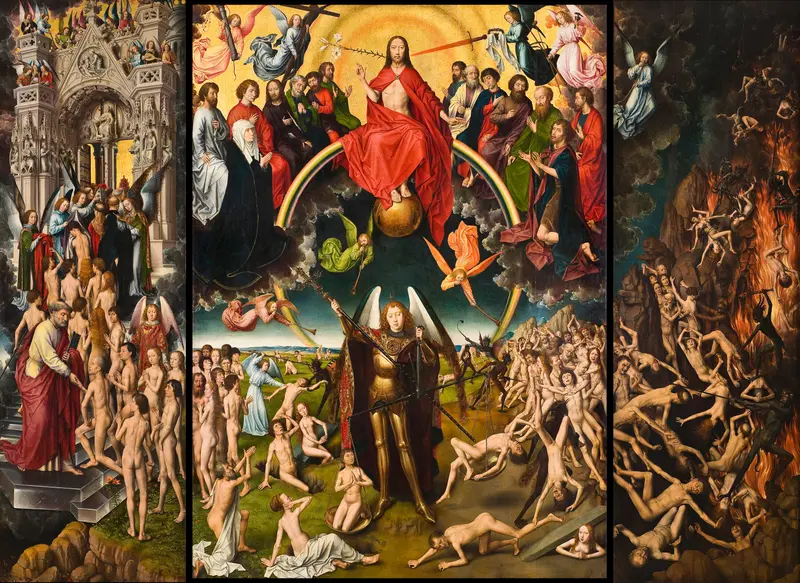
| The Last Judgment | Hans Memling | c. 1467–1473 | Oil on oak panels | 223.5 × 306 cm (88 × 120.5 in) (open) | National Museum in Gdańsk | Gdańsk |
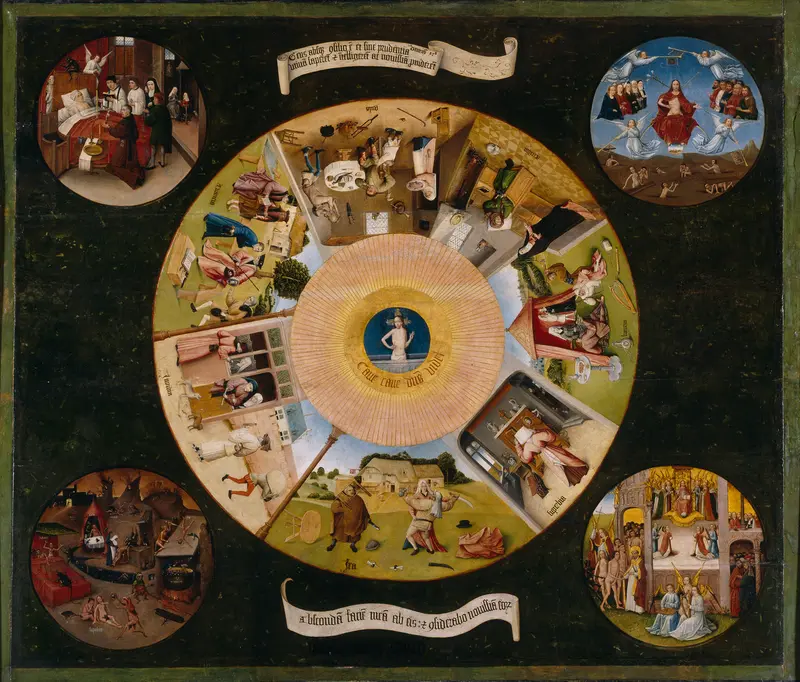
| The Seven Deadly Sins and the Four Last Things | Hieronymus Bosch | c. 1505–1510 | Oil on poplar panel | 119.5 × 139.5 cm (47 × 54.9 in) | Museo del Prado | Madrid |
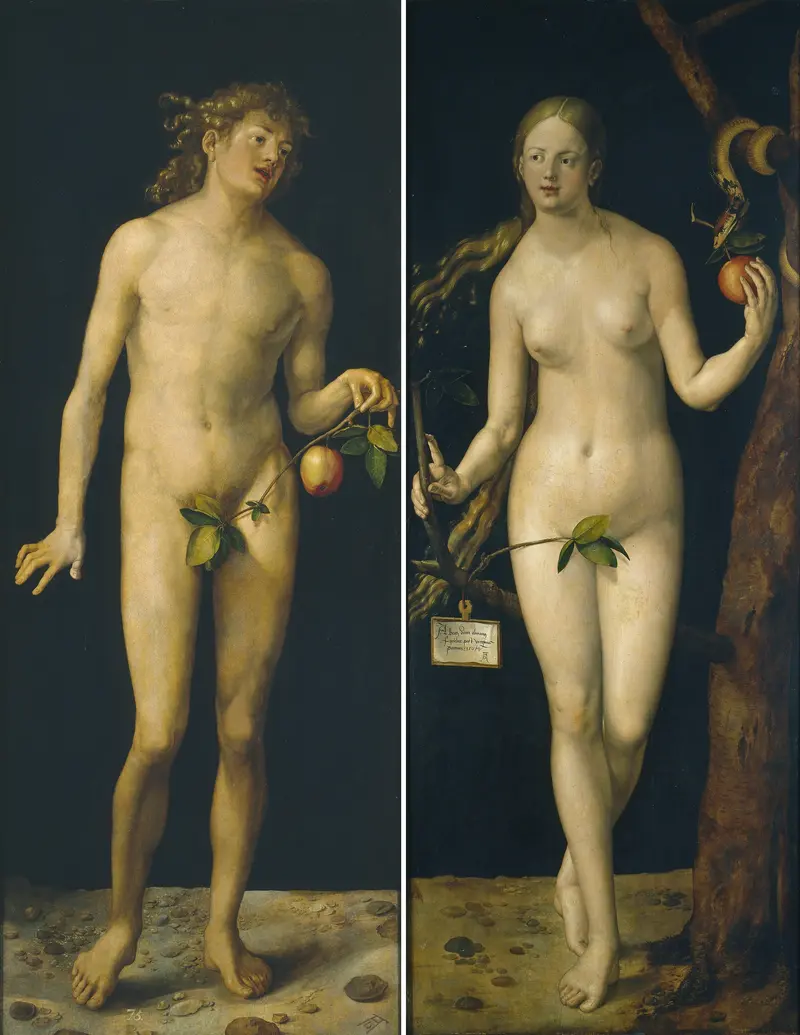
| Adam and Eve | Albrecht Dürer | 1507 | Oil on panel | 209 cm high (each panel) | Museo del Prado | Madrid |
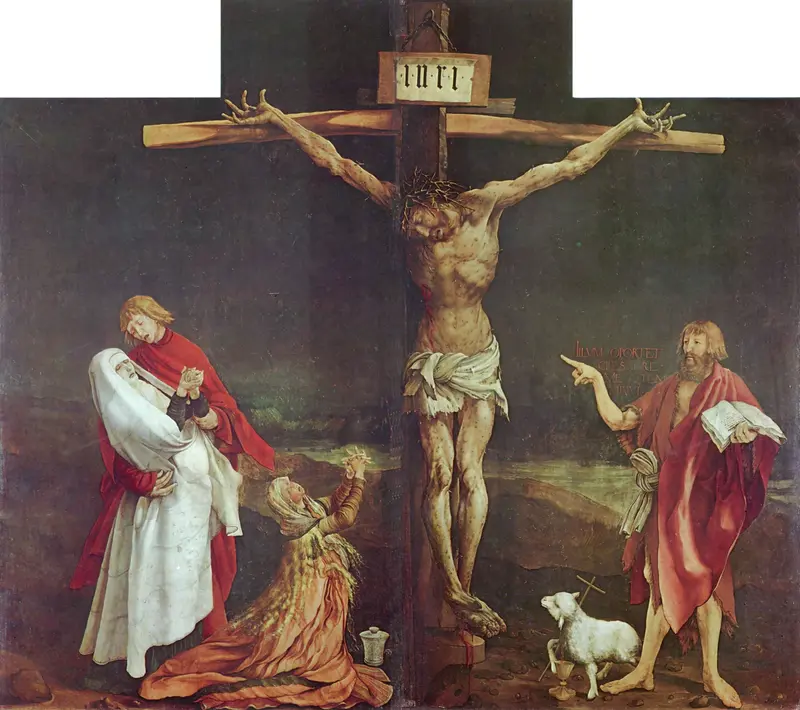
| The Isenheim Altarpiece (The Crucifixion) | Matthias Grünewald | 1512–1516 | Oil and tempera on lime panels | 534 × 665 cm (210.2 × 261.8 in) (whole altarpiece) | Unterlinden Museum | Colmar |
| The Battle of Alexander at Issus | Albrecht Altdorfer | 1529 | Oil on lime panel | 158.4 × 120.3 cm (62.4 × 47.4 in) | Alte Pinakothek | Munich |
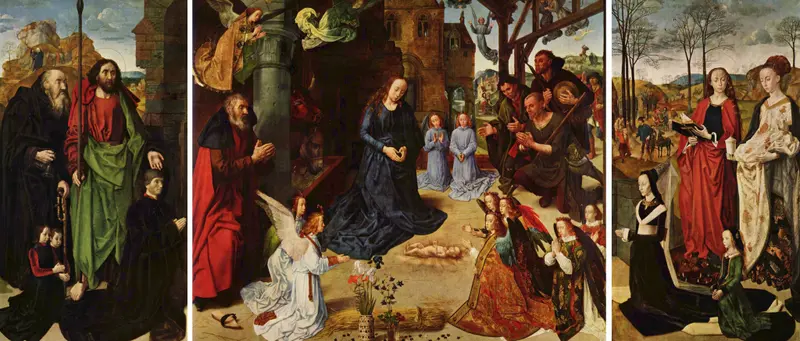
| The Portinari Triptych | Hugo van der Goes | 1477–1478 | Oil on panel | 253 × 586 cm (99.6 × 230.7 in) (open) | Uffizi Gallery | Florence |
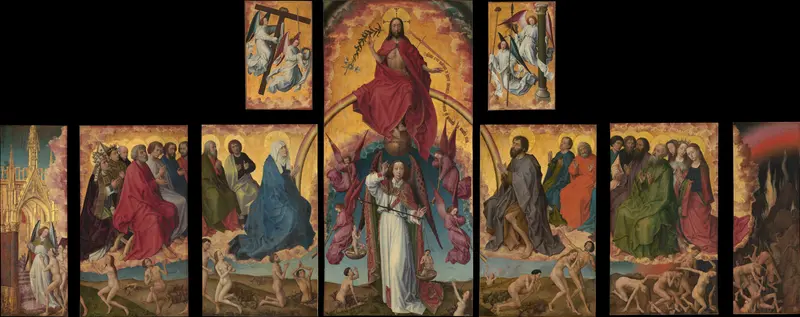
| The Last Judgment (Beaune Altarpiece) | Rogier van der Weyden | c. 1443 | Oil on oak panels | 220 × 546 cm (86.6 × 215 in) (open) | Hospices de Beaune | Beaune |
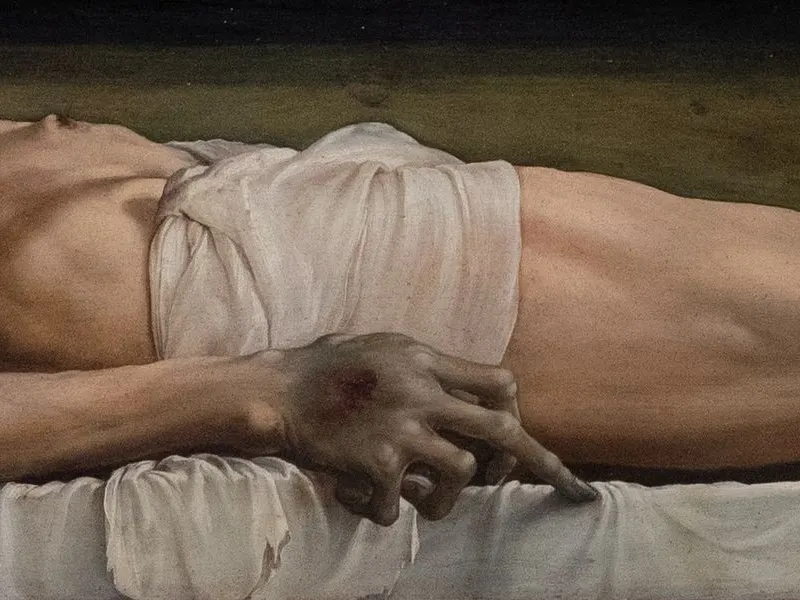
| The Body of the Dead Christ in the Tomb | Hans Holbein the Younger | c. 1520 | Oil on panel | 30.5 × 200 cm (12 × 78.7 in) | Kunstmuseum Basel | Basel |
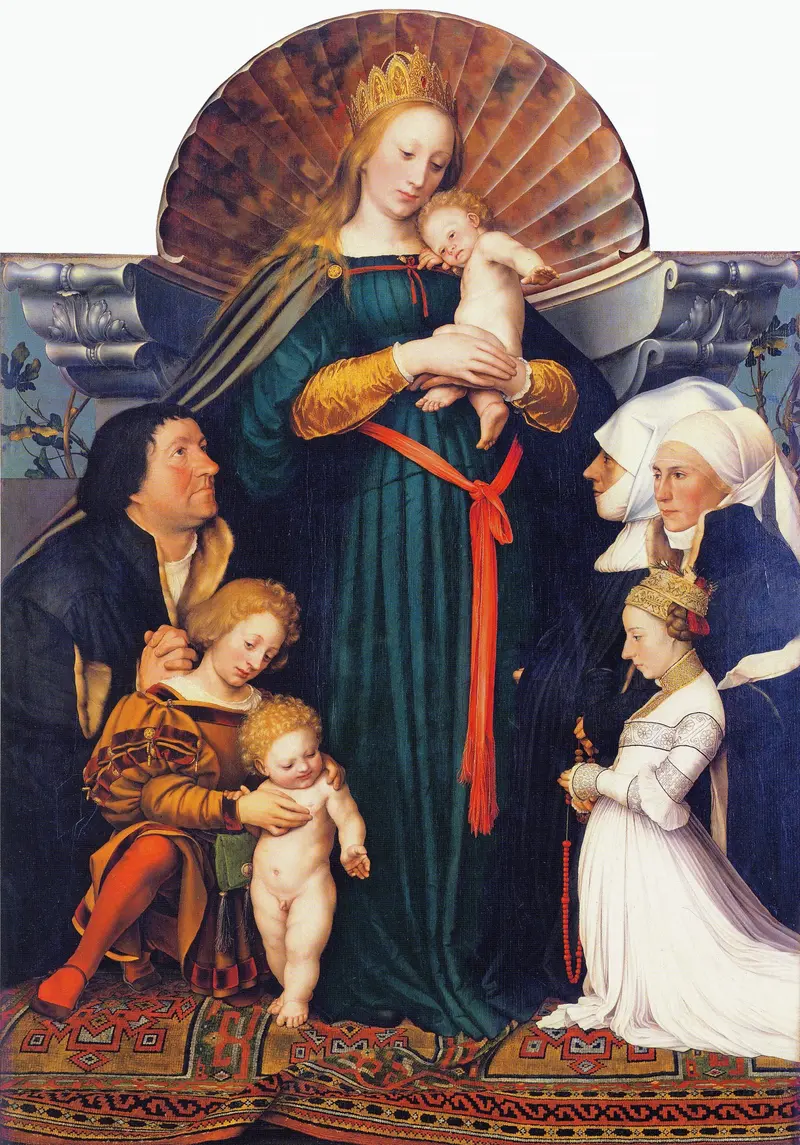
| The Darmstadt Madonna | Hans Holbein the Younger | 1526 | Oil on panel | 146.5 × 102 cm (57.7 × 40.2 in) | Würth Collection | Schwäbisch Hall |
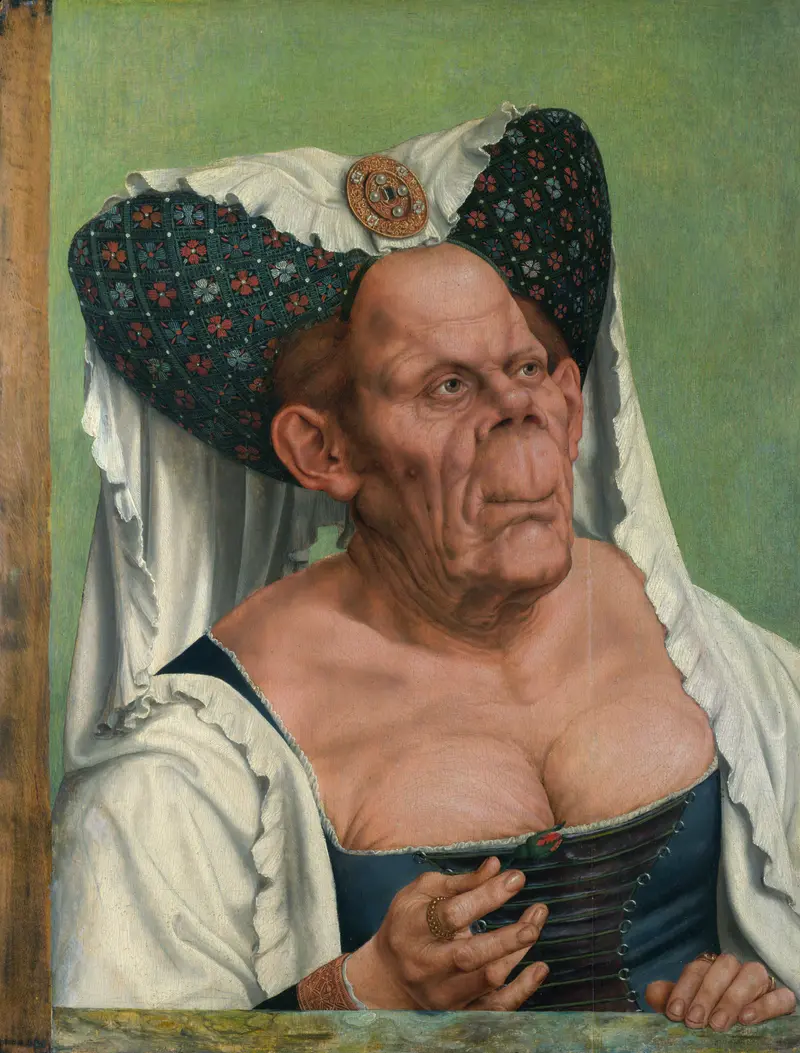
| An Old Woman (The Ugly Duchess) | Quentin Massys | c. 1513 | Oil on oak | 62.4 × 45.5 cm (24.6 × 17.9 in) | National Gallery London | London |
| The Fountain of Youth | Lucas Cranach the Elder | 1546 | Oil on lime panel | 120.6 × 186.1 cm (47.5 × 73.3 in) | Gemäldegalerie Berlin | Berlin |
Northern Renaissance: questions and answers
What does Northern Renaissance mean in art?
In art, the Northern Renaissance means the painting of northern Europe, chiefly Flanders, the Netherlands and Germany, in the 15th and 16th centuries. The Getty's art vocabulary describes it as the style that came from the spread of the Renaissance from Italy into northern Europe, marked by Classical and Italian Renaissance ideals, an emphasis on detail, optical clarity and the use of oil paint and glazes to create brilliant colors. Its first great painters, Robert Campin and Jan van Eyck, worked in the southern Netherlands in the early 1400s; the National Gallery in London calls them the founders of the realistic style of oil painting there.
Sources: Getty AAT: Northern Renaissance · National Gallery: Robert Campin · National Gallery: Jan van Eyck
What are the characteristics of Northern Renaissance art?
Northern Renaissance paintings are minutely detailed and realistic, built up in translucent layers of oil paint that capture surfaces and natural light; the National Gallery in London credits Jan van Eyck with this style. Other hallmarks are portraits of real merchants, courtiers and their wives; religious scenes set in rooms and towns of the painters' own day; landscapes that grow into subjects of their own, like Joachim Patinir's world landscapes; scenes of everyday life by Bruegel and Pieter Aertsen; and the fantastic visions of Hieronymus Bosch. The Getty's art vocabulary sums up the style as detail, optical clarity and brilliant color from oil glazes.
Sources: National Gallery: Jan van Eyck · Getty AAT: Northern Renaissance · Royal Museum of Fine Arts Antwerp (KMSKA) · Gemäldegalerie, Staatliche Museen zu Berlin · National Gallery: Pieter Aertsen · National Gallery: Hieronymus Bosch
When was the Northern Renaissance?
The Northern Renaissance ran from the early 15th century to the end of the 16th. The National Gallery in London's glossary says the Renaissance revival took place in Italy from the 14th century and in Northern Europe a little later, and broadly covers the 15th century to the end of the 16th. Robert Campin was active in Tournai from 1406 and Jan van Eyck's dated paintings begin in 1432; Albrecht Dürer died in 1528, Hans Holbein the Younger in 1543 and Pieter Bruegel the Elder in 1569.
Sources: National Gallery: Renaissance (glossary) · National Gallery: Robert Campin · National Gallery: Jan van Eyck · National Gallery: Albrecht Dürer · National Gallery: Hans Holbein the Younger · National Gallery: Pieter Bruegel the Elder
Where did the Northern Renaissance take place?
It began in the cities of the southern Netherlands, which in the early 15th century belonged to the Duchy of Burgundy: Tournai, Bruges, Ghent, Brussels, Louvain and later Antwerp. In Germany it centered on Dürer's Nuremberg, Cranach's Wittenberg and Altdorfer's Regensburg. The Getty's art vocabulary adds that the new style took hold at the French royal court after the invasion of Italy in 1494, in the Netherlands under Margaret of Austria and in Germany under Emperor Maximilian, and was later adopted by the dukes of Bavaria and the English royal court, where Holbein portrayed the nobility of Henry VIII's court.
Sources: National Gallery: Robert Campin · National Gallery: Jan van Eyck · St Bavo's Cathedral, Ghent: The Ghent Altarpiece · National Gallery: Rogier van der Weyden · National Gallery: Dirk Bouts · National Gallery: Quinten Massys · Alte Pinakothek, Munich · National Gallery: Lucas Cranach the Elder · National Gallery: Albrecht Altdorfer · Getty AAT: Northern Renaissance · National Gallery: Hans Holbein the Younger
Who were the main Northern Renaissance artists?
The main Northern Renaissance artists are Jan van Eyck, Rogier van der Weyden, Hans Memling and Hieronymus Bosch in the Netherlands; Albrecht Dürer, Lucas Cranach the Elder, Albrecht Altdorfer and Hans Holbein the Younger in Germany; and Pieter Bruegel the Elder in Antwerp and Brussels. The National Gallery in London calls Rogier one of the most profound and influential painters of the 15th century, Dürer the archetypal Renaissance artist of Northern Europe, Cranach the chief artist of the Reformation and Holbein one of the most accomplished portraitists of the 16th century.
Sources: National Gallery: Rogier van der Weyden · National Gallery: Albrecht Dürer · National Gallery: Lucas Cranach the Elder · National Gallery: Hans Holbein the Younger · National Gallery: Pieter Bruegel the Elder · Gemäldegalerie, Staatliche Museen zu Berlin · Kunsthistorisches Museum (Google Arts & Culture)
How was the Northern Renaissance different from the Italian Renaissance?
Italian Renaissance painters revived the art of ancient Greece and Rome; northern painters started from close observation of surfaces, light and everyday detail, painted in oil glazes. The National Gallery in London says Dürer, who visited Italy, added an interest in proportion and perspective to his Northern taste for surface detail. Ideas traveled both ways: the gallery notes that Van Eyck's and Campin's innovations in oil painting were introduced to Italy in the 15th century, and that Dürer influenced many Italian artists through his prints.
Sources: National Gallery: Renaissance (glossary) · National Gallery: Albrecht Dürer · Getty AAT: Northern Renaissance · National Gallery: Oil (glossary)
Did Jan van Eyck invent oil painting?
No. Oil paint was already used in Northern Europe in the 13th and 14th centuries, the National Gallery in London says, but Jan van Eyck and Robert Campin exploited its properties in new ways. Van Eyck built up paint in translucent layers, or glazes, to give minutely realistic surfaces and natural light, and the Harvard Art Museums explain that oil let painters layer pigments in translucent glazes blended into a seamless finish. Technical study of the Arnolfini Portrait found nothing unusual in its pigments: the illusion relied on Van Eyck's skill.
Sources: National Gallery: Oil (glossary) · National Gallery: Jan van Eyck · National Gallery: Glaze (glossary) · Harvard Art Museums: The Virgin and Child (workshop of Dieric Bouts) · National Gallery London
What is the symbolism in the Arnolfini Portrait?
The objects in the Arnolfini Portrait mainly proclaim the couple's wealth and status, the National Gallery in London says: the oranges were extremely expensive, the bed was the costliest furniture in the house, and the carpet, the brass chandelier and the fur-trimmed clothes were all luxuries. The little dog is a common sign of faithfulness in marriage, and the roundels around the convex mirror show scenes from the Passion of Christ. The gallery no longer reads the picture as a marriage ceremony, and says the woman is not pregnant: she is holding up her bulky gown, as ladies commonly did.
Sources: National Gallery London
What is the skull in The Ambassadors?
The long, slanting shape between the two men's feet in Holbein's The Ambassadors is a skull, painted in distorted perspective, an effect called anamorphosis, so that it only looks right when you view the picture from the lower right, the National Gallery in London explains. Renaissance portraits often included such reminders of the frailty of life, and a half-hidden crucifix in the upper left corner hints at the hope of salvation. Holbein painted the portrait in London in 1533.
Sources: National Gallery London
What are Albrecht Dürer's famous works?
Albrecht Dürer's famous works include his Self-Portrait of 1500 in Munich, the engravings Adam and Eve (1504), Knight, Death, and the Devil (1513), Saint Jerome in His Study and Melencolia I (both 1514), the Rhinoceros woodcut of 1515 and the Young Hare watercolor of 1502. The Alte Pinakothek calls the self-portrait probably the most unusual in the history of art, and the Albertina in Vienna prizes the hare for its extraordinarily realistic depiction. His painted panels of Adam and Eve, from 1507, are in the Museo del Prado in Madrid.
Sources: Alte Pinakothek, Munich · Metropolitan Museum of Art: Adam and Eve · Metropolitan Museum of Art: Knight, Death, and the Devil · Metropolitan Museum of Art: Saint Jerome in His Study · Metropolitan Museum of Art: Melencolia I · Albertina, Vienna (Google Arts & Culture)
How did the Reformation change Northern Renaissance art?
The Reformation, which began when Martin Luther criticized abuses in the Catholic Church in 1517, cut the demand for religious images in much of northern Europe, and artists such as Holbein had to look for other work, the National Gallery in London says. In England, the Museo Thyssen-Bornemisza notes, portraiture became almost the only genre left to artists after Henry VIII broke with Rome. Lucas Cranach, court painter to the Elector of Saxony, the patron of Luther, became the chief artist of the Reformation, painting Lutheran subjects and portraits.
Sources: National Gallery: The Reformation (glossary) · National Gallery: Hans Holbein the Younger · Museo Nacional Thyssen-Bornemisza: Portrait of Henry VIII · National Gallery: Lucas Cranach the Elder · Alte Pinakothek, Munich
What is Early Netherlandish painting?
Early Netherlandish painting is the art of the southern Netherlands in the 15th and early 16th centuries; in Dutch it is called Vlaamse primitieven, the Flemish Primitives, the Getty's art vocabulary records. Its painters include Robert Campin, Jan van Eyck, Rogier van der Weyden, Petrus Christus, Dieric Bouts, Hans Memling and Gerard David, whom the National Gallery in London calls the last great 15th-century painter from Bruges working in the tradition of realism founded by Van Eyck.
Sources: Getty AAT: Early Netherlandish · National Gallery: Robert Campin · National Gallery: Rogier van der Weyden · National Gallery: Petrus Christus · National Gallery: Dirk Bouts · National Gallery: Hans Memling · National Gallery: Gerard David
Where can you see Northern Renaissance paintings?
Madrid's Museo del Prado holds Bosch's The Garden of Earthly Delights and Rogier van der Weyden's The Descent from the Cross. The National Gallery in London has Van Eyck's Arnolfini Portrait and Holbein's The Ambassadors; Vienna's Kunsthistorisches Museum has Bruegel's The Hunters in the Snow and The Tower of Babel; Berlin's Gemäldegalerie has his Netherlandish Proverbs; and Munich's Alte Pinakothek has Dürer's Self-Portrait of 1500 and Altdorfer's The Battle of Alexander at Issus. The Ghent Altarpiece is still in St Bavo's Cathedral in Ghent.
Sources: National Gallery: Hieronymus Bosch · National Gallery: Rogier van der Weyden · National Gallery London · National Gallery London · Kunsthistorisches Museum (Google Arts & Culture) · Gemäldegalerie, Staatliche Museen zu Berlin · Alte Pinakothek, Munich · Alte Pinakothek, Munich · St Bavo's Cathedral, Ghent: The Ghent Altarpiece
Is Northern Renaissance art in the public domain, and can I download it free?
Yes. Every famous painting on this page was made before 1600, so it is in the public domain in the United States and in countries where copyright ends 70 years after the artist's death. You can download these paintings free and use them for anything, including commercial projects. A few countries have their own rules on photographs of artworks, so check them if you publish outside the U.S.
Sources: Cornell University Library: Copyright Term and the Public Domain
How we chose the famous paintings
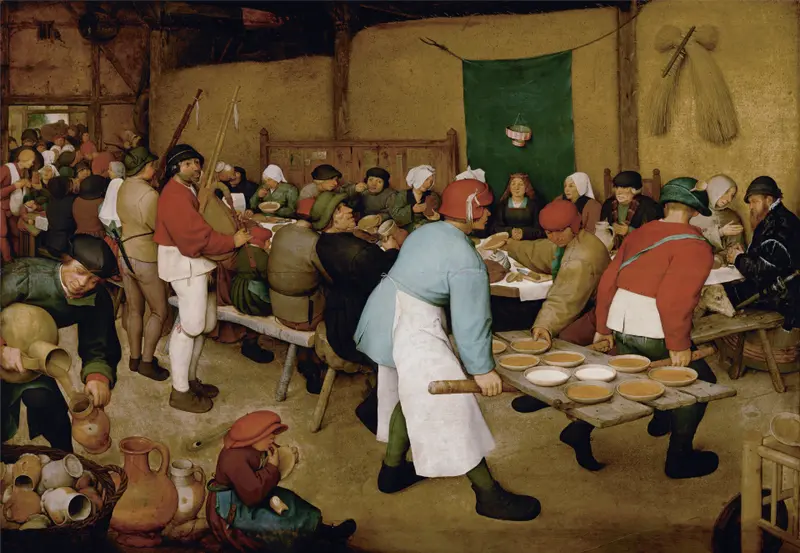
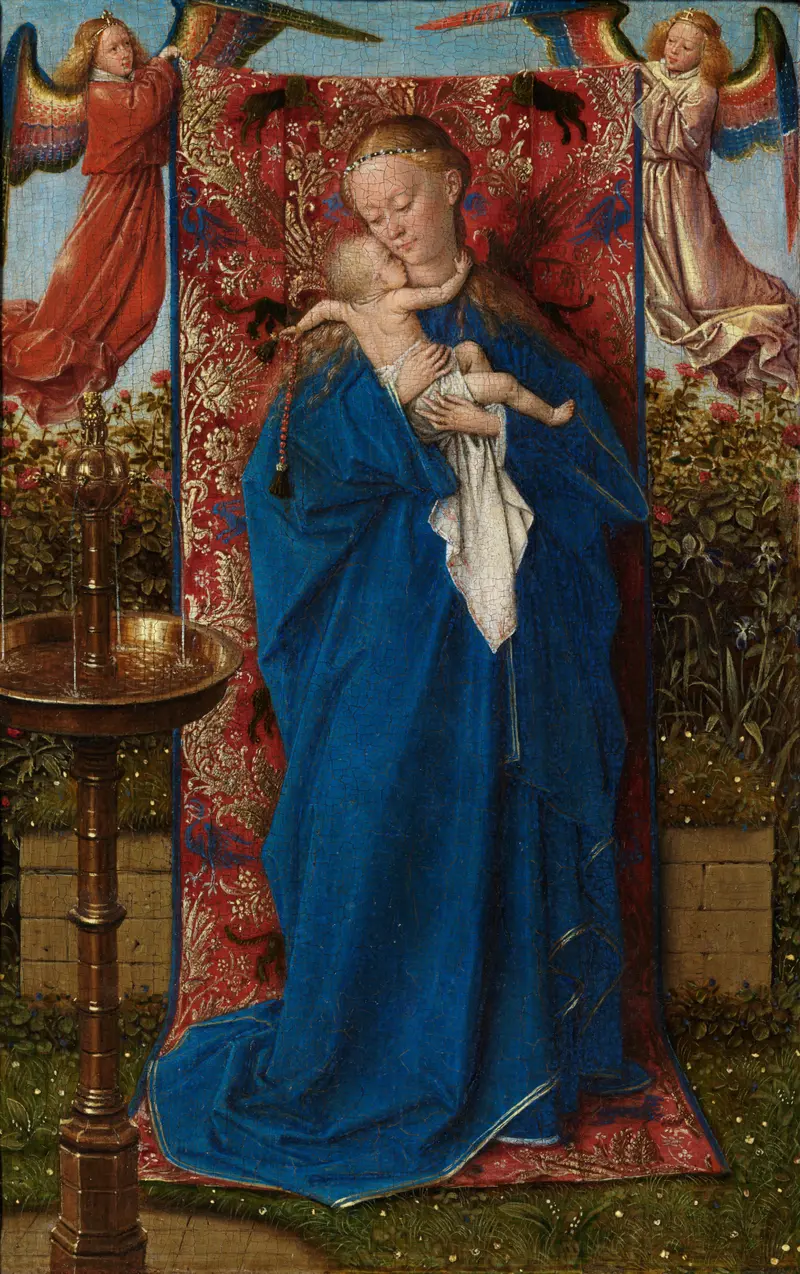
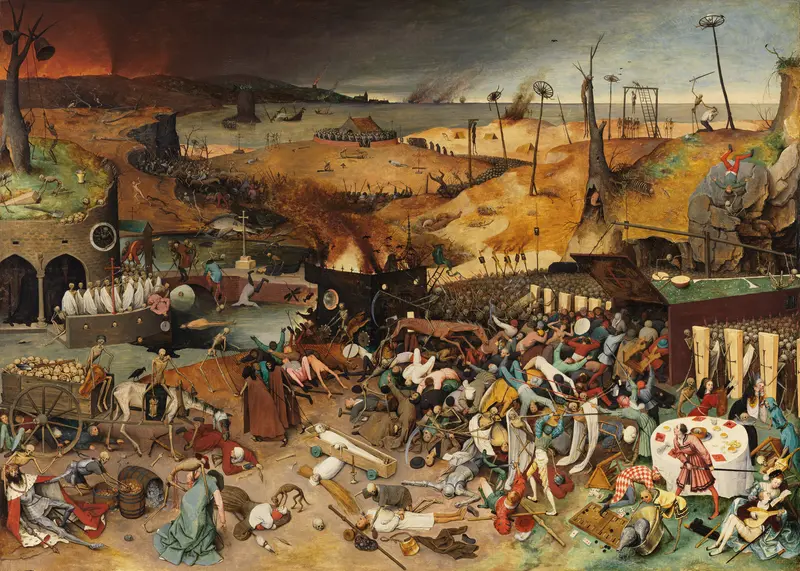
The famous paintings on this page are the Northern Renaissance paintings known most widely around the world, measured by the number of languages that have an encyclopedia entry about each one, checked in November 2026. No painter has more than three of them, which is why Bruegel's The Triumph of Death and The Peasant Wedding and Dürer's self-portrait of 1498 are not on the list, and Van Eyck's Madonna with Canon van der Paele appears in the Early Netherlandish row instead.
We include only paintings that our catalogue, the holding museum or Wikidata classes as Northern Renaissance or Early Netherlandish. Albrecht Dürer's prints, such as Melencolia I and The Rhinoceros, have their own row, because they are engravings and woodcuts rather than paintings. The Ghent Altarpiece is a polyptych of many panels in their frames, so we show its central lower panel, and we show the Isenheim Altarpiece by its Crucifixion. Robert Campin's Mérode Altarpiece is not on the list because we do not yet have an image of it without its frames.
Dates, sizes and locations come from the museums' own records and from Wikidata.
Spotted a mistake? Tell us and we will correct it.