Monarch Beech — History & Facts
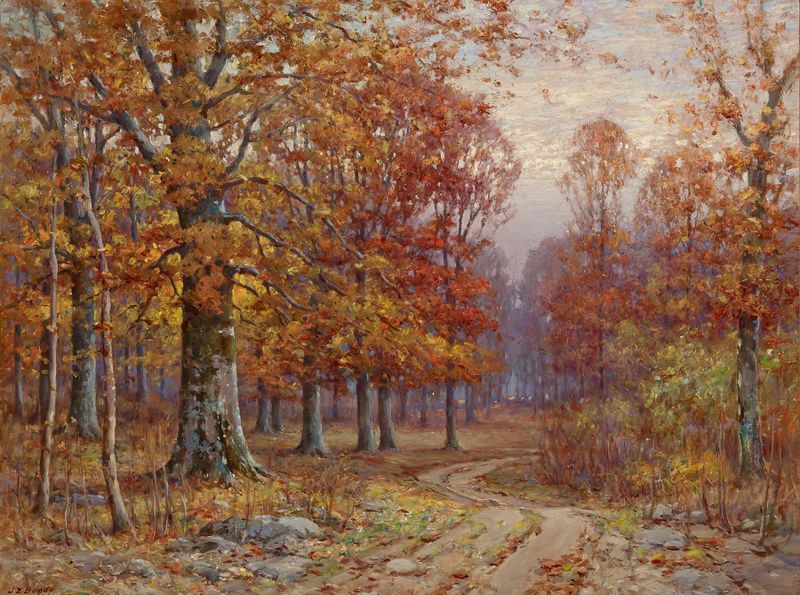
What secret hides in the quiet of the canvas? There’s a palpable weight to the stillness, a haunting echo of nature’s whispered sorrows. Look to the left at the gnarled trunk of the beech tree, its bark a tapestry of textures, rich browns deepening into shadow. The artist’s brushstrokes create a dance between light and shadow, where sunlight filters through the sparse foliage and casts a gentle illumination upon the muted earth below. Notice the palette – earthy greens and browns blend seamlessly, evoking the tranquility of an autumn afternoon, while hints of golden light suggest fleeting warmth, a moment caught in time. Beneath the surface, a profound melancholy resonates.
The solitary tree stands resilient but isolated, evoking themes of solitude and the passage of time. Each fallen leaf, rendered with meticulous detail, hints at the inevitability of change and mortality, while the surrounding emptiness amplifies the sense of longing. There is a poignant contrast between life and decay, a reminder of nature’s cyclical beauty, and the bittersweet reflections it inspires. In the early 1900s, while creating this piece, Bundy was deeply influenced by the American Impressionist movement, focusing on capturing the serene beauty of rural landscapes.
Working in his studio in the Midwest, he sought to convey the emotional connection between man and nature during a time when industrialization was rapidly altering the American landscape. This artwork represents his dedication to preserving the quiet moments of beauty amidst a world in flux.