Woods Interior — History & Facts
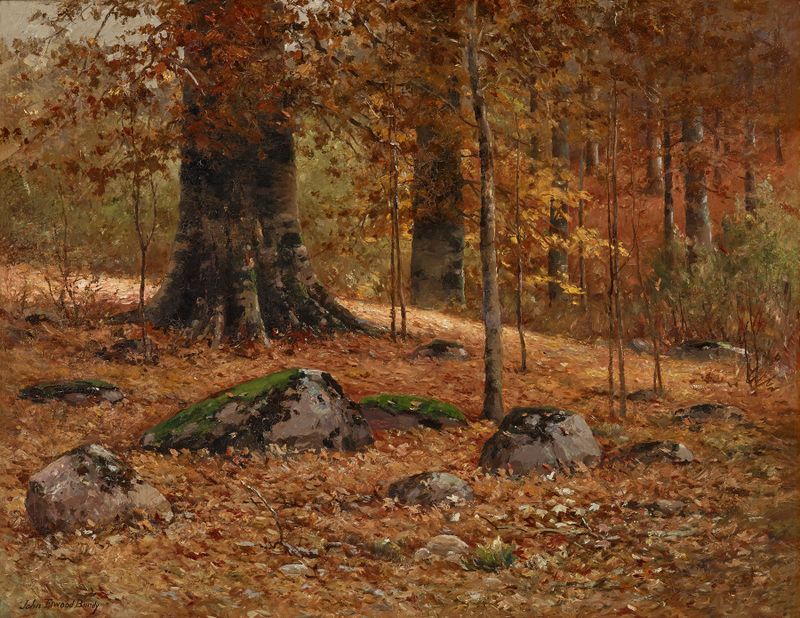
This poignant reflection resonates within the tranquil depths of each woodland, where innocence wades through shadows, hinting at more than just the surface beauty of nature. Focus on the interplay of light and dark as you gaze across the canvas. Observe how dappled sunlight filters through the foliage, illuminating patches of delicate greens and earthy browns. The brushwork invites you to explore the textured bark of the trees, their stoic presence juxtaposed against the gentle sway of grass below.
This composition, with its layered depths, creates a serene yet melancholic atmosphere, urging the viewer to delve deeper. Hidden beneath the serene surface lies a tension that speaks to innocence clashing with the inevitability of change. The juxtaposition of vibrant life and looming shadows hints at the fragility of nature and the delicate balance between joy and sorrow. Each detail, from the curling leaves to the subtle movement of the shadows, encapsulates the passage of time—a reminder of the beauty in transience and the whispers of stories left untold. At the time of creating this work, Bundy was immersed in the American landscape tradition, capturing the essence of nature around him.
Active in the late 19th century, he painted amidst a growing appreciation for natural beauty, where each brushstroke reflected both personal introspection and a broader cultural movement that celebrated the innocence found in the wilderness, even as it faced encroaching change.