Monkey with Baby — History & Facts
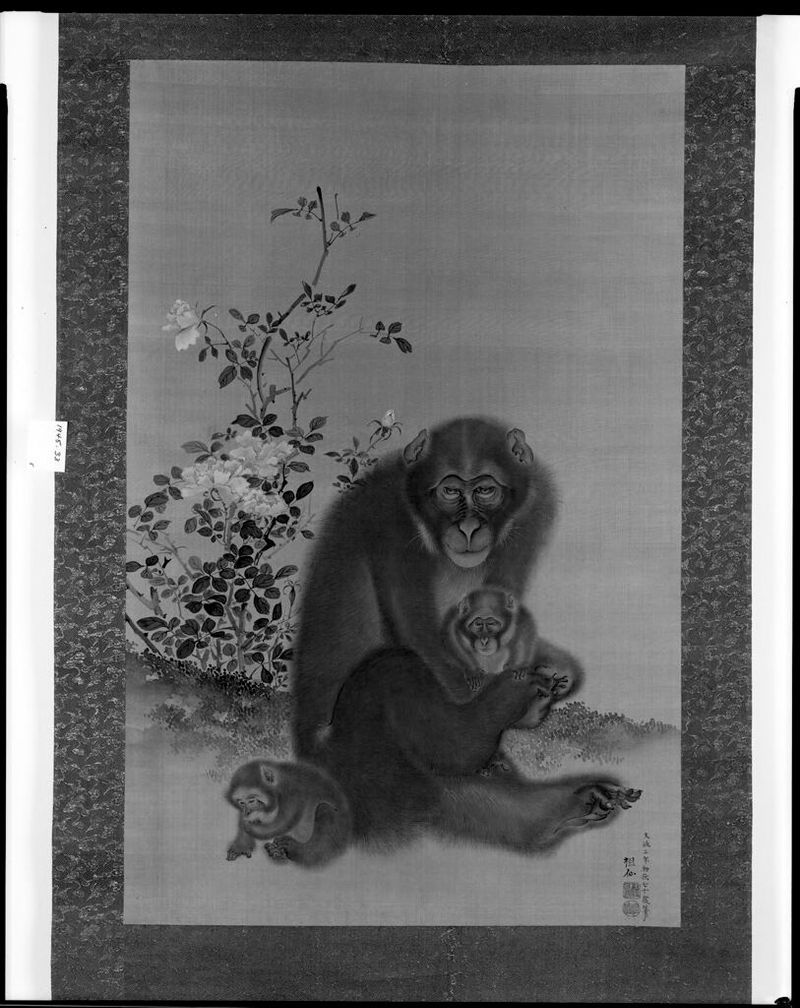
In the quiet embrace of nature, a mother monkey cradles her baby, an intimate moment underscored by an undercurrent of melancholy. The scene whispers of tenderness and vulnerability, inviting the viewer to witness a bond that transcends time and species, offering a glimpse into the heart of existence. Focus on the delicate brushwork that brings the figures to life, where the deep umber of the mother’s fur contrasts with the lighter tones of the baby. Notice how the artist captures the gentle curve of their bodies, emphasizing the protective instinct of the mother.
The subtle strokes create a soft, almost ethereal quality, while the background remains intentionally understated, allowing the viewer's attention to linger on this tender tableau. Yet, beneath the surface of this maternal love lies an unsettling tension. The mother’s gaze, both watchful and weary, hints at the struggles and dangers lurking in their world. The juxtaposition of the serene moment against the potential vulnerabilities of wildlife invokes a profound sense of empathy.
Here, Sosen encapsulates the fragility of life, reminding us that beauty is often accompanied by an inherent sadness. Created during Japan's Edo period, this piece reflects a time when traditional art flourished amidst a changing society. Mori Sosen, known for his exquisite depictions of animals, painted this piece between the 17th and 19th centuries. In a world where the natural and cultural landscapes were evolving, Sosen's work stands as a testament to the enduring connection between humans and nature, even as societal shifts began to reshape their interactions.