Monkeys: Mother and Two Children — History & Facts
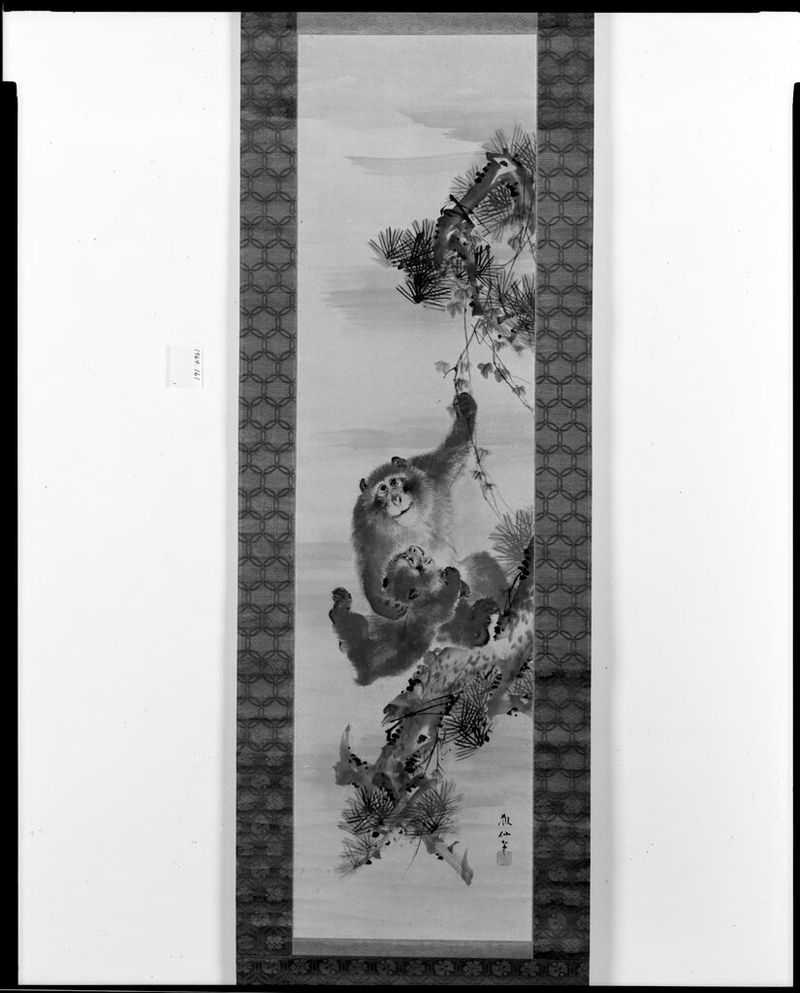
Can beauty exist without sorrow? In Mori Sosen's exquisite portrayal, the delicate relationship of a mother monkey and her two children hints at the madness of existence woven through tenderness and vulnerability. Look closely at the figures, with the mother positioned centrally, her gaze tender yet watchful. Notice how the light dances across their fur, illuminating the intricate details of their expressions and the texture of the branches they inhabit. The subtle hues of browns and grays contrast against the soft pastels of the background, creating a sense of intimacy within a wild world.
The careful brushwork and balance of composition invite you to linger, making the scene feel both serene and charged with an unspoken tension. Delve deeper into the juxtaposition of innocence and the rawness of survival. The playful gestures of the young monkeys, one reaching for the unseen, speak of curiosity and playfulness, while the mother's protective stance reveals an underlying anxiety. This balance of joy and trepidation encapsulates a broader commentary on motherhood and the chaos that often shadows it.
The wildness of their environment serves as a reminder of life’s unpredictability, suggesting that beauty is often entangled with sorrow and madness. Mori Sosen, a renowned Edo period artist, painted this piece during a time when Japan was experiencing significant cultural shifts. Between the 17th and 19th centuries, the country was transitioning from isolation to engagement with the world. This period saw Sosen mastering the art of depicting animals with profound emotional depth, reflecting both the natural world and the complexities of human experience.
His works resonated with contemporary audiences, serving as a poignant reminder of life’s dualities.