Mont Blanc Seen from Combloux — History & Facts
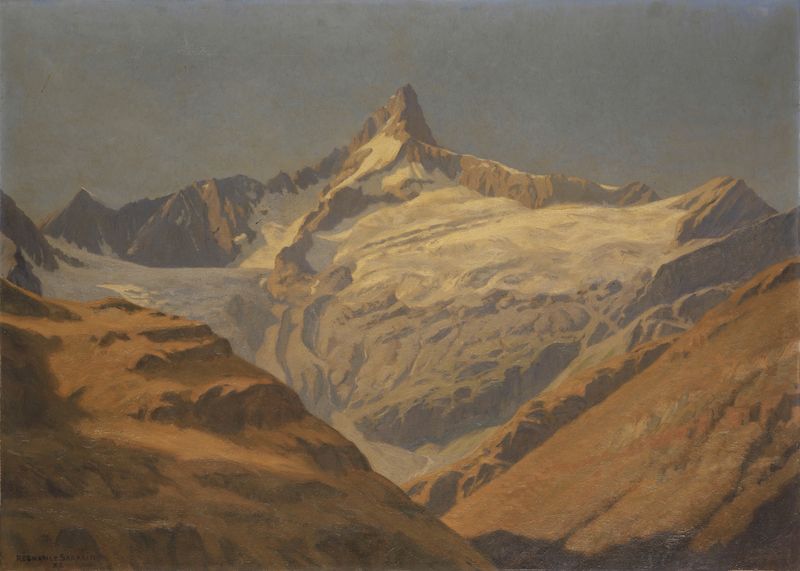
Could beauty survive in a century of chaos? Look closely at the gentle slopes of Mont Blanc, where the alpine majesty meets the soft hues of early dawn. Focus on the delicate interplay of light and shadow that caresses the mountain’s peaks, inviting you to trace the contours of its rugged facade. The muted greens and blues of the foreground contrast beautifully with the pristine white of the snow, creating a serene yet powerful composition that evokes both tranquility and grandeur. As you absorb the scene, consider the layers of meaning hidden within the painter's brushstrokes.
The majestic mountain stands as a symbol of resilience, its unwavering presence a stark contrast to the ephemeral nature of life below. The delicate clouds that drift around the summit may represent fleeting beauty, while the lush valley hints at the human struggle for permanence in an ever-changing world. Each element speaks of a legacy — one forged by nature and echoed by those who dare to capture its essence. Régnault Sarasin painted this work during a time when the art world was evolving rapidly, with movements like Impressionism challenging traditional ideals.
Working in the late 19th century, he was part of a generation that sought to express both the beauty of nature and the complexity of human experience. His attention to the subtleties of light and atmosphere reveals an artist in tune with the natural world and its profound significance in a time of modernization and upheaval.