The Matterhorn — History & Facts
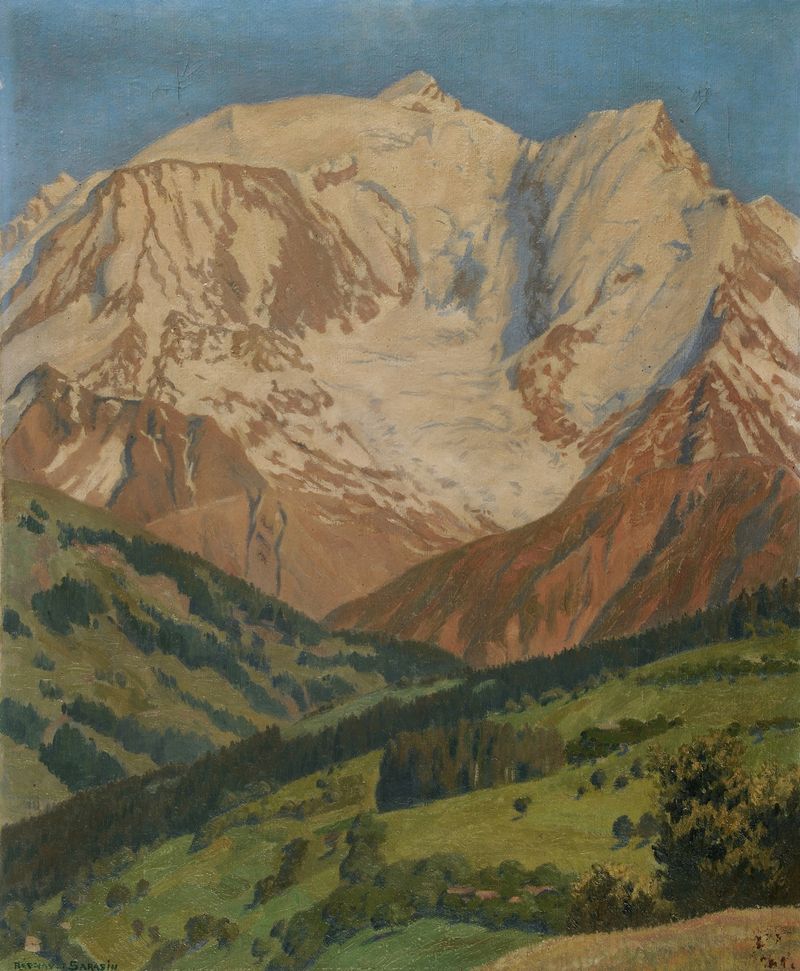
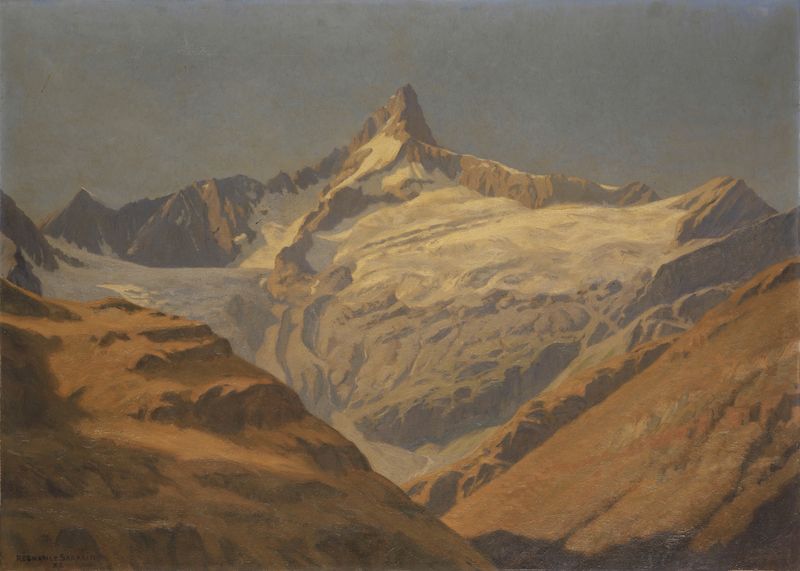
In the vastness of Régnault Sarasin's work, the haunting emptiness of the Matterhorn resonates deeply, evoking a profound sense of solitude and transience. Each brushstroke is an echo of a moment lost, a reminder of nature’s impermanence. Look closely at the towering peak, where cold blues and gritty greys coalesce, drawing your gaze upward. The jagged contours of the mountain slice through the canvas, while the swirling clouds dance ominously around its summit.
Notice how the subtle gradations of light and shadow play across the rugged surface, illuminating details only for them to slip back into obscurity, much like memories fading over time. Within this work lies a tension between grandeur and isolation. The powerful mountain stands resolute against the ephemeral sky, representing nature's unwavering permanence amidst the human experience of fleeting moments. The foreground, bare and uninviting, adds to the emotional weight, inviting reflection on our own place in the vast tapestry of existence.
The emptiness is palpable, both awe-inspiring and suffocating, serving as a poignant reminder of the solitude that accompanies the sublime. In 1933, Sarasin was immersed in the exploration of landscape painting, navigating the evolving artistic movements of his time. Painted in France, during a period marked by the rise of modernism and a newfound appreciation for nature's raw beauty, this work captures both the artist's personal journey and the broader context of an art world embracing abstraction while still yearning for the tangible.