Montmartre, effet de neige. — History & Facts
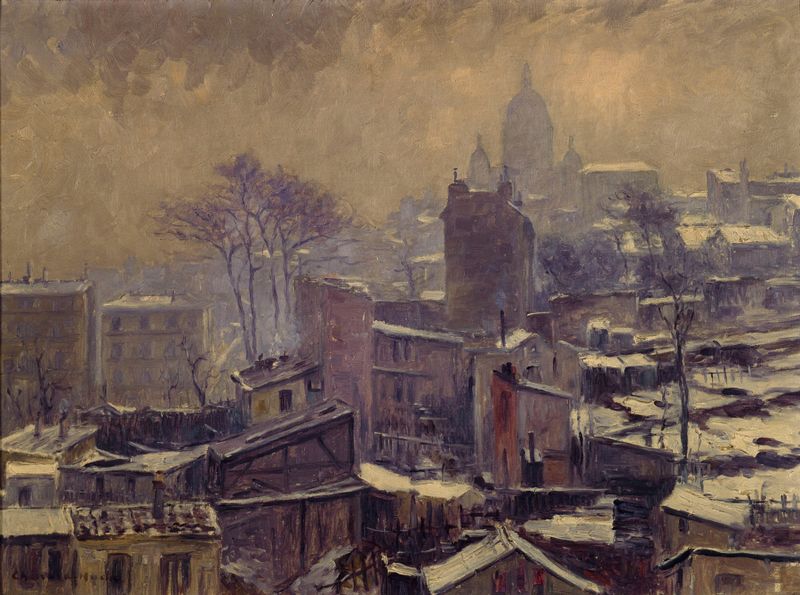
Where does light end, and longing begin? In the soft embrace of snow, the world seems both present and distant, a delicate balance that speaks to the heart’s deepest truths. Look to the left at the gentle curve of the street, flanked by muted buildings draped in winter’s quiet blanket. The pale blues and whites create a serene yet melancholic atmosphere, inviting the viewer to wander through the charming streets of Montmartre. Notice how the light dances off the snow, reflecting a soft glow that contrasts with the shadows lurking in the alleyways, emphasizing the often-overlooked beauty found in solitude and the passage of time. The presence of snow serves as a metaphor for both purity and isolation, suggesting a yearning for connection amidst the cold.
Each footprint in the snow tells a story, echoing the transient nature of existence and the human experience. The figures in the distance, mere silhouettes against the luminous backdrop, hint at lives intertwined yet separate, each navigating their own path through the snowy expanse, further deepening the sense of longing. In 1903, while living in Paris, Georges Chenard-Huché painted Montmartre, effet de neige during a time when the art world was shifting towards modernism, exploring light, color, and emotion. The city was a vibrant hub of creativity, filled with artists experimenting with new ideas, yet Chenard-Huché chose to depict a quieter moment, capturing the essence of a beloved neighborhood shrouded in winter’s embrace, reflecting both personal and universal themes.