La Neige sur le maquis de Montmartre — History & Facts
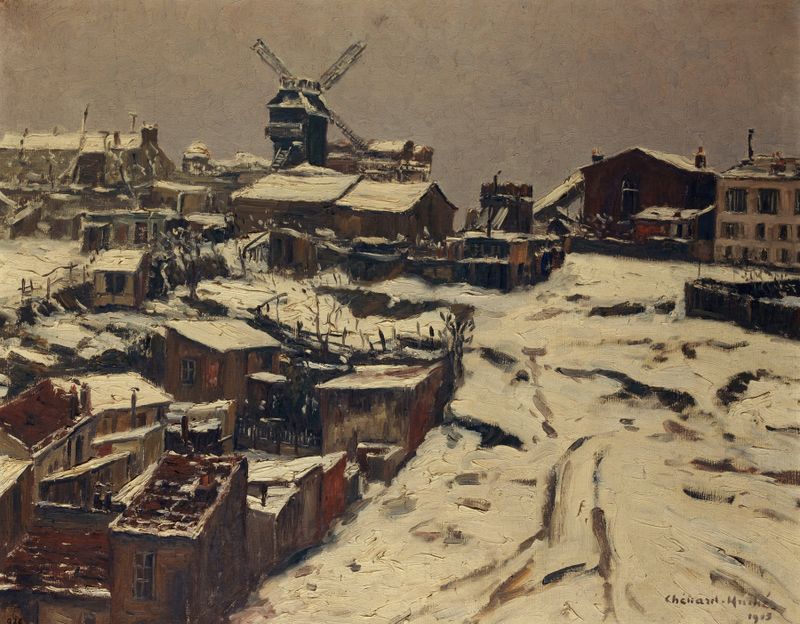
Did the painter know this moment would outlive them? In La Neige sur le maquis de Montmartre, the delicate balance between fleeting beauty and enduring memory is captured in a serene winter scene. Look to the center where a pristine blanket of snow envelops the quaint houses, transforming the bustling Montmartre into a quiet, dreamlike landscape. The soft whites and muted blues contrast with the warm ochres of the buildings, drawing the eye. Notice how the gentle strokes of the brush convey the soft fall of snow, almost as if time itself is caught in this stillness.
The light filters through the clouds, casting an ethereal glow that highlights the natural curves of the rooftops, inviting viewers to linger in contemplation. Amidst this tranquil beauty lies a tension between nature and human habitation. The snow, while a symbol of purity and peace, also carries the weight of transience—soon to melt and vanish. The scattered figures, bundled in winter attire, seem to navigate this delicate balance, each lost in their own world, yet connected by the shared experience of the landscape.
The juxtaposition of the bustling life of Montmartre and its serene winter facade suggests a longing for simplicity in a rapidly changing world. Created in 1905, this piece reflects the artist’s response to the vibrant art scene in Paris, a time rife with experimentation and innovation. At this juncture, Chenard-Huché was exploring impressionist techniques while embedding personal narratives within his work. The continued evolution of the Montmartre district and the burgeoning modernist movement offered a backdrop of contradiction and inspiration, influencing the artist’s portrayal of a moment suspended in time.