Moonlight on the River near Bruges — History & Facts
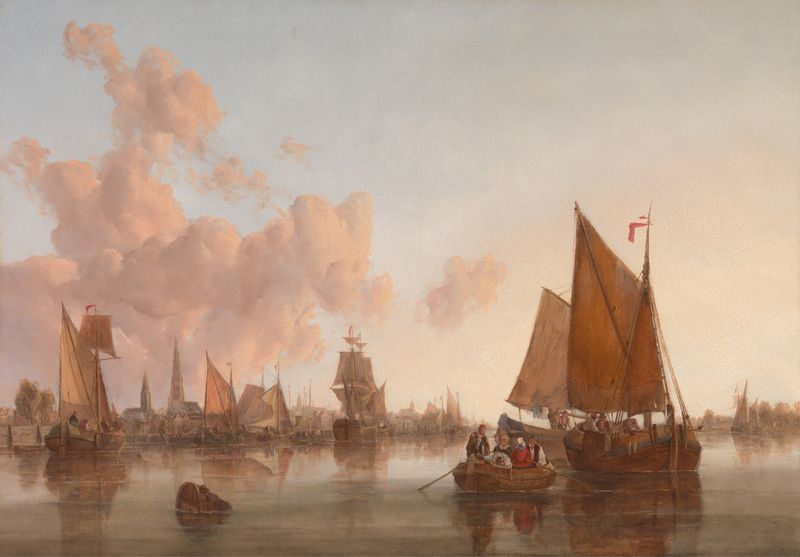
What secret hides in the quiet of the canvas? Beneath the serene surface of Moonlight on the River near Bruges, the tension of violence whispers, waiting to be unearthed by the observer's gaze. Focus first on the shimmering water, where moonlight dances in a fragmented embrace with the dark depths below. The cool palette of blues and silvers contrasts sharply with the shadowy silhouettes of the surrounding trees, creating a palpable tension. Notice how the painter's deft brushwork captures the rippling reflections, guiding your eye across the surface.
Each stroke reveals not only the beauty of the night but also the undercurrents of unease lurking just beneath. As you linger on the edges of the canvas, subtle hints reveal deeper meanings. The moon casts an almost eerie glow, transforming the tranquil river into a stage where nature's beauty teeters precariously close to violence—the unseen struggle of life beneath the surface. The trees, standing sentinel along the banks, evoke a sense of isolation, suggesting that tranquility can mask turmoil, inviting the viewer to ponder the stories hidden within the shadows and the water’s depths. John Berney Crome painted this work during an undetermined period, likely in the early 19th century, as he explored landscapes that encapsulated both beauty and contemplation.
Active in the English landscape tradition, he sought to capture the essence of nature in his works while reflecting the broader artistic currents of his time, where romanticism began to intertwine with a more nuanced view of the natural world, hinting at the violence that often lies beneath serene façades.