Sailing Boats and Barges on a Dutch Estuary — History & Facts
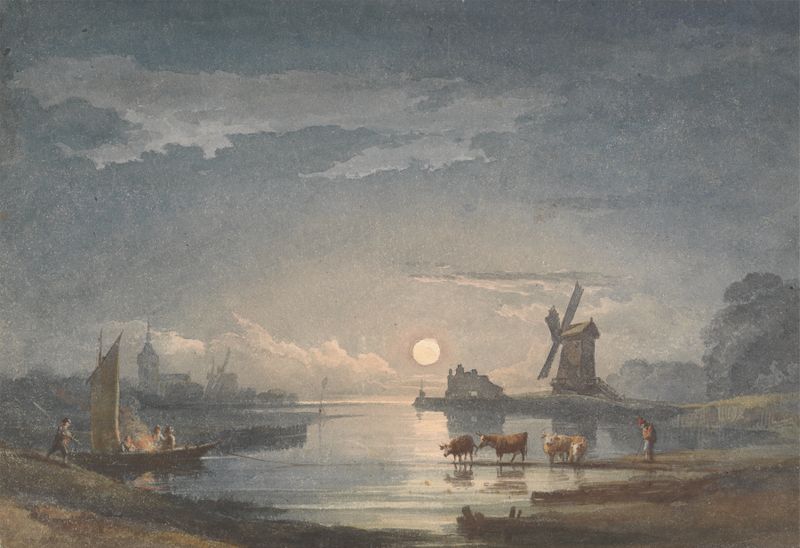
What if beauty was never meant to be finished? This thought lingers in the air as the serene waters of a Dutch estuary cradle vibrant sailing boats, their sails billowing gently, whispering stories of travelers lost in time. Look to the center of the canvas, where two boats glide effortlessly, their hulls reflecting the warm glimmers of sunlight dancing upon the water’s surface. Notice how the artist has employed delicate brushstrokes to create a sense of movement, infusing life into each vessel. The color palette, a harmonious blend of soft blues and earthy browns, evokes a tranquil atmosphere, while the wispy clouds above mirror the fluidity below, drawing the eye toward the horizon where sky meets sea. Amidst this picturesque scene lies an emotional undercurrent, a tension between the calmness of the water and the untamed spirit of the boats.
The juxtaposition of the rigid lines of the barges against the organic forms of the sails hints at the interplay between humanity and nature. Each boat is a vessel of memory, suggesting journeys past and futures unwritten, evoking reflections on the transient nature of existence itself. John Berney Crome painted this work in 1825, during a time when Romanticism was blossoming in the art world. Living in England, he was influenced by the Dutch masters and the burgeoning appreciation for landscapes.
This painting emerged as part of an era characterized by a deepening connection to the natural world and a desire to capture its fleeting beauty, reinforcing the notion that every moment, though seemingly complete, resonates with an eternal longing for more.