
Moonrise — History & Facts
It whispers from the canvas, inviting us into a realm where stillness reigns supreme. In the hush of twilight, the moon hovers like a guardian, casting a soft glow over the landscape, revealing secrets hidden in the shadows. Look to the left at the horizon, where a delicate blend of blues and purples meld seamlessly, evoking the transition from day to night. The earthy tones of the foreground anchor the scene, while the luminous orb above draws the eye upward, creating a dialogue between earth and sky.
Jettel’s meticulous brushstrokes breathe life into the pine trees and gently rippling water, their textures inviting touch and evoking a profound sense of calm. The contrast between light and dark holds deep emotional significance, reminiscent of personal introspection and the complexities of the human experience. The moon's radiant presence illuminates yet softens the landscape, suggesting the possibility of hope within solitude. Each element seems to communicate a silent story—of nature's enduring beauty and the stillness that often accompanies our most profound thoughts. In 1896, this work emerged from Jettel's creative exploration during his time in Vienna, a city buzzing with artistic innovation.
The late 19th century was marked by transitions in both the art world and societal norms, as artists sought new ways to represent their environment. In this context, the painting reflects Jettel's fascination with the interplay of light and silence, encapsulating a moment that transcends time and resonates with our quest for tranquility.
More Artworks by Eugen Jettel
Browse all →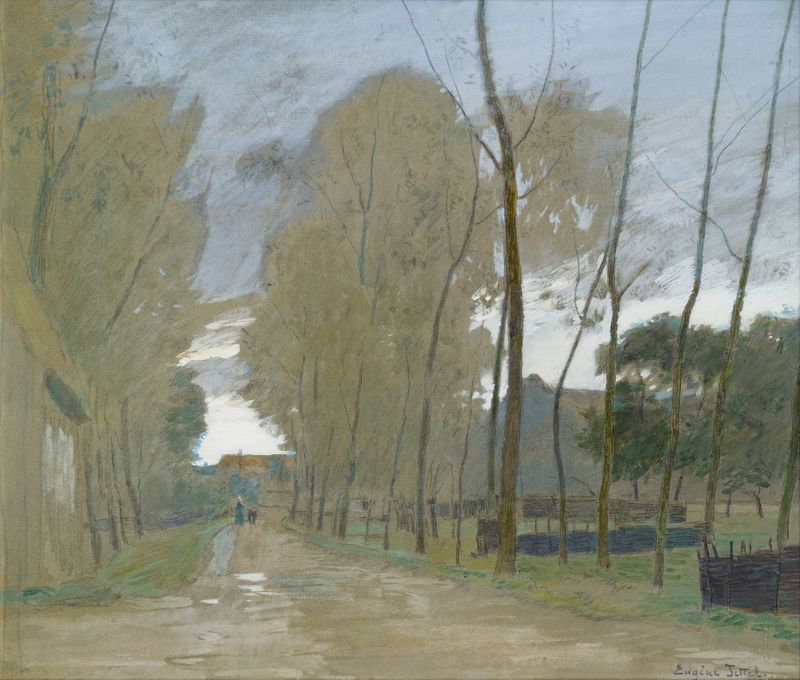
Motiv aus der Bretagne
Eugen Jettel
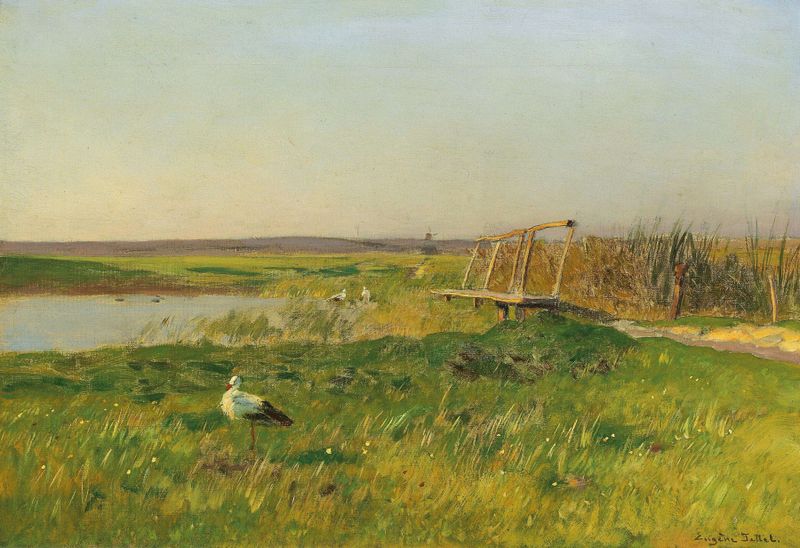
Frühlingslandschaft mit Störchen an einem Weiher
Eugen Jettel

Rinder auf Sommerwiese
Eugen Jettel
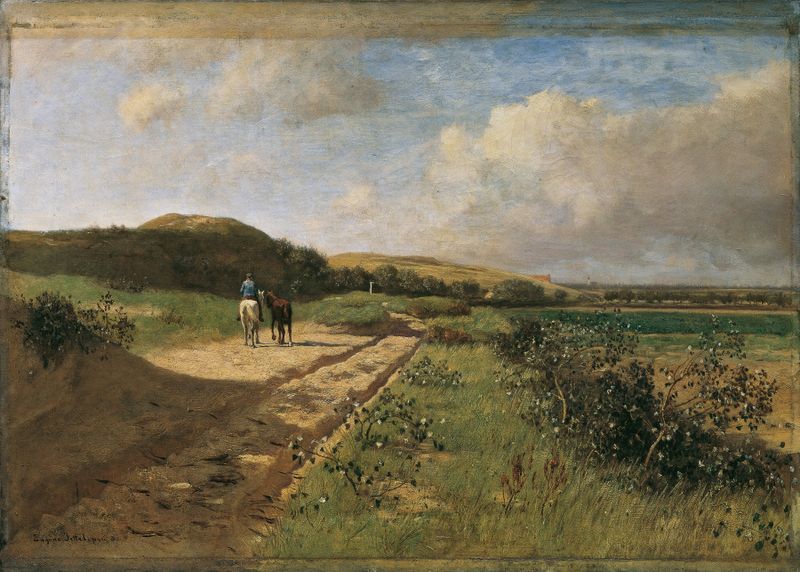
Dünen bei Katwijk
Eugen Jettel
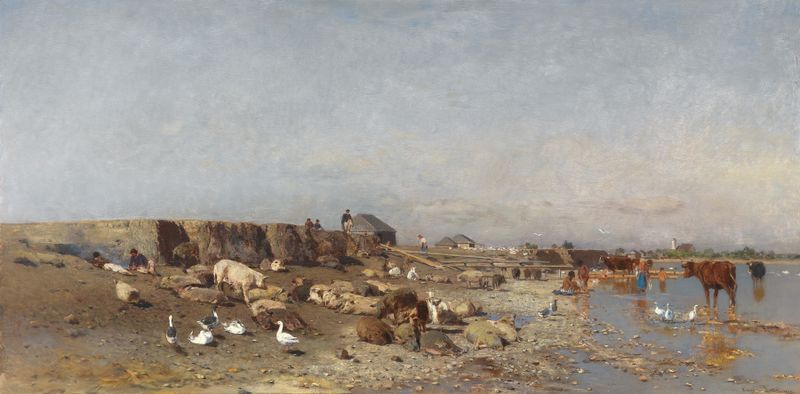
Motiv aus Szered an der Waag
Eugen Jettel
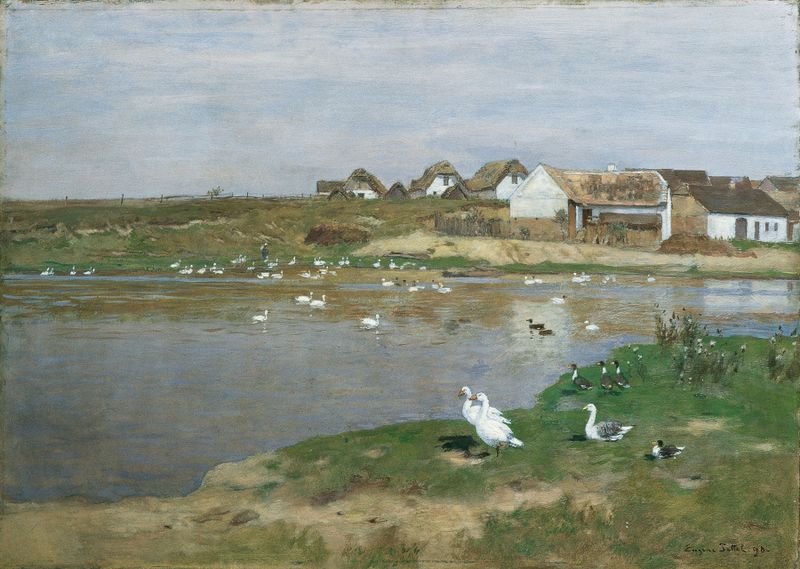
Der Gänseteich in Kotting-Neusiedl
Eugen Jettel

Flusslandschaft Mit Boot
Eugen Jettel

Flusslandschaft mit Kühen
Eugen Jettel

Dorfpartie Strohhütten aus Staatz
Eugen Jettel

Abendlandschaft
Eugen Jettel





