Moonrise — History & Facts
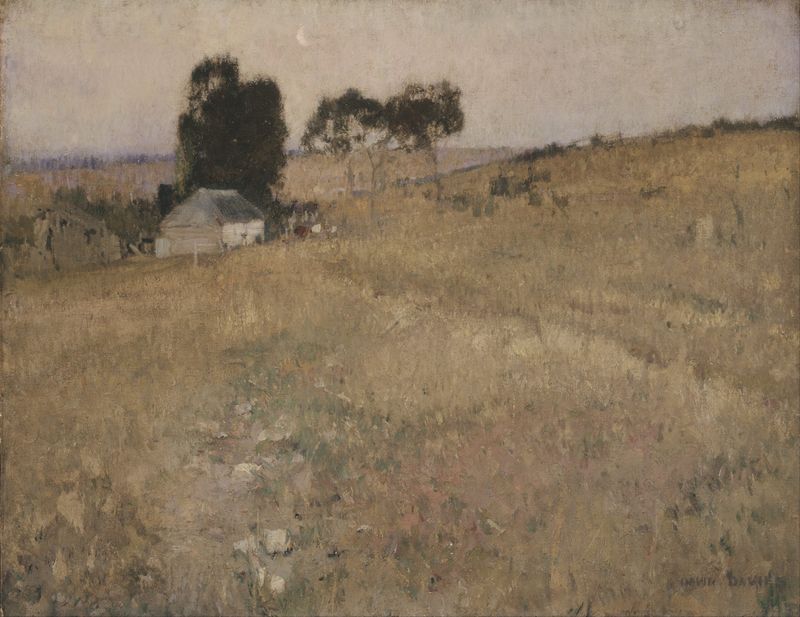
In Moonrise, the artist captures the essence of a fleeting moment that resonates with the feelings of change and revolution. The canvas vibrates with an evocative energy, inviting viewers to reflect on their own transformations amidst a backdrop of twilight. Look at the explosion of deep blues and purples that dominate the upper portion of the painting, enveloping the glowing moon. The luminous orb seems to pulse with life, casting silvery light across the lower landscape.
Focus on the intricate play of shadows—how they dance across the horizon and suggest movement, like whispers of the night urging the earth to awaken. The delicate brushwork creates a sense of texture that almost beckons you to reach out and touch the surface. Yet, beneath this tranquil exterior lies a tension between light and dark, a metaphor for the upheavals that often accompany new beginnings. The moon, a symbol of hope and illumination, stands in stark contrast to the encroaching shadows of uncertainty.
This balancing act portrays the duality of revolution—beauty entwined with chaos, serenity threatened by the unknown. It beckons the viewer to confront their own dichotomies, inviting them into a contemplative space. David Davies painted Moonrise during a time marked by artistic experimentation and societal shifts, likely in the late 19th century. Working amidst the rise of Impressionism, he found himself at a crossroads, where traditional techniques met new movements.
His work reflects the tumultuous spirit of change, serving as a canvas that captures the heartbeat of an era on the brink of transformation.