A summer evening — History & Facts
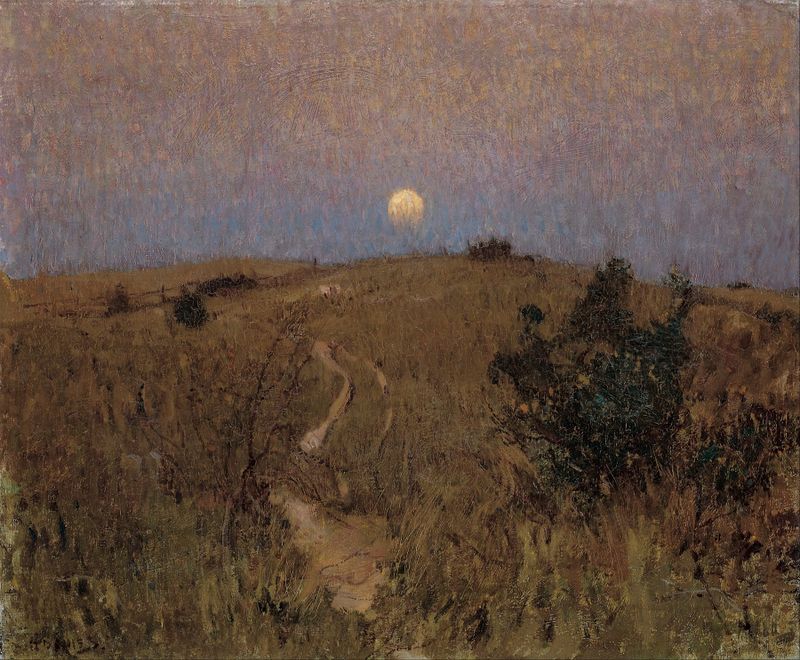
Is this a mirror — or a memory? In A Summer Evening, time seems to fold into itself, inviting viewers to step into a warm embrace of nostalgia. Look to the center of the canvas, where a vibrant sunset bathes the landscape in hues of orange and gold. The gentle brushstrokes evoke the soft caress of evening light as it dances across the rolling fields. Notice how the shadows stretch languidly, inviting both stillness and movement, while the trees stand like sentinels, watching over the tranquil scene.
The palette evokes a sense of harmony, blending colors that both comfort and stir the soul. Here, the viewer can sense the tension between fleeting moments and lasting memories. The lush green of the grass contrasts with the fiery sky, representing the delicate balance between the present and the past. Each element in the composition speaks to the longing for simpler times, encapsulating the essence of a fleeting summer evening.
The soft blending of colors suggests an ethereal quality, as if the moment captured is both real and dream-like, leaving a lingering sense of yearning. David Davies painted A Summer Evening in 1895, during a period marked by a transition in art towards Impressionism. Working in England, he was influenced by the natural world and the shifting light of the seasons. This piece reflects a personal exploration of beauty and fleeting time, a sentiment that resonated with many artists as society evolved rapidly during the late Victorian era.