Morning Air — History & Facts
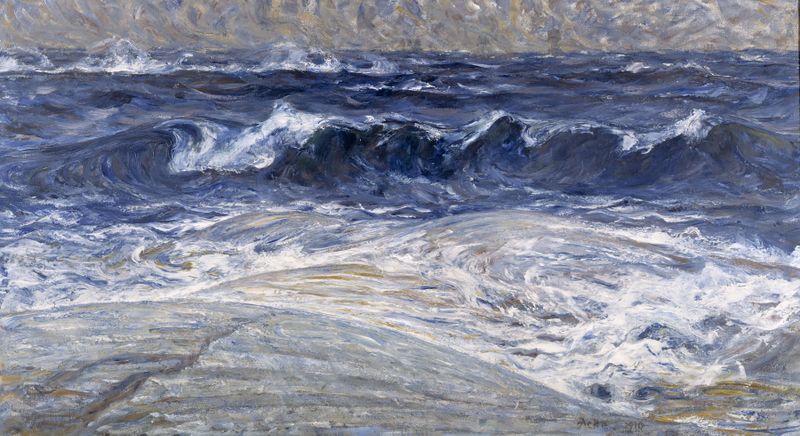
In a landscape where silence reigns, the canvas breathes with emotion, inviting the viewer into a moment that lingers as a memory. Look to the soft hues that dominate the foreground, a blend of muted greens and blues underscoring the tranquil ambiance. Notice how the light spills gently over the horizon, illuminating the tender contours of the scene. This play of light not only captures the essence of dawn but also envelops it in a delicate embrace of hope, suggesting a new beginning emerging from the darkness. Yet beneath this serene surface lies an undercurrent of grief.
The unyielding stillness hints at a loss, perhaps of innocence or connection, while the solitary elements—an empty path or a lone tree—invoke feelings of solitude and longing. Each brushstroke seems to echo the unspoken weight of emotion, reminding us that the beauty of the landscape can coexist with sorrow. In 1911, J.A.G. Acke created Morning Air amidst the shifting tides of artistic expression in Europe.
He was influenced by the burgeoning Impressionist movement, which celebrated light and color, while also grappling with his own personal challenges. The early 20th century was a period of transition, reflecting the complexities of a world on the brink of monumental change, mirroring his own explorations in the realm of grief and renewal.