Seascape — History & Facts
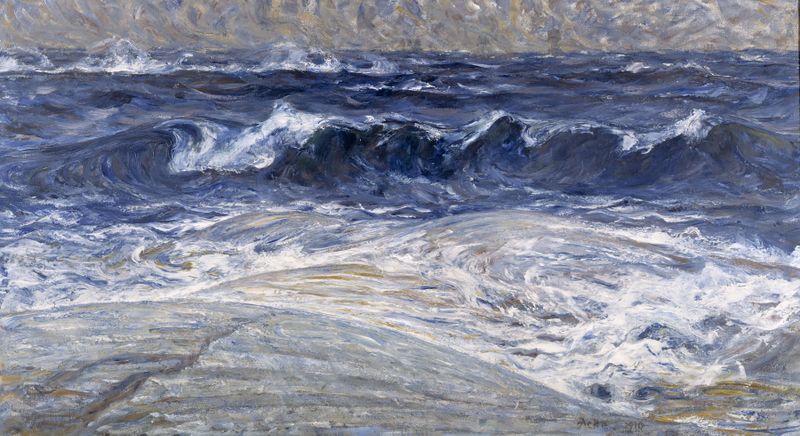
What if silence could speak through light? In moments where the sea meets the sky, hues whisper secrets beyond the reach of sound, beckoning us to listen with our eyes. Look to the bottom of the canvas, where gentle waves play with the light, reflecting a palette of soft blues and delicate whites. The artist’s brushstrokes create a rhythmic dance, capturing the undulating movement of water as it glistens under the sun. Notice how the horizon blurs, merging the deep azure of the sea with the pale cerulean above, inviting viewers to lose themselves in this tranquil expanse.
Each stroke is deliberate yet fluid, showcasing a mastery of color that evokes both calm and contemplation. Delve deeper into the contrast between the serene surface and the turbulent undertones of emotion that lie beneath. The interplay of light and shadow hints at the temporal nature of beauty, suggesting both the fleetingness of a moment and the eternal cycle of nature. In this work, the immensity of the ocean reflects personal introspection, as if the stillness holds a thousand unanswered questions, each wave a silent response. J.A.G.
Acke painted Seascape in 1911, during a period marked by his exploration of color theory and the Impressionist influences that captivated the art world. While living in Denmark, he sought to depict not just landscapes but emotional landscapes, capturing the raw essence of nature in its most tranquil state. In a time of burgeoning modernism, Acke's commitment to color vibrancy stood as a testament to the evolving dialogue between light and perception.