
Moroccan Rider Crossing the Ford at Wad Boswicha — History & Facts
Who listens when art speaks of silence? In Moroccan Rider Crossing the Ford at Wad Boswicha, light becomes a language of its own, illuminating the unspoken stories of a solitary rider navigating the complexities of the landscape. Look to the center of the canvas, where a lone horseman emerges, cloaked in vibrant hues of blue and ochre. His figure contrasts against the pale, shimmering water of the ford, each stroke masterfully capturing the ripples that seem to hold reflections of both sky and earth. Notice how the artist employs a delicate play of light, casting a warm glow on the rider’s face, enhancing the sense of solitude in this vast wilderness. The emotional tension in this work lies in the juxtaposition of movement and stillness; the rider is both a part of and separate from the tranquil surroundings.
The flowing water evokes a sense of transition, while the horse’s steady gait suggests both confidence and contemplation. The surrounding landscape, painted in muted earth tones, reinforces the rider's quiet strength, as if he is a bridge between two worlds—one of natural beauty and another of human endeavor. In 1860, Frank Buchser painted this piece during his travels in Morocco, a period marked by his deepening fascination with the culture and landscapes of North Africa. This work reflects his experiences and observations, set against a backdrop of growing European interest in exotic locales.
It encapsulates a moment in art history where exploration and observation converged, leading to a rich dialogue on identity and place.
More Artworks by Frank Buchser
Browse all →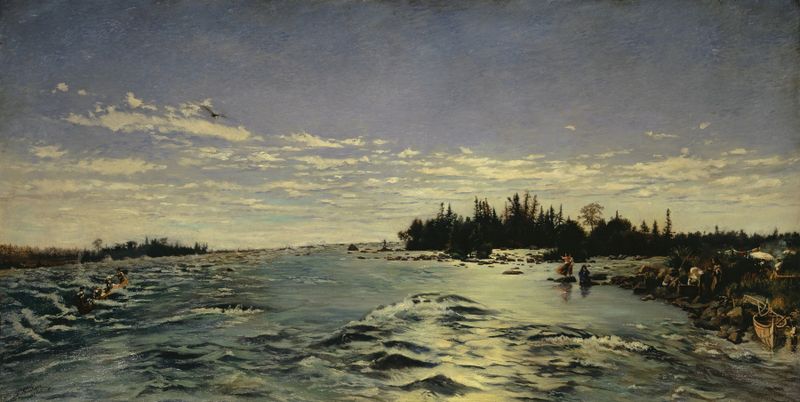
The Rapids of Saint Marys River
Frank Buchser
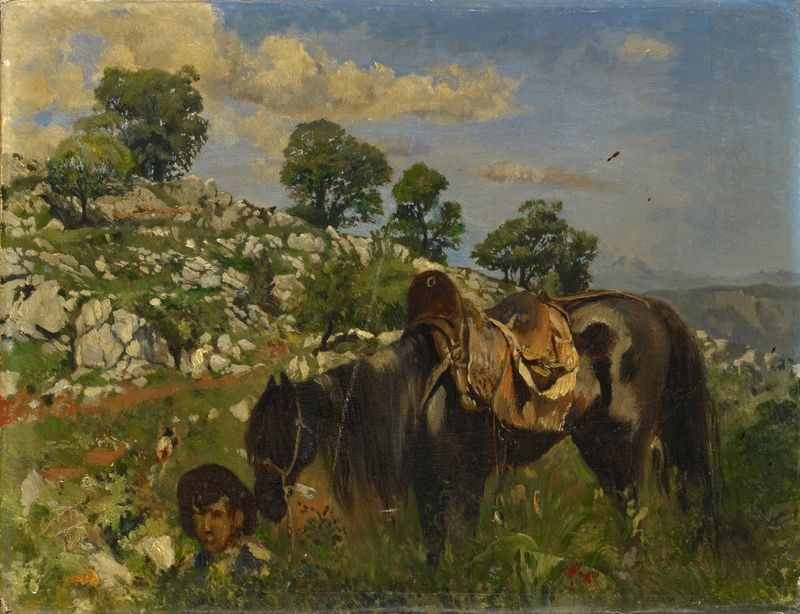
Rider in High Grass
Frank Buchser
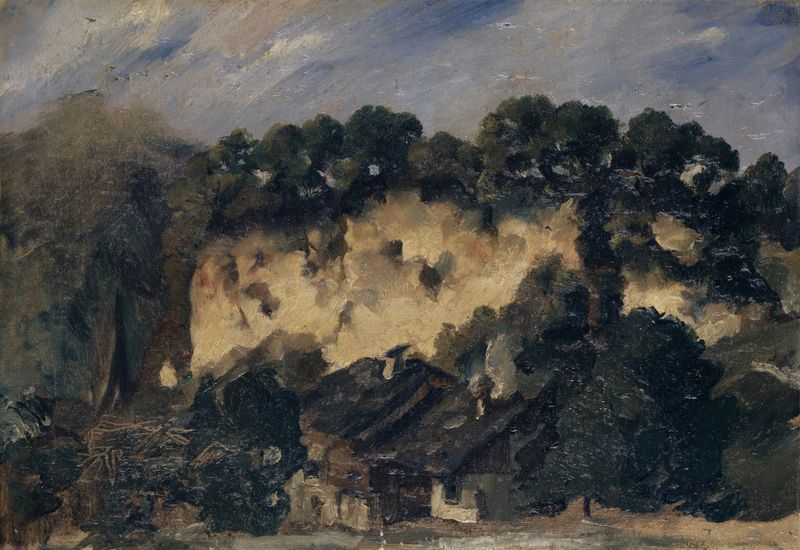
Houses by a Quarry
Frank Buchser

Passage at the Platte River
Frank Buchser
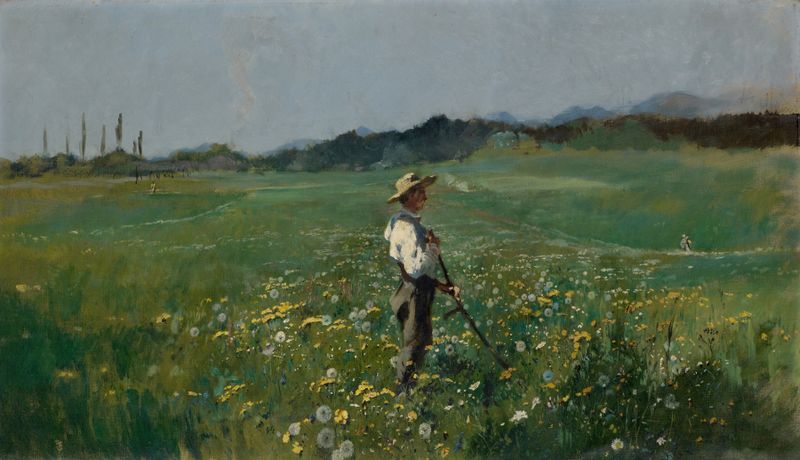
Reaper in a Flowery Meadow
Frank Buchser
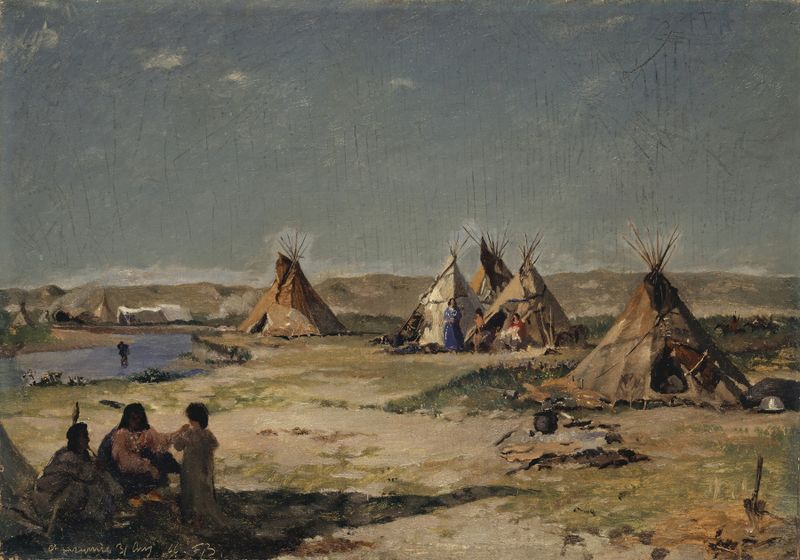
Tent Camp of the Indians at the Laramie
Frank Buchser
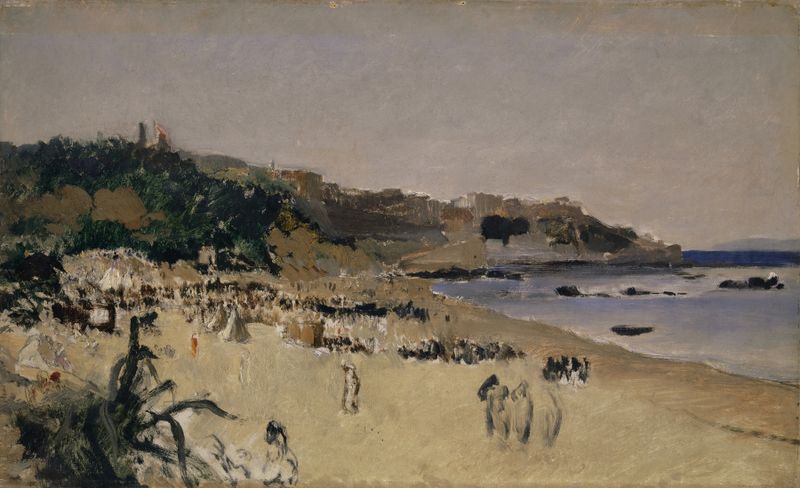
On the Beach at Tangier
Frank Buchser
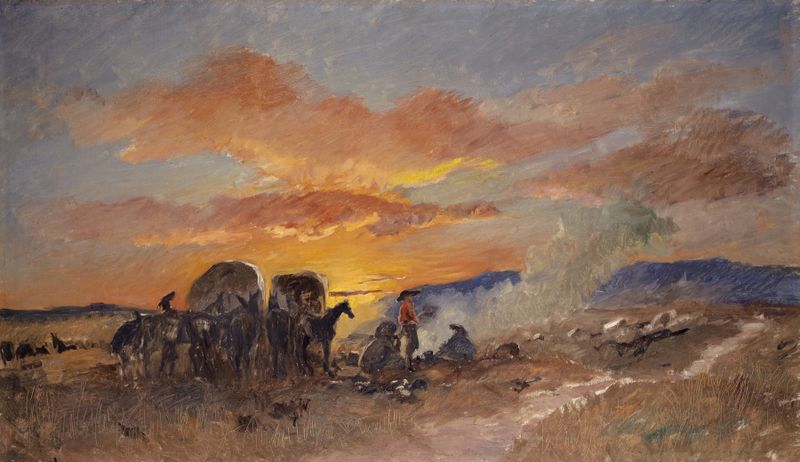
Campfire at Sunrise in the Laramie Plains
Frank Buchser

Landscape with Giant Corn in the Foreground
Frank Buchser

View of Seville Across the Guadalquivir
Frank Buchser





