
Tent Camp of the Indians at the Laramie — History & Facts
Shadows, often overlooked, speak louder than words in the context of history and identity, whispering stories of those who inhabit the margins. As you delve into the artwork, look to the left at the intricate tents, their forms rising like solemn sentinels against the expansive backdrop of a vast, open sky. The earthy browns and soft whites of the canvas blend with muted greens, evoking a sense of harmony between the structures and the land. Notice how the play of light dances across the contours of the tents, drawing your eye to the textures, while deeper shadows linger beneath, hinting at untold stories and lives lived in quiet resilience. The juxtaposition of light and shadow throughout the piece serves as a poignant metaphor for the Indigenous experience during a time of upheaval.
The brilliant afternoon sunlight seems to illuminate the dignity of the camp, yet the encroaching shadows suggest a world of uncertainty and change lurking just beyond the canvas. The careful placement of figures—sometimes obscured by the shadows of the tents—illustrates a tension between visibility and invisibility, a reminder of the complexity of their existence and the transient nature of their history. In 1866, Frank Buchser captured this scene during a turbulent period in American history, as westward expansion was reshaping the lives of Indigenous peoples. The artist, who traveled extensively to document the world around him, painted this work while navigating the challenges of his own artistic journey in a rapidly changing society.
His attention to the individuals within the camp reflects a dedication to preserving their stories at a time when many were being overshadowed by the dominant narratives of colonization.
More Artworks by Frank Buchser
Browse all →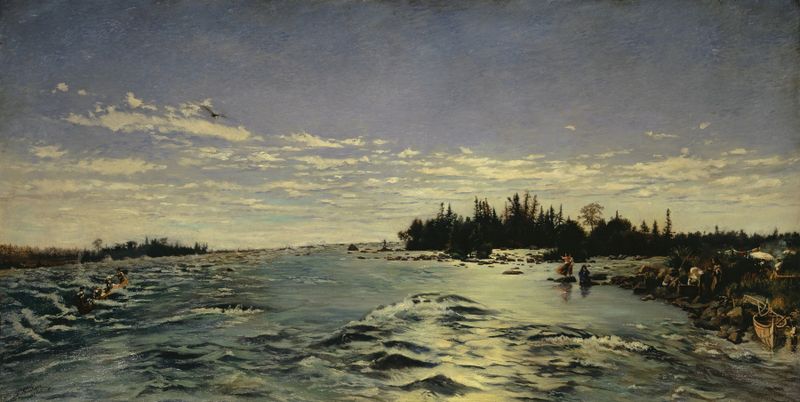
The Rapids of Saint Marys River
Frank Buchser
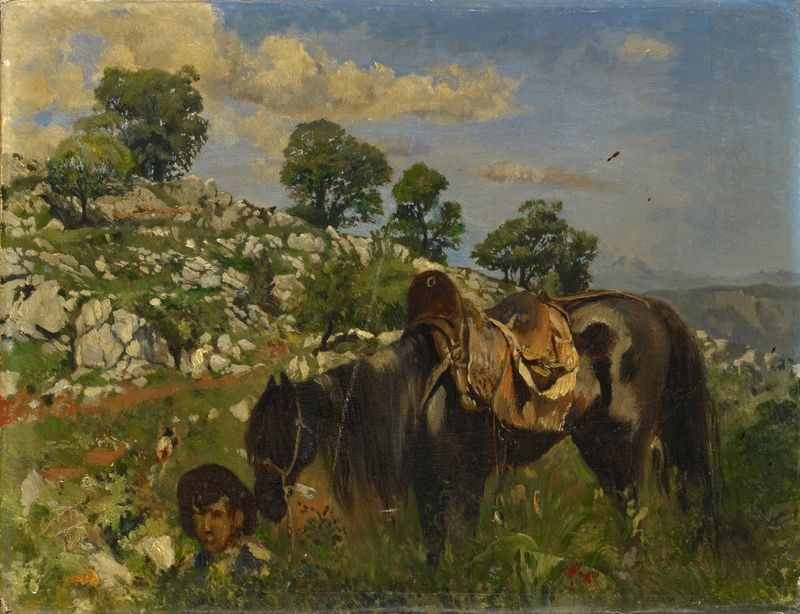
Rider in High Grass
Frank Buchser
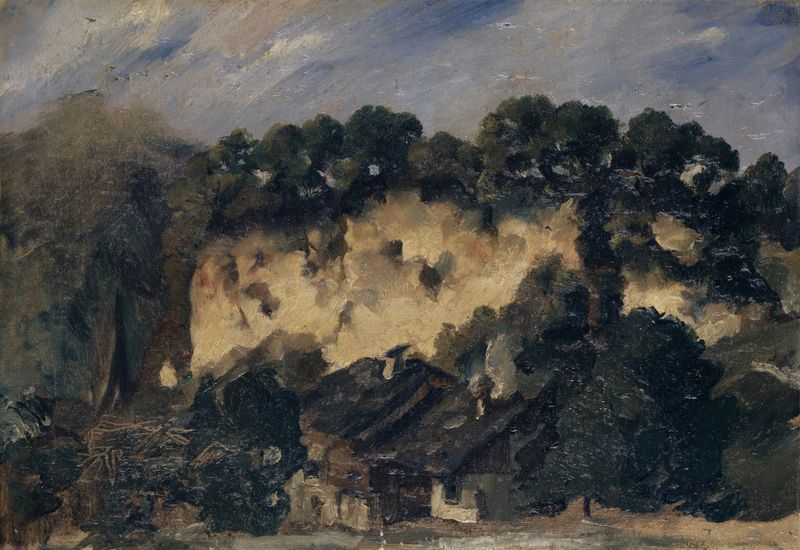
Houses by a Quarry
Frank Buchser

Passage at the Platte River
Frank Buchser
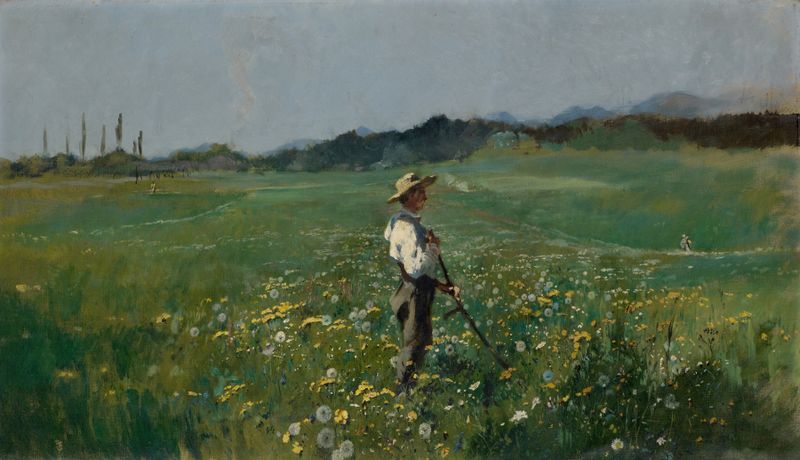
Reaper in a Flowery Meadow
Frank Buchser
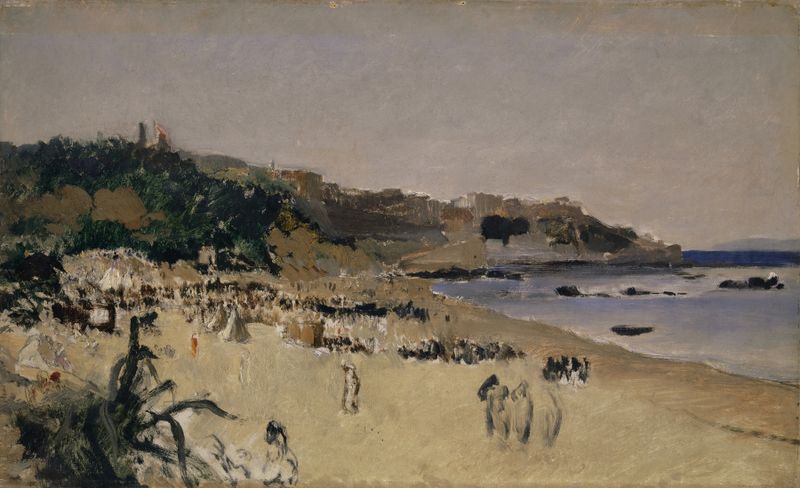
On the Beach at Tangier
Frank Buchser
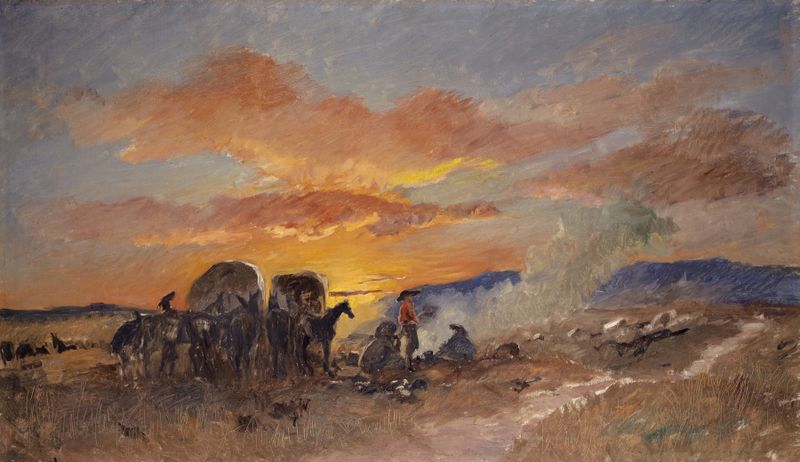
Campfire at Sunrise in the Laramie Plains
Frank Buchser

Landscape with Giant Corn in the Foreground
Frank Buchser
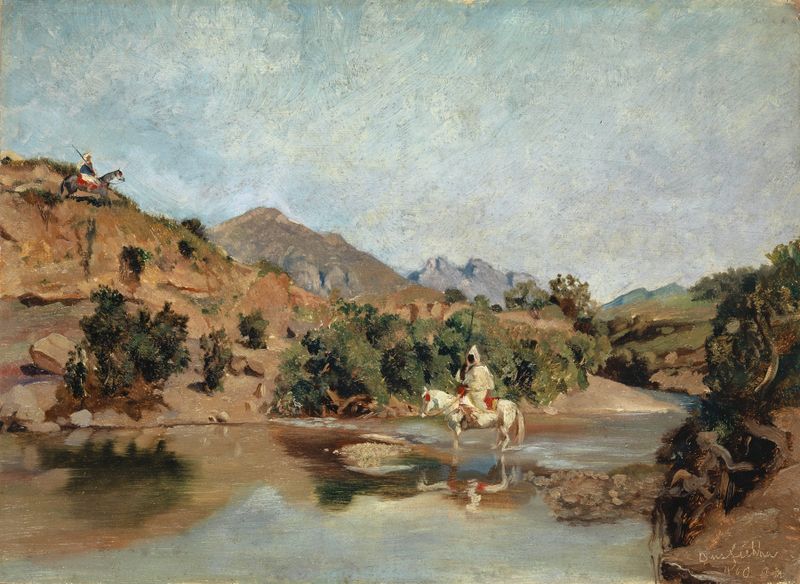
Moroccan Rider Crossing the Ford at Wad Boswicha
Frank Buchser

View of Seville Across the Guadalquivir
Frank Buchser





