Motif Of Capri — History & Facts
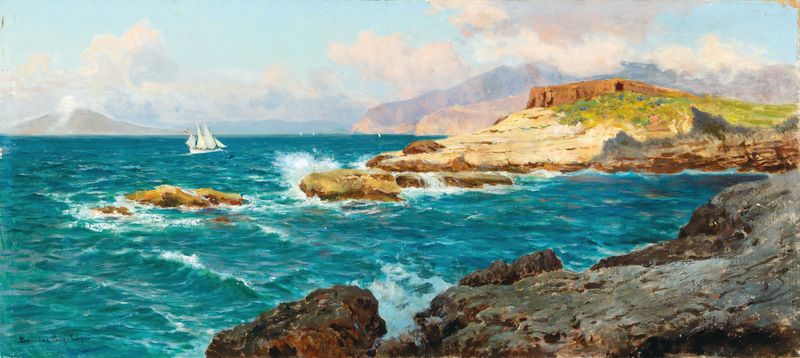
Can beauty exist without sorrow? In the balance of light and shadow, we find a delicate tension that suggests a deeper yearning, a void filled with unspoken emotions. Look to the center of the canvas where a serene landscape unfolds, painted in soft pastel hues of blues and greens that evoke tranquility. Notice how the light dances across the water’s surface, shimmering with reflections that pulse like a heartbeat. The composition draws your eye to the gentle curves of the shoreline, inviting contemplation while also hinting at the depth of the void that lies just beyond the vibrant beauty. A sense of isolation seeps through the idyllic scenery; the absence of human presence amplifies the emotional weight.
The juxtaposition of the radiant colors against the vast, empty sky speaks to a longing for connection, suggesting that the beauty of this place carries an underlying melancholy. Each brushstroke whispers of history and memory, echoing the stories left untold, as if the landscape itself mourns the absence of life. Bernardo Hay painted Motif Of Capri during a time of quiet introspection, likely in the late 19th or early 20th century. While specific details about the circumstances remain unclear, this period was marked by a growing appreciation for nature and its complexities within the art world.
The serene imagery reflects a broader yearning for beauty and harmony, likely influenced by the artist’s own experiences and the evolving artistic movements surrounding him.