On The Beach At Naples — History & Facts
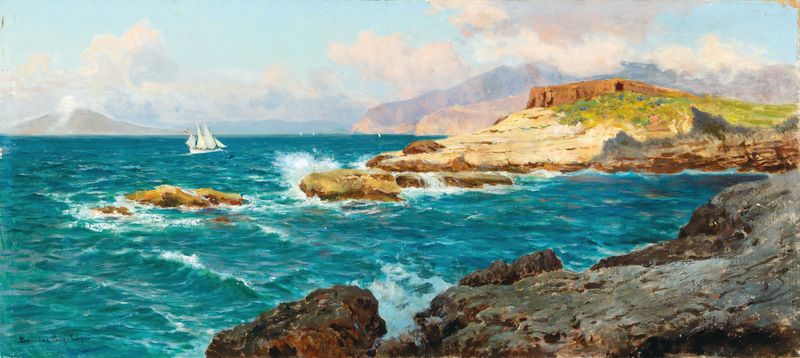
In the interplay of light and shadow, the essence of humanity finds its voice, echoing across the canvas. Focus on the luminous horizon where soft pastels blend seamlessly—a sky painted in gentle blues and blushes that invites the viewer to linger. Notice how the dappled sunlight dances upon the waves, creating a mesmerizing shimmer that draws the eye toward the tranquil shore. The figures scattered along the beach exude a sense of calm, their silhouettes softened by the golden glow, hinting at moments of leisure and reflection. Delve deeper into the composition, where the contrast between the gentle undulations of the water and the stillness of the figures suggests a tension between nature and human experience.
Each brushstroke captures fleeting moments—the laughter that hangs in the air, the unspoken thoughts shared between companions. In this serene setting, one can sense the weight of solitude beneath the carefree facade, as if each figure is enveloped in their own introspection. The artist created this work during an unrecorded period in his life, likely amidst the vibrant artistic milieu of 18th-century Europe. Influenced by the burgeoning Romantic movement, he sought to capture not just the beauty of the landscape but the emotional resonance of human existence within it.
This painting reflects a world on the cusp of change, where the delicate balance between light and shadow mirrors the complexities of life itself.