
Mount Cook — History & Facts
When did color learn to lie? Each brushstroke whispers secrets that linger in the air, hinting at deeper truths behind nature's facade and the melancholy ever-present in our lives. Look closely at the center of the canvas, where the majestic peak of Mount Cook rises sharply against a turbulent sky. The artist has meticulously layered shades of blues and grays, giving the mountain an almost ethereal quality, while soft, muted greens and browns at the base suggest a serene yet fragile landscape. Notice how the light dances across the snow-capped summit, illuminating it with an otherworldly glow, while shadows gather in the valleys below, creating a palpable tension between grandeur and solitude. There is a haunting contrast between the sublime beauty of the mountain and the ominous sky that looms overhead.
The tranquil colors of the foreground, representing life, stand in stark opposition to the foreboding darkness threatening to encroach. This interplay of light and shadow evokes feelings of longing and loss, suggesting that such beauty is not just to be admired, but also deeply felt—a reminder of nature's fleeting moments and the inevitable passage of time. In 1875, Hodgkins painted this work while living in New Zealand, a place that greatly influenced his artistic vision. It was a period of exploration and discovery in his career, as he sought to capture the unique landscapes of his homeland.
At this time, the art world was shifting towards impressionism, yet Hodgkins maintained a reverence for detail and structure, bridging the gap between the old and the new while reflecting the melancholy of the landscape around him.
More Artworks by William Mathew Hodgkins
Browse all →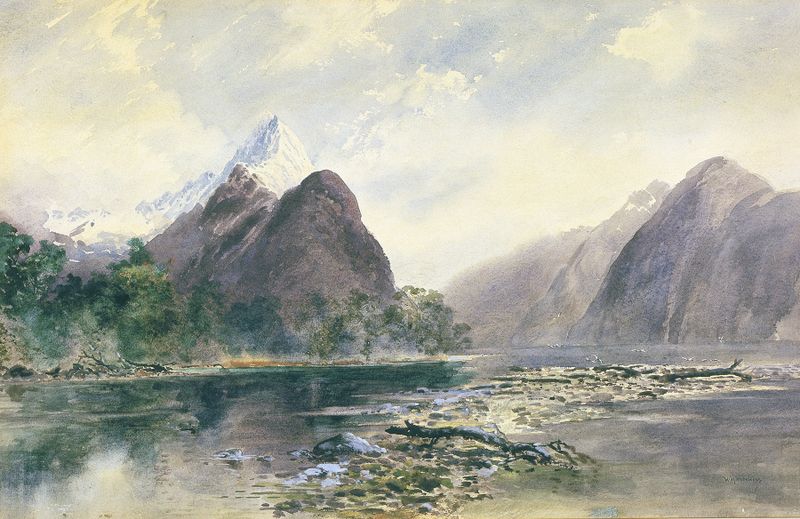
Mitre Peak, Milford Sound
William Mathew Hodgkins

Taieri Plains, Otago
William Mathew Hodgkins

A wet day on a wild coast
William Mathew Hodgkins
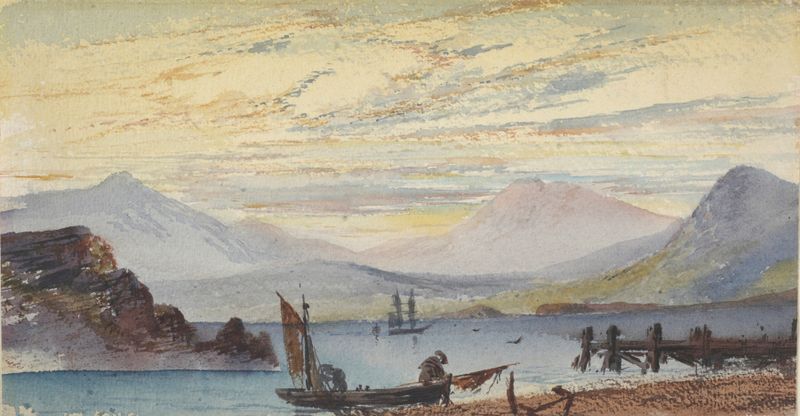
View from Maori Kaik, looking up Otago Harbour
William Mathew Hodgkins

Mount Cook – an afterglow above the mist
William Mathew Hodgkins

Coast near George McLean’s
William Mathew Hodgkins

On the Arthur River
William Mathew Hodgkins
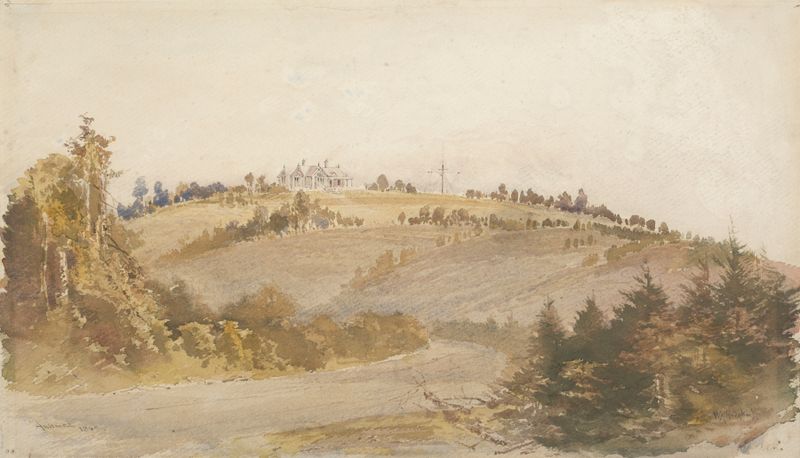
Awamoa (Otago)
William Mathew Hodgkins





