
A wet day on a wild coast — History & Facts
Can paint confess what words never could? In A Wet Day on a Wild Coast, the tumultuous marriage of sky and sea transcends the boundaries of language, inviting viewers into a world where emotion flows freely. Look to the left at the dark, brooding clouds that loom heavily, casting a muted palette over the coast. The artist’s brushstrokes evoke movement, capturing the swirling winds that whip the surf into frothy chaos. Notice how the cobalt blue of the ocean marries with streaks of gray and green, creating an atmosphere that is both foreboding and mesmerizing.
The intricate details of the rocks, slick with rain, draw the eye, emphasizing the wildness of nature in its untamed glory. Beneath the surface, contrasts pulse with meaning—between calm and chaos, solitude and the vastness of nature. The heavy clouds suggest an impending storm, yet they also provide a sense of intimacy, drawing viewers closer to the tempest. Each stroke feels like a whisper of the transcendent power of nature, urging us to confront our own emotions and insignificance against such grandeur. In 1894, Hodgkins painted this scene while living in New Zealand, reflecting both his experiences with the unique landscapes of the land and the changing tides of artistic expression.
This period marked a time of exploration in art, where realism began to intertwine with impressionistic techniques, showcasing the emotional weight and depth of his subjects.
More Artworks by William Mathew Hodgkins
Browse all →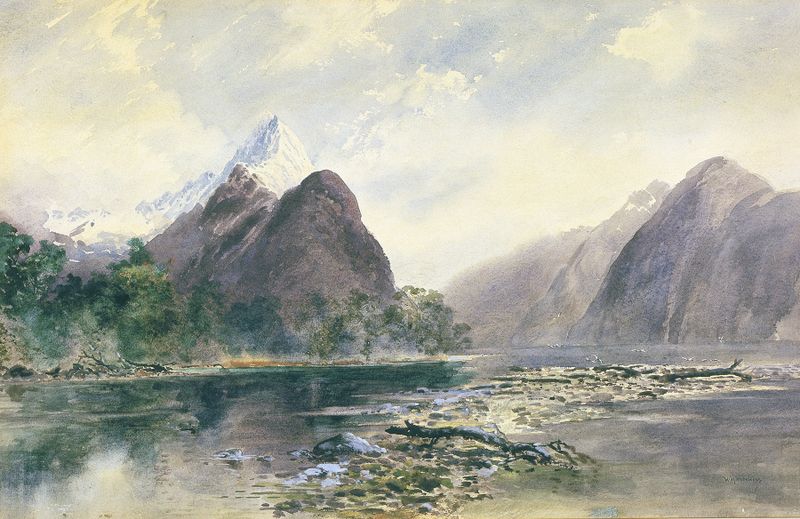
Mitre Peak, Milford Sound
William Mathew Hodgkins

Taieri Plains, Otago
William Mathew Hodgkins
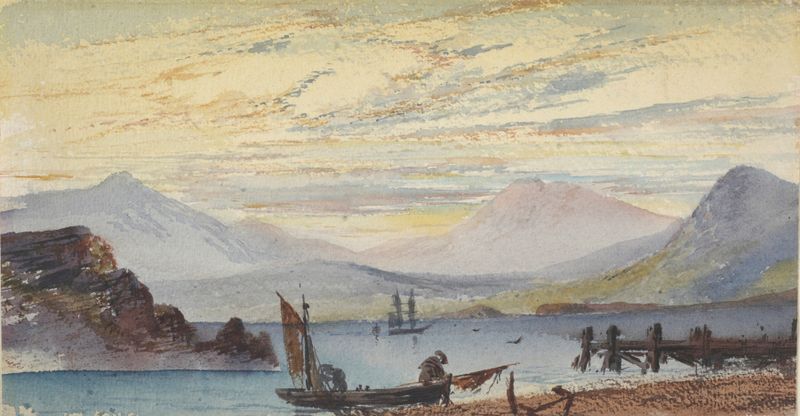
View from Maori Kaik, looking up Otago Harbour
William Mathew Hodgkins

Mount Cook – an afterglow above the mist
William Mathew Hodgkins

Coast near George McLean’s
William Mathew Hodgkins

Mount Cook
William Mathew Hodgkins

On the Arthur River
William Mathew Hodgkins
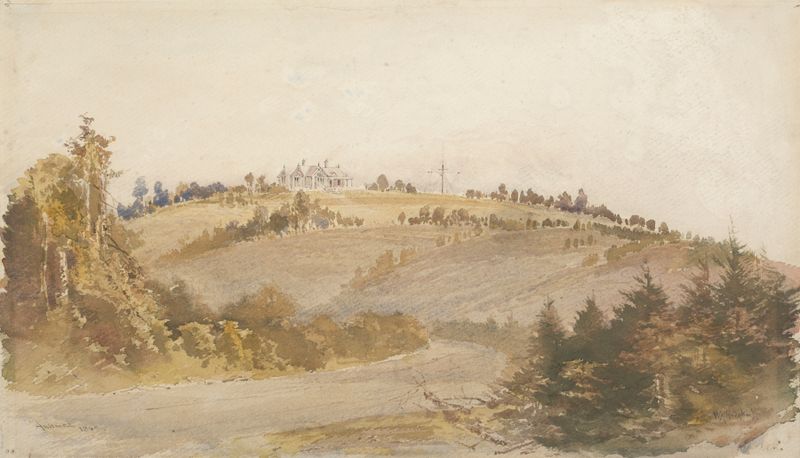
Awamoa (Otago)
William Mathew Hodgkins





