Mountain Landscape, River Landscape — History & Facts
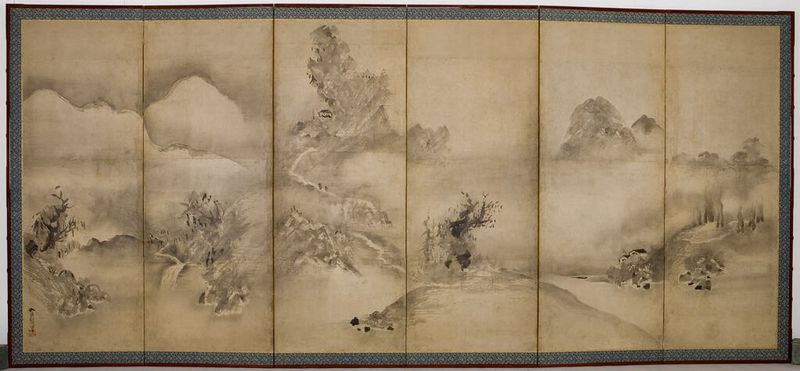
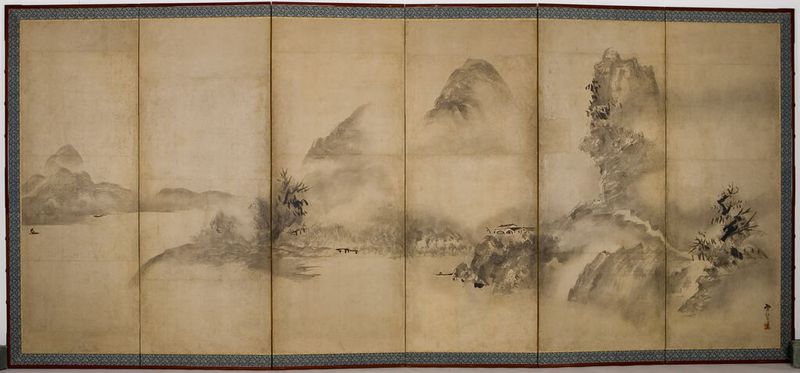
Did the painter know this moment would outlive them? The serene beauty of nature captured in a single frame suggests a dreamlike permanence that transcends time. Focus on the sweeping hills and gentle river flowing through the composition. The artist employs delicate brushstrokes, blending muted greens and blues that echo the tranquility of the landscape. Look closely at the subtle gradations of color; they breathe life into the rolling mountains, while the soft ripples of the water shimmer as if stirred by a whispering breeze.
Tōkan's meticulous attention to detail invites you to lose yourself in the harmonious rhythm of the natural world. Beneath the placid surface, tensions arise—between the solidity of the mountains and the fluidity of the river, between permanence and ephemerality. The juxtaposition of these elements speaks to the relentless passage of time, challenging the viewer to ponder the transient nature of human existence against the backdrop of eternal landscapes. The ethereal mist that hovers over the water adds an air of mystery, hinting at dreams and memories that linger just beyond the reach of perception. Shūgetsu Tōkan created this masterpiece during the Edo period, a time when Japan experienced a flourishing of art and culture.
From the late 18th to early 19th century, the artist was immersed in a world where traditional aesthetics mingled with a growing appreciation for nature's beauty. At this juncture, landscapes became a popular genre, reflecting the profound shift in societal values, as people sought solace in the natural world amidst the complexities of urban life.