Mountain landscape with a church — History & Facts
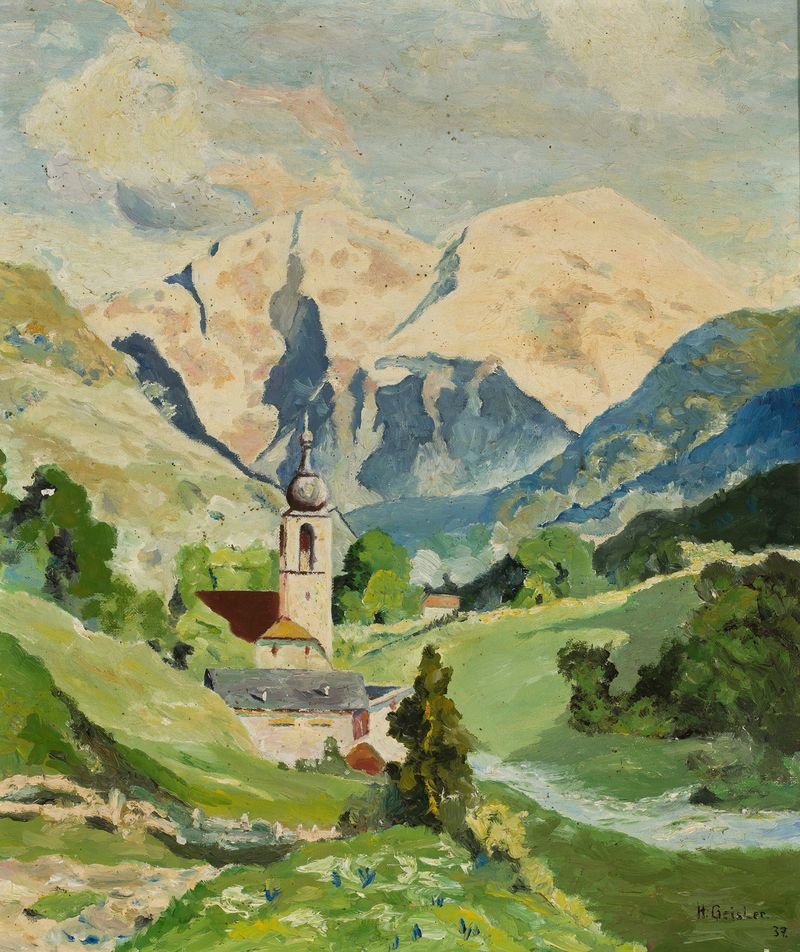
When did color learn to lie? In a world where hues often mask the true essence of emotion, the stark landscape speaks volumes of absence and yearning, evoking a profound sense of emptiness. Focus on the foreground, where the church stands as a solitary sentinel against the grandeur of nature. The delicate brushstrokes conjure a textured interplay between the solid structure of the building and the soft contours of the surrounding mountains. Notice how muted greens and grays dominate the canvas, creating a haunting atmosphere that invites reflection, while the distant peaks are bathed in a dreamlike mist, hinting at the juxtaposition of the human spirit against the vastness of the world. Delve deeper into the subtle contrasts of this piece.
The church, with its imposing yet fragile architecture, represents both faith and isolation amidst the overwhelming presence of the mountains. The emptiness surrounding it echoes the solitude of the human experience, suggesting a search for belonging in an indifferent universe. The interplay of light and shadow adds layers of complexity, inviting viewers to ponder the silent stories that unfold within the landscape, where nature's beauty is tinged with melancholy. Christian Gottfried Heinrich Geissler painted this work in 1837, during a time when Romanticism was flourishing, emphasizing emotion and the sublime in nature.
Living in Germany, Geissler navigated a period of artistic exploration that sought to reconcile the individual’s experience with the vast, often overwhelming landscape, reflecting both personal and societal search for meaning in a rapidly changing world.