Mountain Landscape: with cows and goats foreground and figures, left — History & Facts
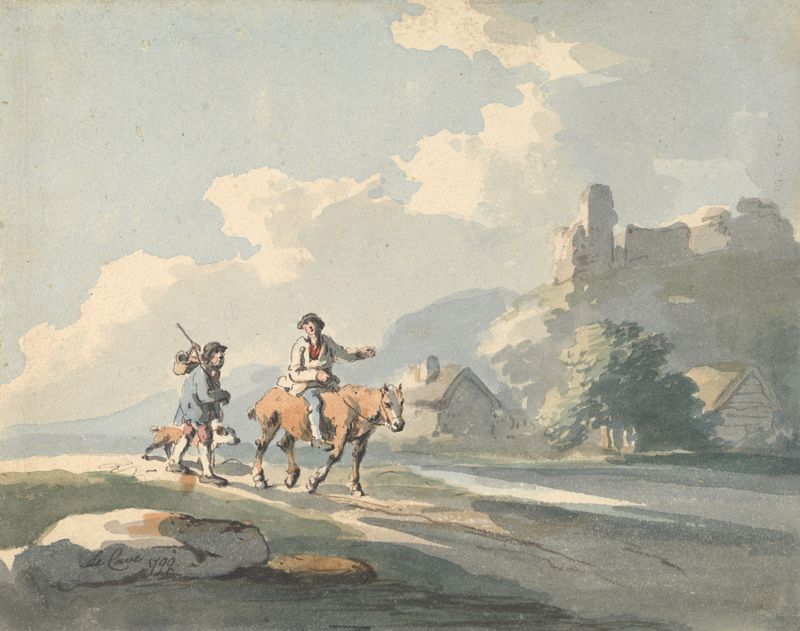
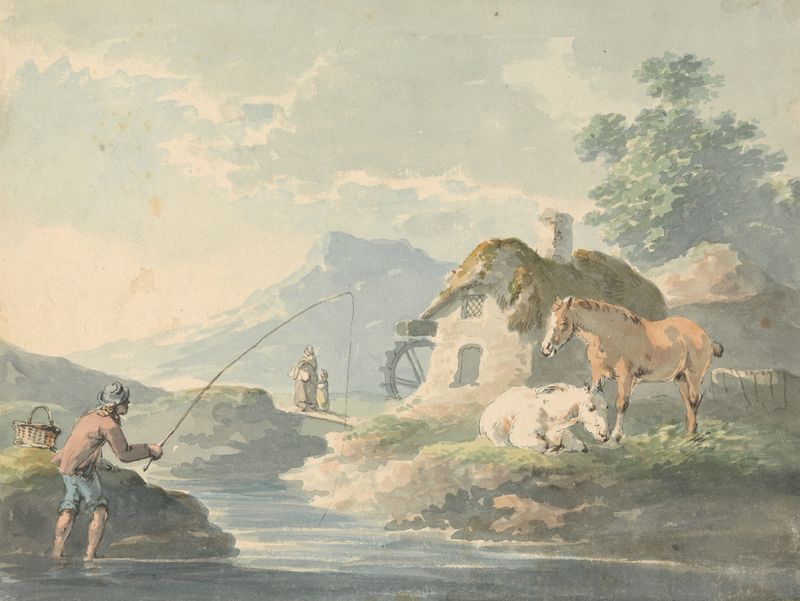
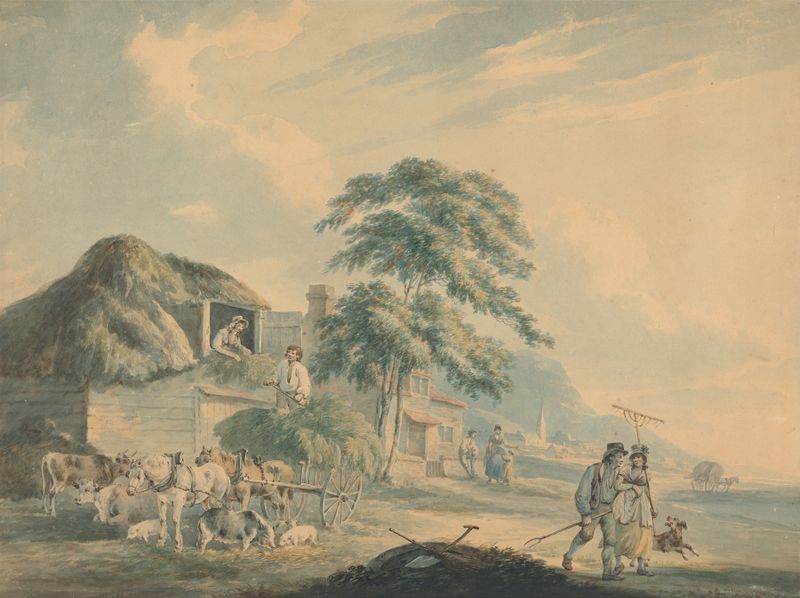
Did the painter know this moment would outlive them? In Mountain Landscape, Peter La Cave captures an idyllic pastoral scene that resonates with the promise of rebirth in the quiet rhythms of nature. The soft hues and gentle forms seem to invite the viewer into a world where time stands still, allowing us to pause and reflect. Look to the foreground where cows and goats graze peacefully, their forms rendered in warm browns and whites that contrast with the cool blues and greens of the mountainous backdrop. Notice how the light filters through the clouds, casting a serene glow that accentuates the animals' stillness.
The figures on the left are mere silhouettes against the grandeur of the landscape, evoking a sense of harmony between humanity and the environment. The composition leads the eye naturally through each element, celebrating the beauty of pastoral life. Deeper meanings emerge upon closer inspection. The cows and goats symbolize sustenance, while the distant mountains suggest endurance and stability, perhaps a metaphor for the cyclical nature of life.
The interplay of light and shadow reflects the transient moments of existence, capturing the essence of rebirth. This serene tableau resonates with the viewer on a personal level, reminding us that every day offers a new beginning. In 1801, La Cave painted this work amid the Romantic movement, a time when artists sought to express the sublime beauty of nature. Living in a rapidly changing world, he found solace in the simplicity of rural life and the landscape, reflecting a desire to return to nature's embrace amidst the chaos of modernity.
This painting stands as a testament to that longing, inviting us to cherish the beauty of the world around us.