Mountain Rocks — History & Facts
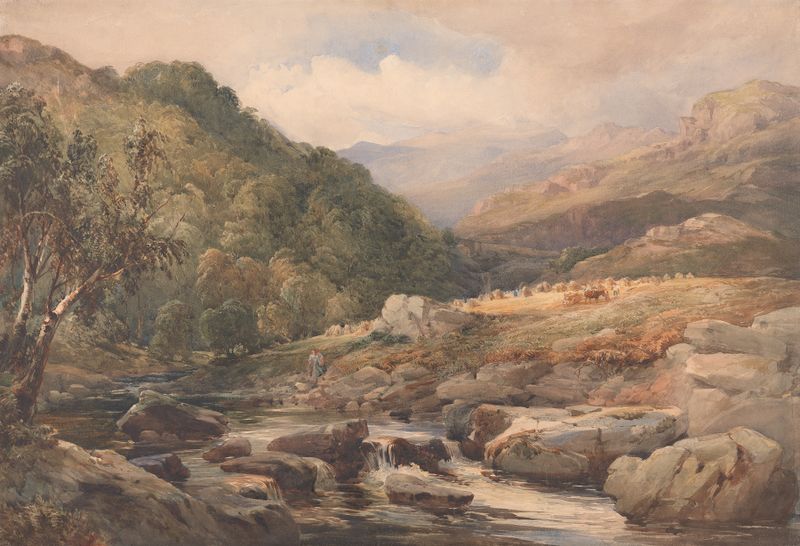
In that stillness, the deep breaths of nature echo, inviting contemplation and reverence. Look closely at the rugged textures of the mountain rocks, where the brush strokes reveal a tactile landscape. Notice how the muted earth tones blend seamlessly, embodying the weightiness of stone yet conveying an ethereal quality. The play of shadow and light dances across the surface, drawing the eye to the crevices and elevations that speak of ancient histories and silent resilience. In this work, contrasts emerge: the hardness of the rock juxtaposes the fluidity of the palette, suggesting a harmony between permanence and transience.
Each sharp angle invites introspection, while the subtlety of the color evokes a sense of calm. The silence captured in the composition hints at an unspoken narrative, an invitation to imagine the stories these ancient formations might tell. David Hall McKewan created Mountain Rocks during a period when he sought to capture the essence of the natural world. His work emerged in the late 20th century, a time marked by increasing abstraction in the art community.
McKewan’s approach, rooted in observation and appreciation of the landscape, positioned him as a distinctive voice amidst a sea of changing artistic movements, emphasizing a return to nature and its inherent truths.