Mountainous Landscape with a Ruin — History & Facts
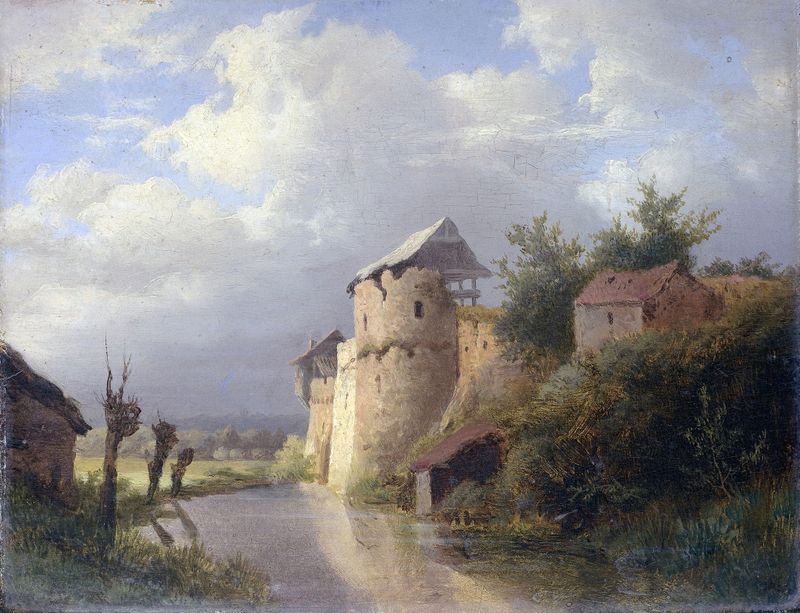
In its stillness, it invites reflections on what has been lost and the remnants that remain. Look to the left at the crumbling ruins, their edges softened by nature’s embrace. The earth tones of ochre and muted green meld seamlessly, suggesting a harmonious decay. Notice how the sky, with its delicate strokes of gray and blue, looms overhead, casting a pensive gaze upon the landscape.
The gentle play of light and shadow enhances the scene's melancholy, revealing the artist’s masterful control of oil paints and composition that draws the eye along the undulating hills. Beneath the surface, echoes of history reverberate throughout the painting. The juxtaposition of the robust mountains and the fragile ruins speaks of the passage of time and the inevitability of fading glory. Each crack in the stone structure signifies not only decay but also resilience, reminding us that remnants of the past linger despite their vulnerability.
This tension between permanence and transience invites us to contemplate our own histories and the emotional landscapes we navigate. In 1849, the artist created this piece during a period of personal exploration and artistic evolution. Hanedoes, residing in the Netherlands, was influenced by the Romantic ideals of nature and the sublime. This era, marked by a fascination with ruins and landscapes, mirrored a broader cultural reflection on identity and loss, themes that would resonate within the hearts of many during a time of social change and upheaval in Europe.