The Old Fortress — History & Facts
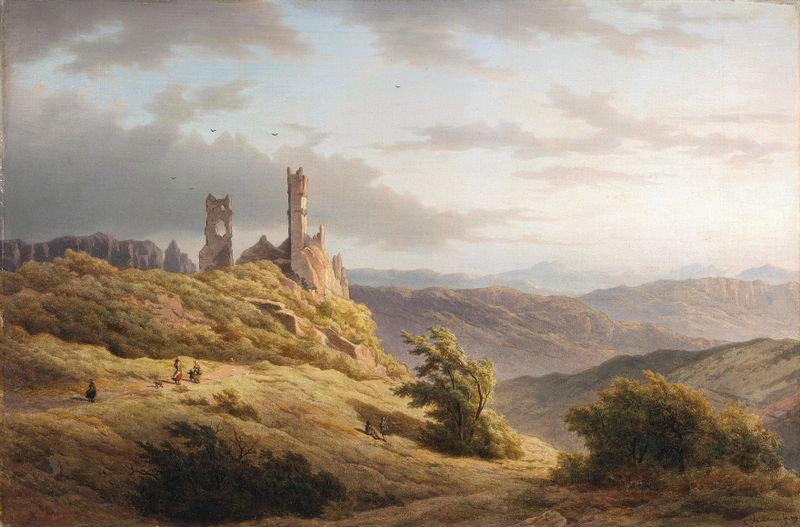
Could a single brushstroke hold eternity? In the stillness of The Old Fortress, silence envelops a timeless landscape that speaks of endurance and history. To appreciate this work fully, look to the sturdy fortress that rises majestically against the horizon. Notice how subtle shades of gray and ochre interplay, defining its weathered stones, each corner capturing the fading light of dusk. The sky, a delicate gradient of blues and soft pinks, creates a tranquil backdrop that invites contemplation, while the brushwork conveys an almost tactile sense of age, grounding the viewer in the moment. Delve deeper into the details: the sparse vegetation hints at the resilience of nature amidst human constructs.
The solitary figure near the base of the fortress — a mere silhouette — evokes a profound solitude, challenging the viewer to consider their relationship with the past and the passage of time. The contrast between the immovable stone and the fleeting clouds above speaks to the tension between permanence and ephemerality, suggesting a whisper of stories untold. During the years between 1840 and 1860, Louwrens Hanedoes was immersed in a burgeoning artistic environment, characterized by a growing interest in landscape painting across Europe. While living in the Netherlands, he captured the essence of his homeland's fortifications through a lens of nostalgia, reflecting both personal and collective histories.
This era marked a significant shift in art, as artists began to explore the emotional weight of the landscapes that surrounded them, infusing their works with deeper meanings that resonate still.