Mountains At Sunset — History & Facts
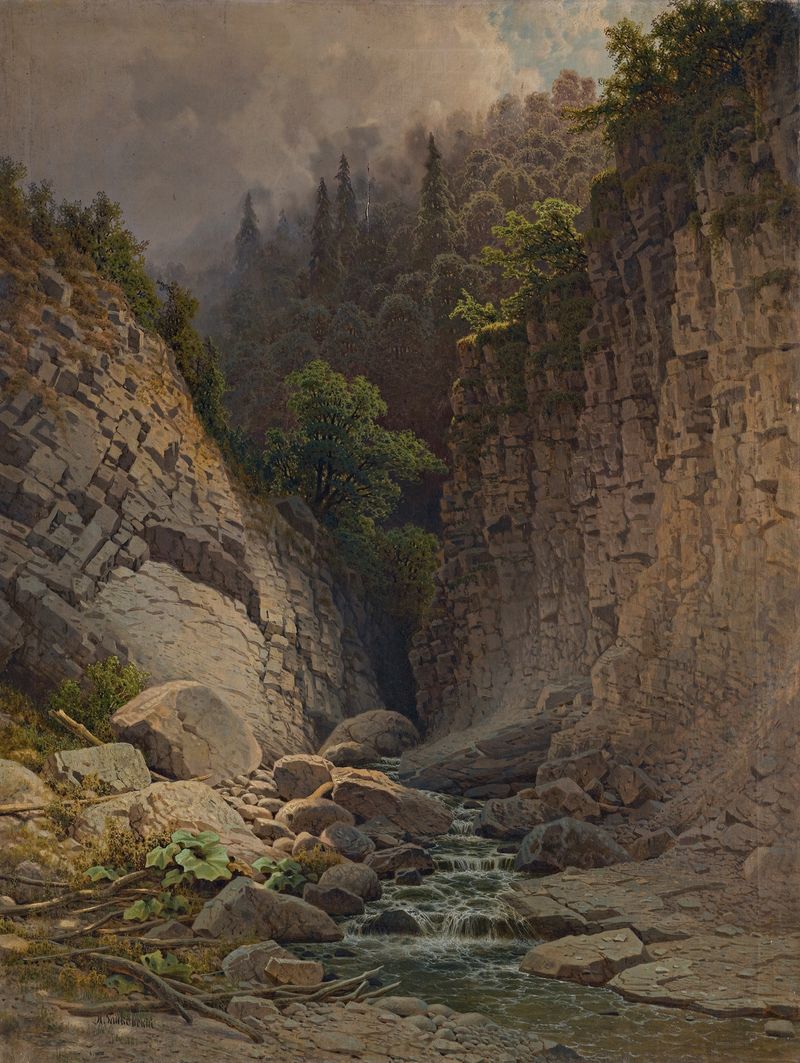
When did color learn to lie? As daylight surrenders to twilight, the canvas bears witness to a breathtaking revelation, one where vibrancy dances on the edge of deception. Focus on the horizon, where fiery oranges and deep purples collide, crafting a stunning gradient that draws the eye into the depths of the landscape. Notice the brushstrokes that evoke motion, almost as if the mountains themselves are breathing in the fading light. In the foreground, subtle greens contrast with the vivid sky, grounding the scene in nature's embrace while hinting at the calm before nightfall. Hidden within this seemingly serene moment is a tension between illusion and reality.
The colors, though striking, hint at transience, reminding the observer of the fleeting nature of beauty. Each mountain's silhouette looms both majestic and foreboding, suggesting the mysteries that exist beyond human understanding. The interplay of light and shadow invites contemplation, urging viewers to question the truths they perceive. Zankovsky painted this work during a period brimming with artistic exploration, where the transition from realism to impressionism was underway.
The exact date remains elusive, yet this piece reflects a time when artists sought to capture not just the landscape but the emotions it evoked. In a world shifting toward modernity, he embraced color as a means to convey deeper truths, challenging the viewer’s perception of nature and beauty.