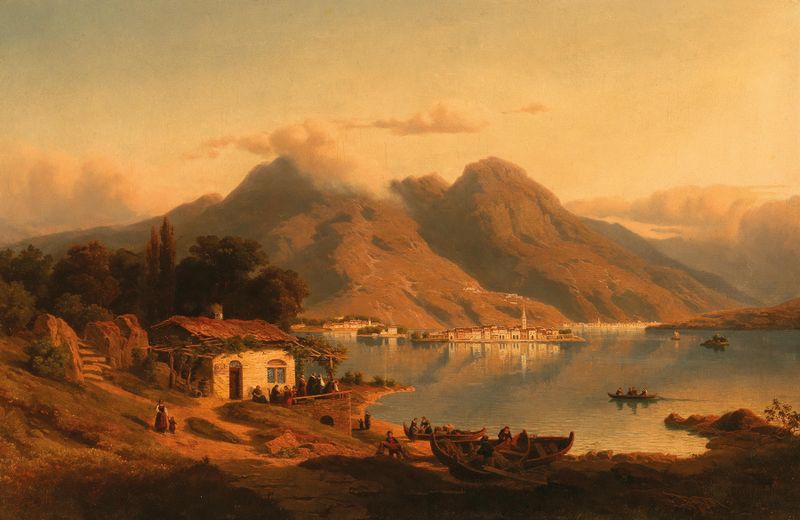
Mountains Jungfrau, Moench and Eiger covered in snow — History & Facts
Can paint confess what words never could? In the serene stillness of a snow-covered mountain landscape, innocence unfolds in a symphony of whites and icy blues, inviting introspection and reverence for nature's majesty. Look closely at the foreground, where soft strokes of paint form a delicate contrast against the sharply defined peaks of the Jungfrau, Mönch, and Eiger. The artist employs a cool palette that captures the purity of the snow, while subtle variations in light create depth and texture, drawing the viewer’s gaze upward. Notice how the mountains, nearly ethereal, come alive with an almost spiritual glow, inviting contemplation about the vastness of the world beyond human reach. Beneath the majestic facade lies an emotional tension between the raw, untamed energy of nature and the peacefulness of the winter scene.
The layered snow suggests a blanket of innocence, yet within its beauty lies the reminder of nature's unforgiving power. The juxtaposition of sharp mountain ridges with soft, flowing valleys reflects the duality of life's harsh realities and serene moments, beckoning the viewer to consider their own place within this grand landscape. In 1854, Johann Wilhelm Lindlar painted this remarkable scene during a time of personal and artistic growth. Living in Germany during the Romantic period, he was immersed in a movement that celebrated the sublime beauty of nature.
As he captured these iconic peaks, Europe was experiencing a burgeoning interest in landscape painting, and Lindlar's work stands as a testament to this transformative era in art history, where nature was both muse and metaphor for innocence and grandeur.