
Märkische Landschaft — History & Facts
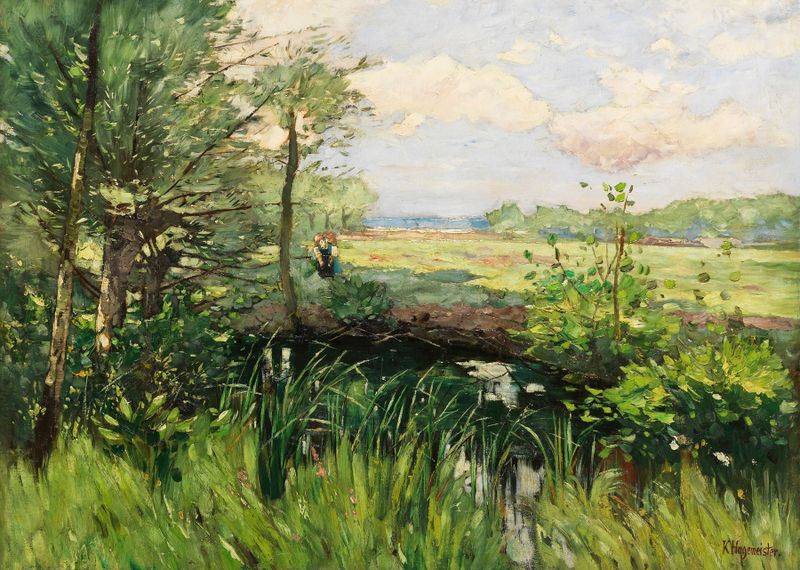
What secret hides in the quiet of the canvas? The landscape unfolds like a whispered memory, evoking a sense of solitude and grief that lingers in the air. Look to the left at the delicate brushstrokes capturing the gentle undulations of the rolling hills, swathed in muted greens and browns. Notice how the light dapples through the sparse trees, casting soft shadows that dance across the ground. The horizon blurs, drawing the eye into an infinite expanse, inviting introspection and contemplation.
The artist's mastery lies in his ability to balance the stillness of nature with a profound emotional undercurrent, imbuing the scene with a haunting elegance. As the viewer lingers, small details reveal deeper meanings—perhaps the withering leaves hint at loss, while the quiet stream suggests the passage of time and the inevitability of change. The sparse composition amplifies the feeling of isolation, evoking a sense of longing that resonates with those who have experienced loss. Each element, from the somber palette to the serene landscape, speaks to the universal human experience of grief, allowing the observer to find their own narrative woven into the fabric of the painting. Created in 1878, this work emerged during a pivotal moment in Karl Hagemeister’s career, as he sought to capture the essence of the German countryside through a lens of emotional depth.
Living in Berlin, he was influenced by the Romantic movement and the burgeoning interest in capturing natural beauty infused with personal experience. This piece reflects not only his artistic evolution but also the societal shifts of the time, resonating with a collective yearning for connection to nature amid the rapid changes of the industrial age.
More Artworks by Karl Hagemeister
Browse all →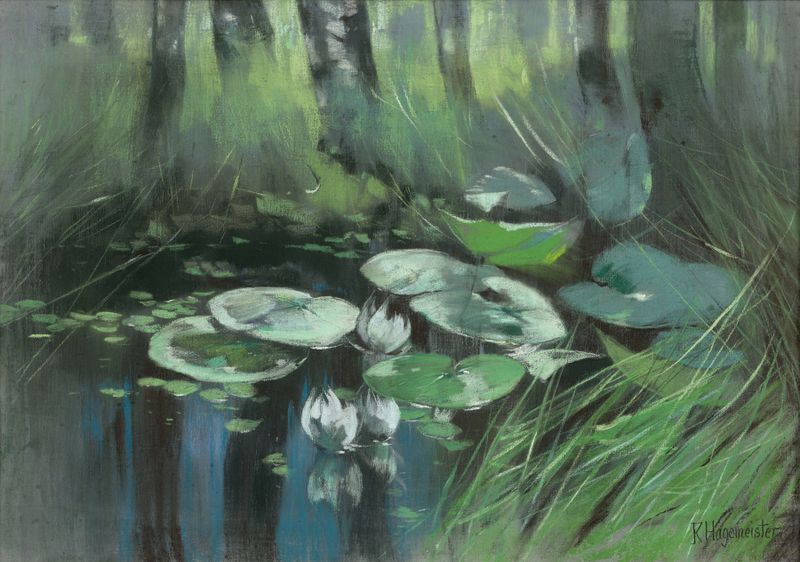
Teich in der Mark mit Seerosen
Karl Hagemeister
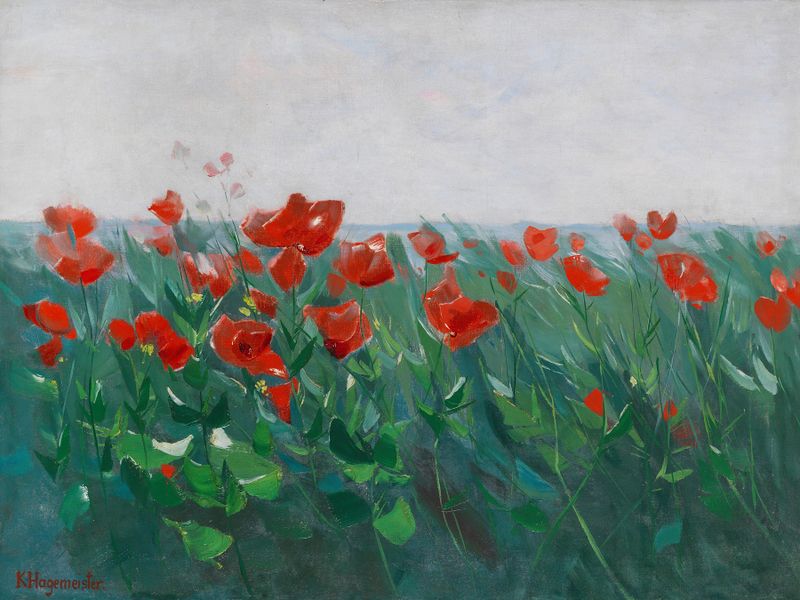
Roter Mohn am Seeufer
Karl Hagemeister

Bauernhaus bei Ferch
Karl Hagemeister
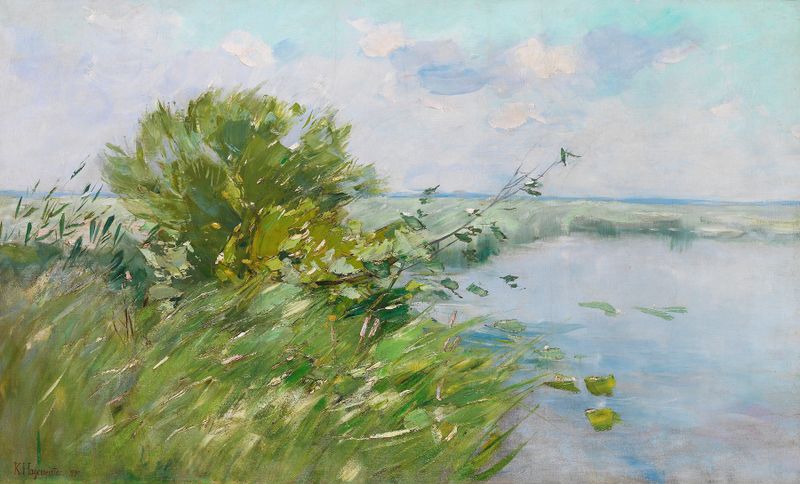
Märkische Seenlandschaft
Karl Hagemeister

Seeufer bei Ferch
Karl Hagemeister
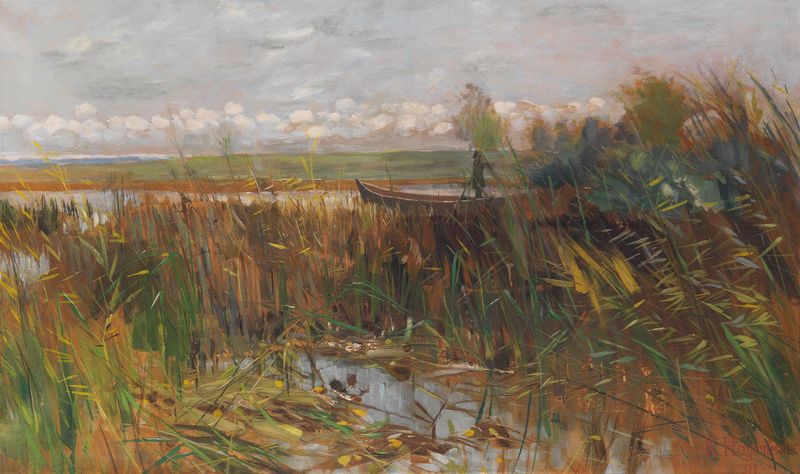
Märkische Seenlandschaft mit Entenjäger im Kahn stehend
Karl Hagemeister
Der Schwielowsee bei Kaputh – Frühling
Karl Hagemeister

Waldweiher
Karl Hagemeister

Waldlandschaft mit Bachlauf (Golmer Luch)
Karl Hagemeister

Sanddornstrauch an der Meeresküste
Karl Hagemeister





