
Märkische Uferlandschaft — History & Facts
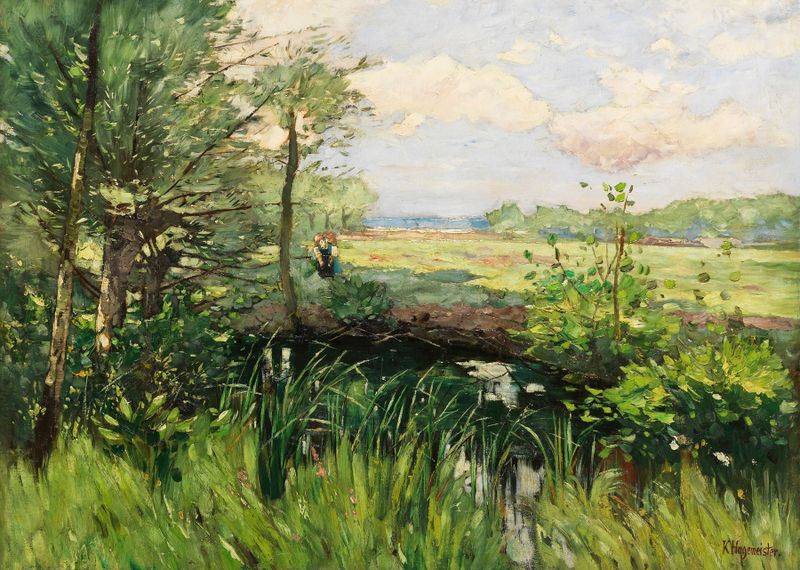
When did color learn to lie? In a world of shifting hues and tranquil reflections, the balance between reality and illusion unfolds on the canvas. Look to the left, where gentle undulations of green brush strokes meld with the soft blues of the water, inviting the viewer into a serene landscape. Notice how the light plays delicately upon the surface, highlighting the ripples that mimic the texture of the lush foliage surrounding the river's edge. The composition draws your gaze toward the horizon, where a faint blush of dawn hints at a new beginning, while the overall palette of muted earth tones grounds the scene in a comforting embrace. Yet beneath this tranquil exterior lies a tension between elements.
The vibrant contrast of the water against the quiet trees suggests a dialogue between the calmness of nature and the restless spirit of time. Each stroke captures not just a landscape but an emotional cadence, revealing an artist's struggle to convey the beauty in impermanence and the fragility of existence. Shadows stretch long and deep, echoing the notion that balance is not merely a visual concept, but a profound existential realization. In 1906, Hagemeister painted this work amid a burgeoning interest in Impressionism and its exploration of light and color.
Living in Germany at a time of artistic transition, he was influenced by nature’s beauty and its representation in art. The evolving styles around him prompted a deeper exploration of how landscapes could express not just the external world but the internal truths of human experience.
More Artworks by Karl Hagemeister
Browse all →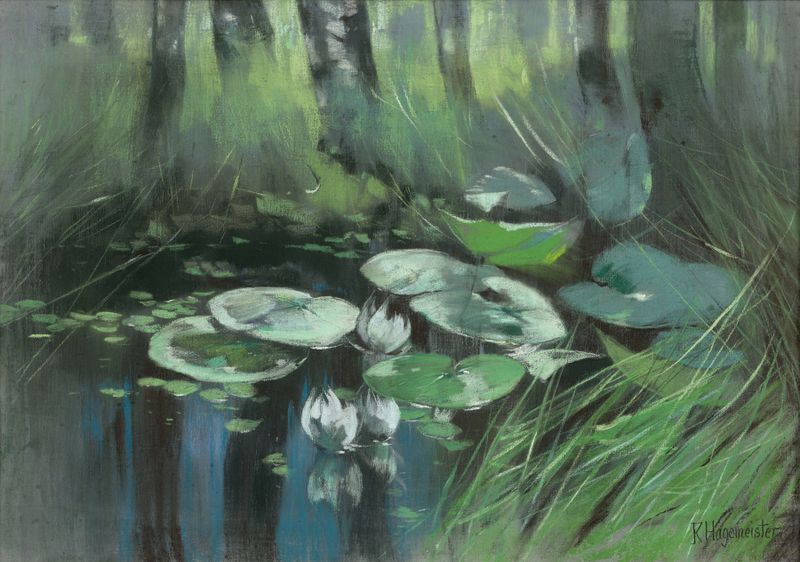
Teich in der Mark mit Seerosen
Karl Hagemeister
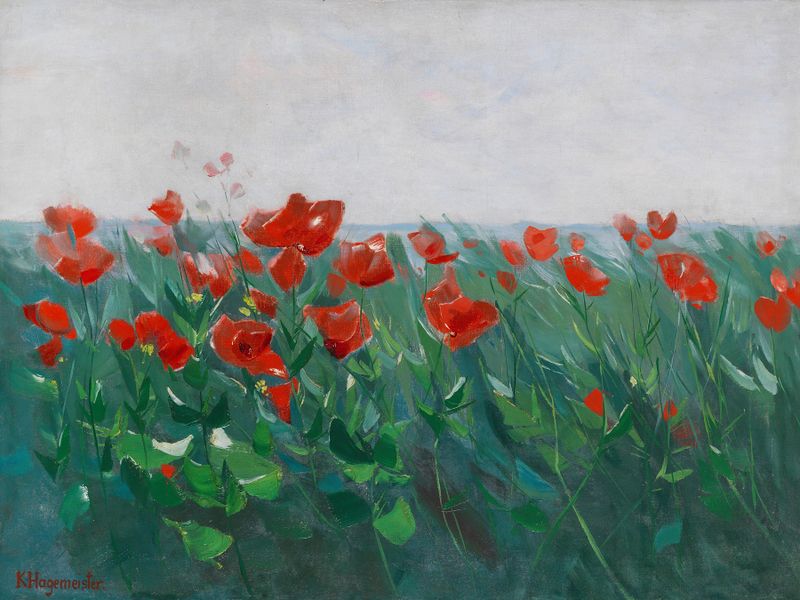
Roter Mohn am Seeufer
Karl Hagemeister

Bauernhaus bei Ferch
Karl Hagemeister
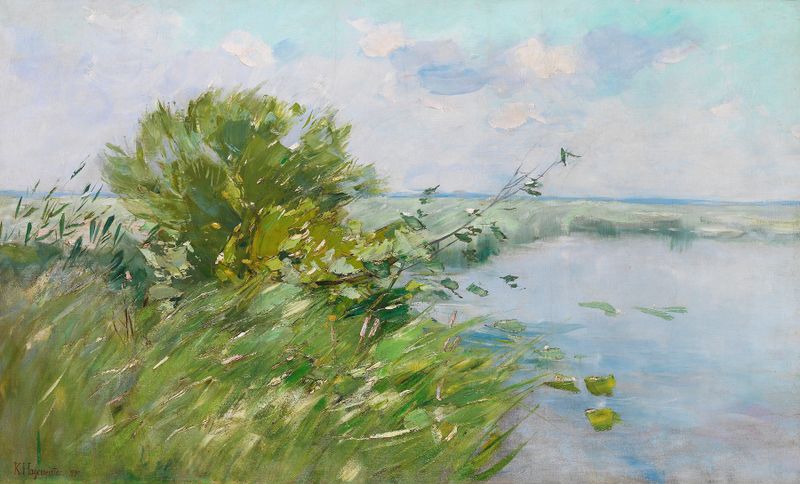
Märkische Seenlandschaft
Karl Hagemeister

Seeufer bei Ferch
Karl Hagemeister
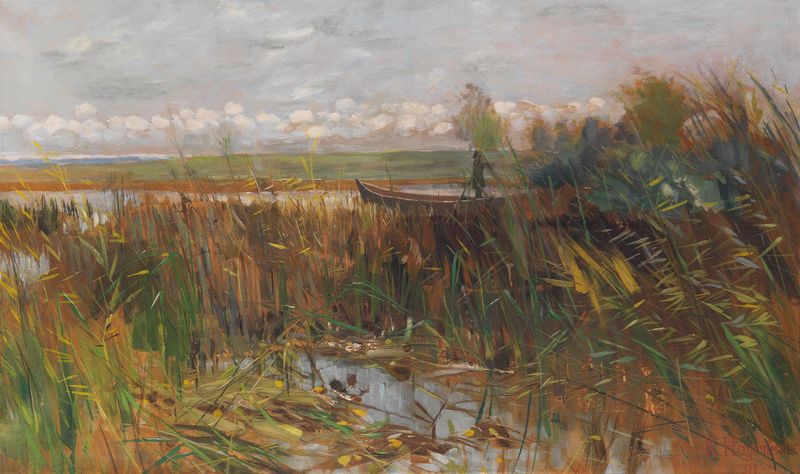
Märkische Seenlandschaft mit Entenjäger im Kahn stehend
Karl Hagemeister
Der Schwielowsee bei Kaputh – Frühling
Karl Hagemeister

Waldweiher
Karl Hagemeister

Waldlandschaft mit Bachlauf (Golmer Luch)
Karl Hagemeister

Sanddornstrauch an der Meeresküste
Karl Hagemeister





