Narcissus — History & Facts
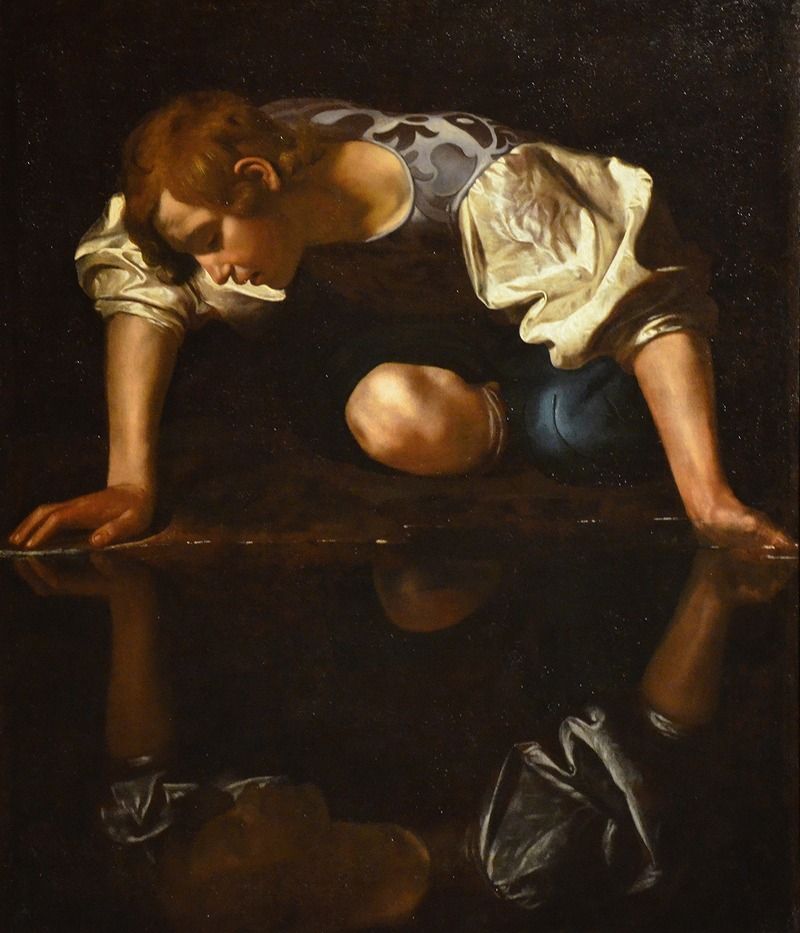
Did the painter know this moment would outlive them? In the delicate interplay of shadow and light, Narcissus captures an ephemeral instant, forever frozen in time. Focus first on the figure at the center, whose gaze is fixed intently upon the shimmering reflection in the water. The soft, muted color palette of blues and greens envelops the scene, allowing the figure's bright garment to draw your eye. Notice how the gentle ripples distort the reflection, suggesting a longing that transcends the mere surface.
The skillful use of ink wash creates a subtle depth, evoking a sense of tranquility that contrasts with the tension of his fixation. As you explore further, consider the symbolism woven throughout the work. The play of shadow suggests not only the allure of beauty but also the lurking danger of obsession. Here, the duality of desire and despair emerges, encapsulated in the figure's yearning expression.
The surrounding flora, with its vibrant yet shadowy tones, hints at the transient nature of life and love, as if whispering that beauty is often fleeting. During the 16th century, the artist painted this piece amidst a dynamic cultural landscape of the Ming dynasty, marked by a flourishing of arts and a revival of traditional values. In this era, Wang Guxiang was influenced by previous generations while also experimenting with techniques that blended realism with lyrical expression. This painting reflects not only his personal artistry but also the complexity of human emotions and the enduring relationship between self and environment.