New Hampshire — History & Facts
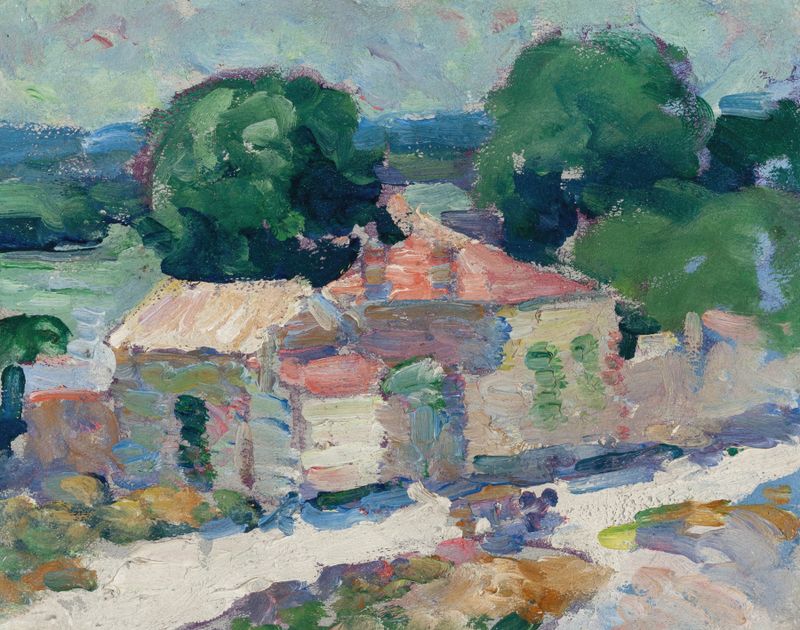
In that silence, the viewer finds the thrill of truth and the joy of expression interwoven. Here, ecstasy emerges not just through vibrant hues but in the very act of creation itself, inviting us to delve deeper into its beauty. Look to the left, where warm ochres and cool blues meet in a harmonious dance, each stroke of color suggesting the undulating hills of New Hampshire. The interplay of light across textured surfaces creates a sense of rhythm, as if the landscape breathes.
Notice how the artist’s thick application of paint invites the viewer to feel the warmth of the sun-drenched earth and the coolness of shadows, capturing a fleeting moment of nature’s grandeur. This work reveals the tension between the serene beauty of the landscape and the artist’s emotional fervor. The bold colors suggest a celebration of life, contrasting with shadowy forms that hint at unseen complexities, perhaps evoking the tumultuous period of the early 20th century. Additionally, the interplay of light and shadow creates a dialogue between calmness and agitation, mirroring the artist’s internal struggles and triumphs. William Zorach created this piece in 1917 while residing in the vibrant artistic community of New York.
At that time, the art world was shifting from traditional forms to modernist expressions, revealing a growing interest in abstraction. Zorach’s exploration of color and form during this tumultuous era not only reflects his personal journey but also a broader movement of artists seeking new ways to represent the world around them.