Nocturno — History & Facts
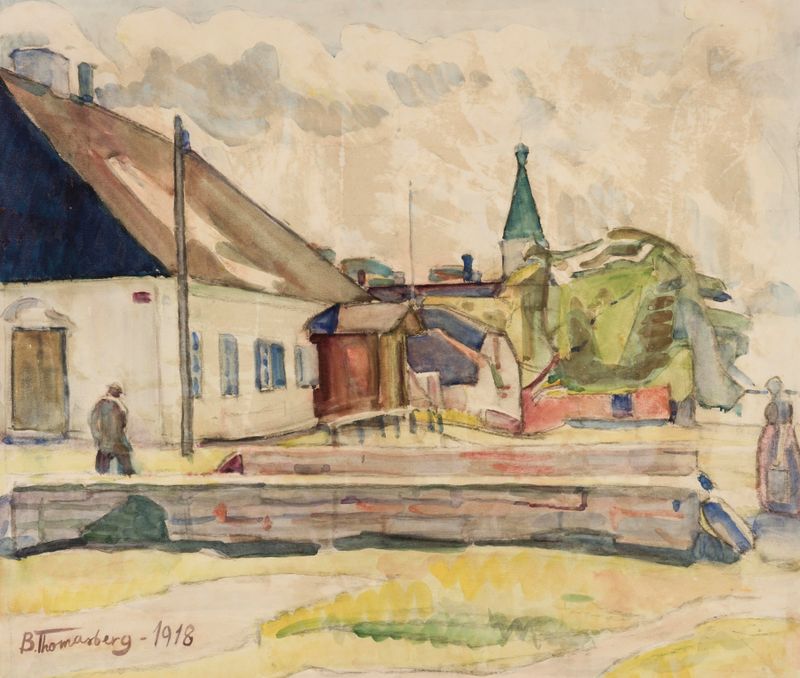
Could beauty survive in a century of chaos? In Nocturno, Balder Tomasberg invites us to ponder this question, enveloping us in a world where serenity defies the tumult of the early 20th century. Focus your gaze on the deep blues and velvety blacks that dominate the canvas, creating an atmosphere of profound stillness. The gentle play of light, emanating from an unseen moon, casts an ethereal glow, illuminating the outlines of trees and distant hills. Notice how the brushstrokes vary in intensity; some areas are almost ghostly, while others pulse with a heartbeat, pulling you further into this enigmatic night. As you absorb the beauty of the landscape, subtle contrasts emerge.
The tranquility of the night is pierced by an underlying tension — perhaps a reflection of the unrest surrounding Tomasberg in 1918. The juxtaposition of darkness and light evokes a sense of hope amidst despair, suggesting that even in chaos, moments of awe can flourish. Each element, from the muted colors to the serene composition, speaks to the resilience of beauty and the human spirit. At this time, Tomasberg was navigating a world reshaped by World War I, grappling with both personal and societal upheaval.
Painted in the aftermath of conflict, Nocturno reveals his pursuit of peace through art, emphasizing the importance of solace and wonder in a rapidly changing landscape. In this work, he channels the raw emotions of his era, transforming them into a hauntingly beautiful depiction of the night.