View of Paldiski — History & Facts
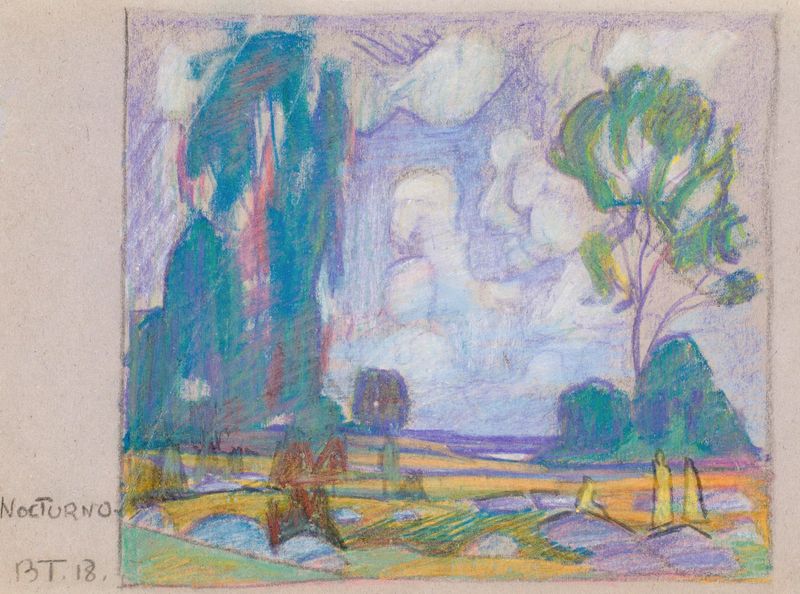
In View of Paldiski, the landscape dances between serenity and turmoil, hinting at the complexities of existence. Focus your gaze on the horizon where the tumultuous sea meets the sky, a juxtaposition of calm blues and turbulent whites. The deft brushwork creates a rhythmic flow, inviting you to trace the waves as they crash against the rugged shoreline. Notice the golden hues that bleed into the clouds, embodying both dawn and dusk—a moment caught in the liminal space of transition.
This vibrant dichotomy alludes to movement, both in nature and within the soul, suggesting an undercurrent of change and the passage of time. Hidden within the painting is an emotional tension between stillness and motion. The sea, eternally restless, serves as a metaphor for the human condition, echoing the struggles faced during the tumultuous period of 1918. The cliffs, steadfast and unmoving, stand as a reminder of resilience amidst chaos, while the distant horizon beckons with possibilities.
Together, these elements reveal an interplay of hope and despair, beauty and violence, capturing the essence of a world on the brink of transformation. In 1918, during the aftermath of World War I, View of Paldiski emerged from the mind of Balder Tomasberg, an Estonian artist deeply influenced by the shifting tides of national identity and self-discovery. This was a period rife with artistic exploration, as artists sought new expressions in the wake of conflict. Tomasberg’s work reflects the poignant sense of place, capturing both the physical landscape and the emotional landscape of his time, speaking to the struggles of a nation in flux.