Noon Hour in the Harbor, Gloucester — History & Facts
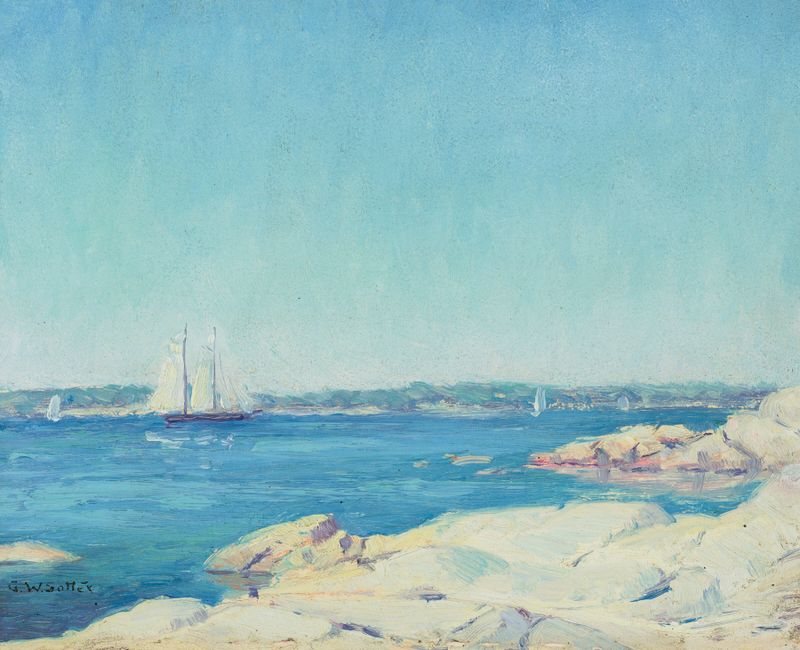
Is this a mirror — or a memory? In Noon Hour in the Harbor, Gloucester, the still water reflects not just the boats and buildings, but the very essence of time suspended between past and present, reality and imagination. The scene invites for contemplation, drawing forth a sense of nostalgia that reveals deeper truths amidst its serene surface. Look to the foreground where gentle ripples dance across the water's surface, creating a delicate interplay of light and shadow. The soft pastel hues of blue and green provide a calming backdrop, while the vibrant splashes of red and yellow from the boats grab your attention.
Notice how Sotter expertly employs loose brushwork to capture the fleeting moment of midday tranquility, giving life to the scene while allowing a sense of quiet reflection to pervade. The emotional tension in this work lies in its duality — a harbor bustling with the life of fishermen and commerce, framed by the stillness of its mirrored reflection. This juxtaposition highlights the contrast between the vibrancy of human activity and the contemplative calm of the water. The layers of color seem to whisper of stories untold, urging the viewer to explore their own connections to this moment in time, where the revolution of life unfolds quietly yet powerfully. Created in 1913, Noon Hour in the Harbor, Gloucester emerged during a period when George William Sotter was deeply immersed in the American Impressionist movement.
Living in the coastal town of Gloucester, Massachusetts, he was inspired by the working lives and landscapes around him. This painting reflects both his personal experience as an artist and the broader artistic shifts of the early 20th century, where traditional forms were being challenged and redefined.