
Nordische Landschaft — History & Facts
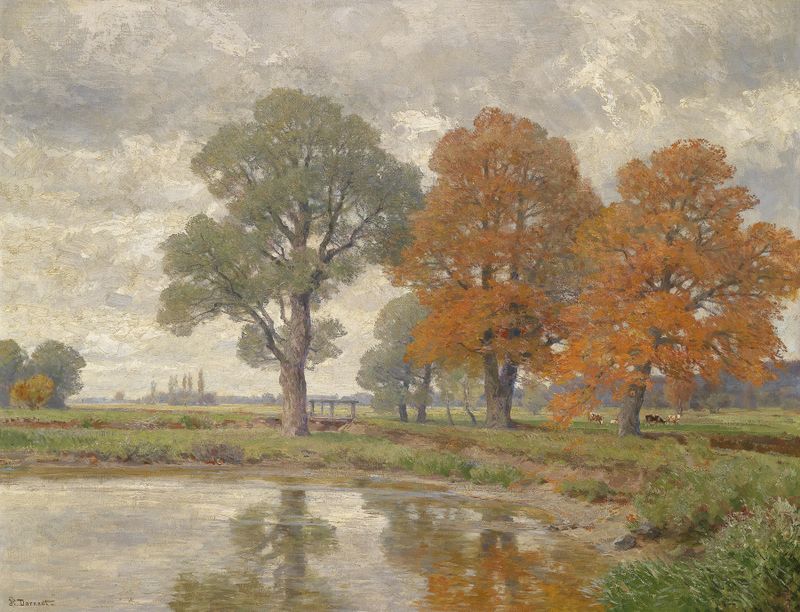
Each stroke beckons us into a dreamscape where nature breathes quietly, inviting reflection and exploration. Look to the horizon, where soft pastels blend seamlessly, forming a delicate balance between earth and sky. The serene blues and gentle greens of Nordische Landschaft create a tranquil atmosphere, pulling the viewer’s gaze towards the distant mountains. Notice how the painter’s technique, with its loose brushwork and airy layers, cultivates a sense of depth and spaciousness, drawing you into the expansive wilderness. In this tranquil scene, tension arises from the juxtaposition of serenity and isolation.
The mountains loom majestically, almost protectively, while the light seems to tease the edges of the landscape, hinting at the mysteries that lie within. The faint presence of a winding path suggests a journey, yet it remains an invitation unfulfilled, leaving a feeling of longing that resonates deeply. During the years when this piece was created, from 1910 to 1915, Darnaut was immersed in the burgeoning art movements of the early 20th century, exploring the interplay of emotion and nature. Living in Germany, he was influenced by the expressionist movement, which sought to convey the inner experiences of the artist.
As the world teetered on the brink of change, his work emerged as a contemplative response, encapsulating a moment where nature reigns supreme, untouched yet deeply felt.
More Artworks by Hugo Darnaut
Browse all →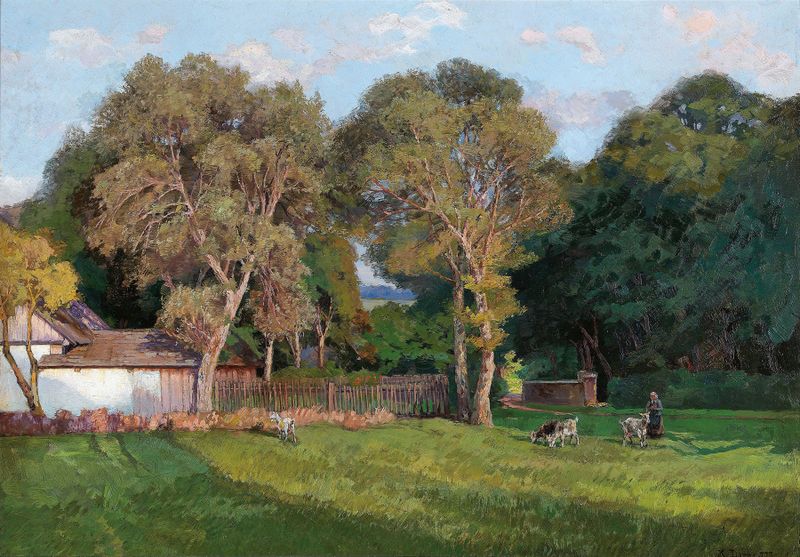
Aus dem Wienerwald
Hugo Darnaut
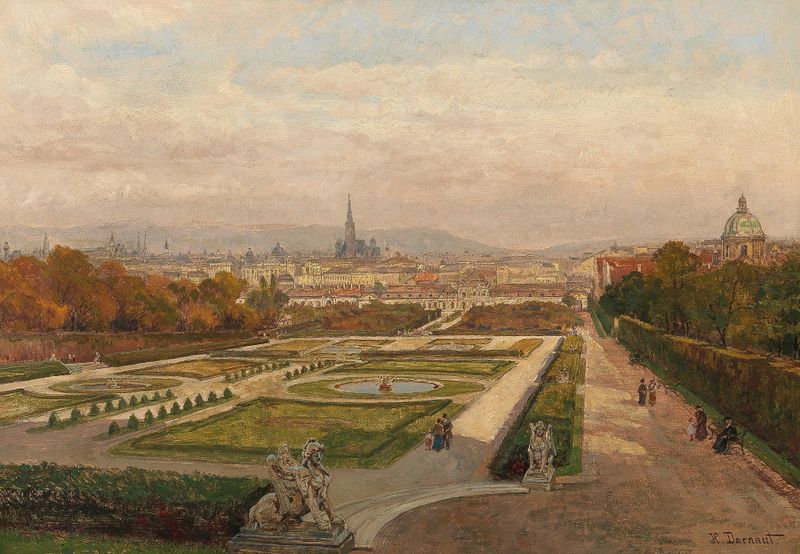
Blick vom Belvedere auf Wien
Hugo Darnaut

Motiv aus Plankenberg
Hugo Darnaut

In einem Wiener Garten (II., Praterstraße 60)
Hugo Darnaut

A Scene at Dusk in Late Autumn
Hugo Darnaut
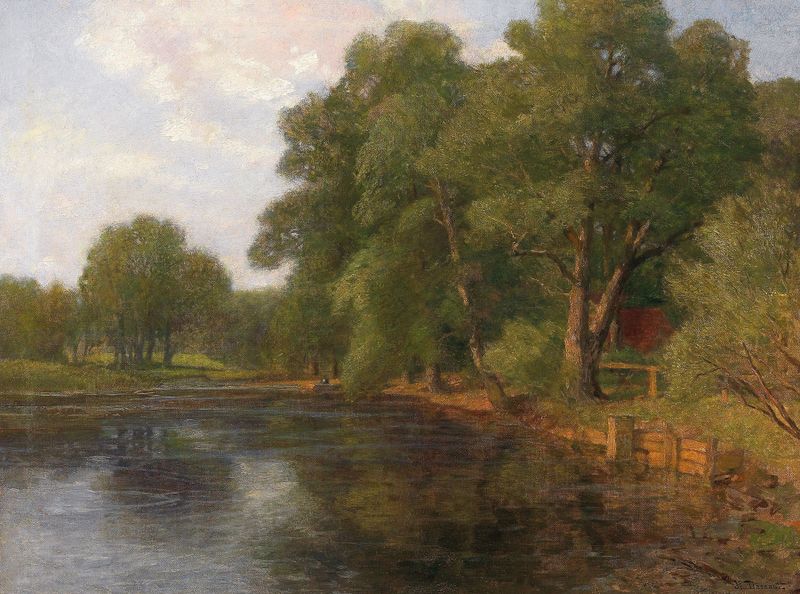
Motiv bei Plankenberg
Hugo Darnaut

Die Ruine Starhemberg im Piestingtal
Hugo Darnaut
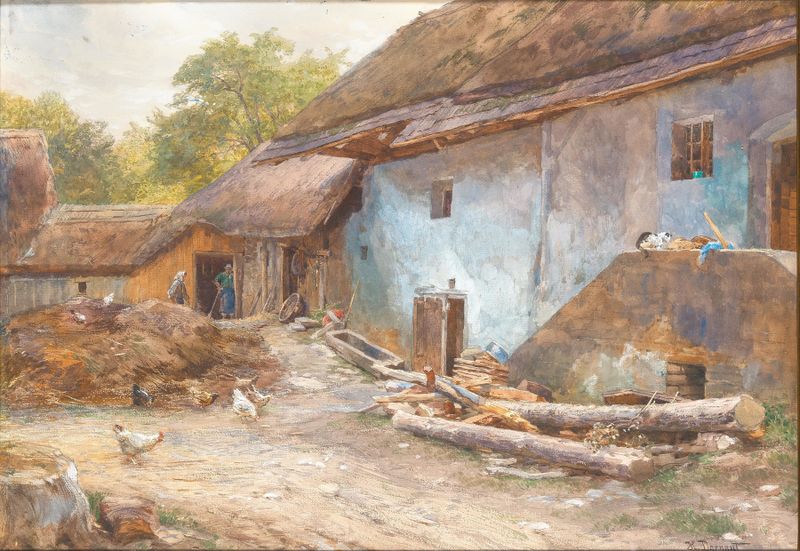
Niederösterreichischer Bauernhof
Hugo Darnaut

River Landscape with Small Herd of Cows and a Village in the background
Hugo Darnaut
Spätherbsttag
Hugo Darnaut





