
Notre Dame de Paris — History & Facts
Did the painter know this moment would outlive them? In Notre Dame de Paris, the air is thick with a wistful yearning, a silent dialogue between the grandeur of the cathedral and the fleeting nature of humanity. The image captures the essence of a time when the heartbeats of everyday life harmonized with the towering spires and intricate details of stone. Look towards the left, where the light gently bathes the façade of the cathedral, illuminating the intricate carvings that whisper tales of devotion. Notice the soft palette, where muted earth tones combine with subtle blues and grays, creating a serene atmosphere that contrasts with the bustling life below.
The composition draws your gaze upward, inviting you to explore not just the architectural marvel, but also the life that unfurls in its shadow. Yet, beyond the physical beauty lies a deeper tension, one of transient existence against eternal stone. The figures in the foreground, caught in their daily routines, seem both significant and diminutive against the grandeur of the cathedral. Their postures and gestures tell stories of longing, as if they are aware that, while the stone will remain, their lives are ephemeral, fleeting like the wisps of smoke from a nearby café. At the time of creating this work in Paris in the late 19th century, Rafaëlli was immersed in the transformation of the city, witnessing a blend of modernity and tradition.
The rise of Impressionism influenced his style, yet he remained dedicated to realism, capturing an era where the old world met the new. This painting reflects a moment in history that transcends the artist’s own life, encapsulating a city’s soul as it faced the winds of change.
More Artworks by Jean-François Rafaëlli
Browse all →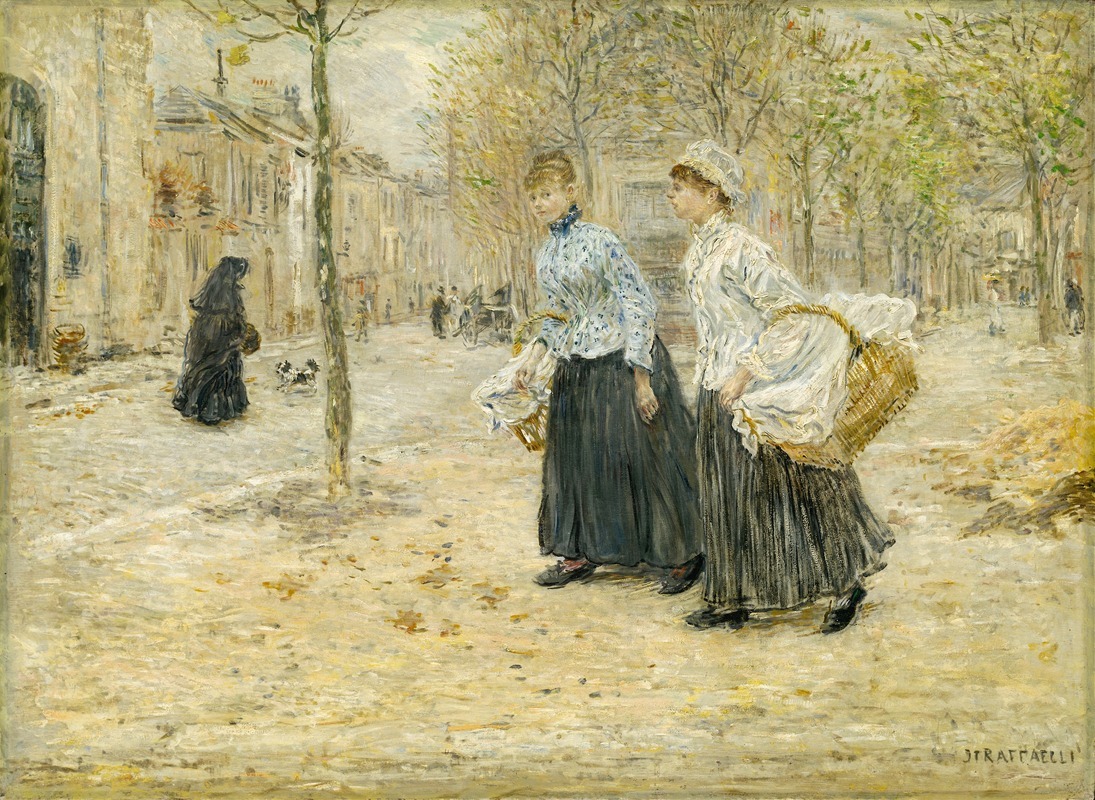

More Architecture Art
Browse all →
The statue of Liberty
Frédéric Auguste Bartholdi

View of Houses in Delft, Known as ‘The Little Street’
Johannes Vermeer

View of Houses in Delft, Known as ‘The Little Street’
Johannes Vermeer

The Cathedral in Rouen. The portal, Grey Weather
Claude Monet

The yellow house
Vincent van Gogh

The Church in Auvers-sur-Oise, View from the Chevet
Vincent van Gogh