
Notre-Dame, vue du quai de l’Hôtel-de-Ville — History & Facts
In a moment of quiet reflection, color becomes the heartbeat of our shared human experience, compelling us to look deeper than the surface. Focus first on the breathtaking palette that envelops the scene, where soft pastels of blues and pinks blend seamlessly with the shimmering golds of the setting sun. Notice how the light dances across the façade of the cathedral, each hue whispering stories of faith and time. The figures in the foreground are delicately rendered, their silhouettes contrasting with the majestic structure behind them, grounding the ethereal beauty of Notre-Dame. This painting captures a tension between permanence and transience.
While the cathedral stands resolutely against the backdrop of the evening sky, the fleeting nature of the moment is felt through the ephemeral light and the flowing water of the Seine. Each brushstroke conveys not just a scene, but the emotions tied to place—longing, nostalgia, and reverence. The balance of vibrant color against the coolness of the water hints at the harmony between human life and architectural grandeur. In 1900, when this work was painted, the artist was entrenched in the vibrant art scene of Paris, during a time marked by the rapid transformation of the city and its culture.
The turn of the century saw artists grappling with modernity, yet Gillot chose to honor tradition and beauty, encapsulating the timeless significance of Notre-Dame amid the shifting tides of society.
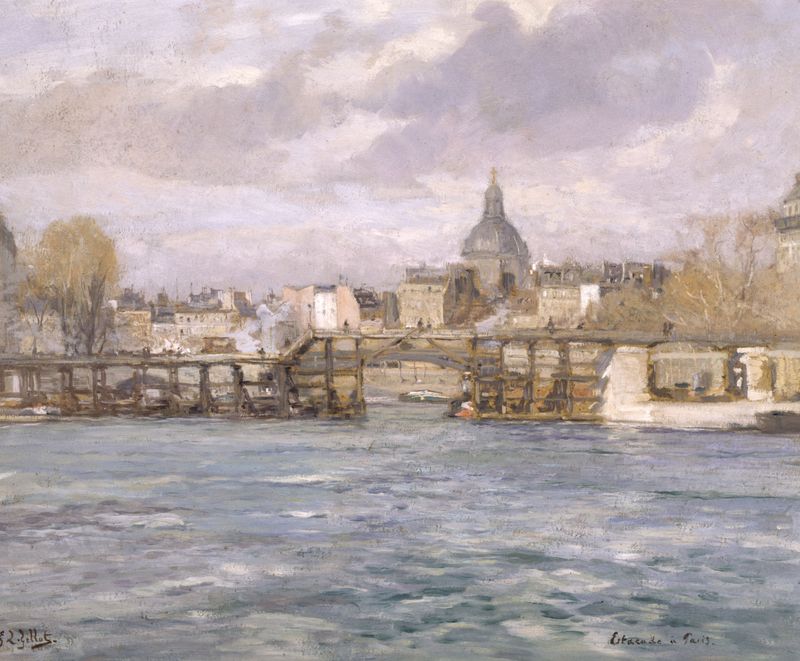
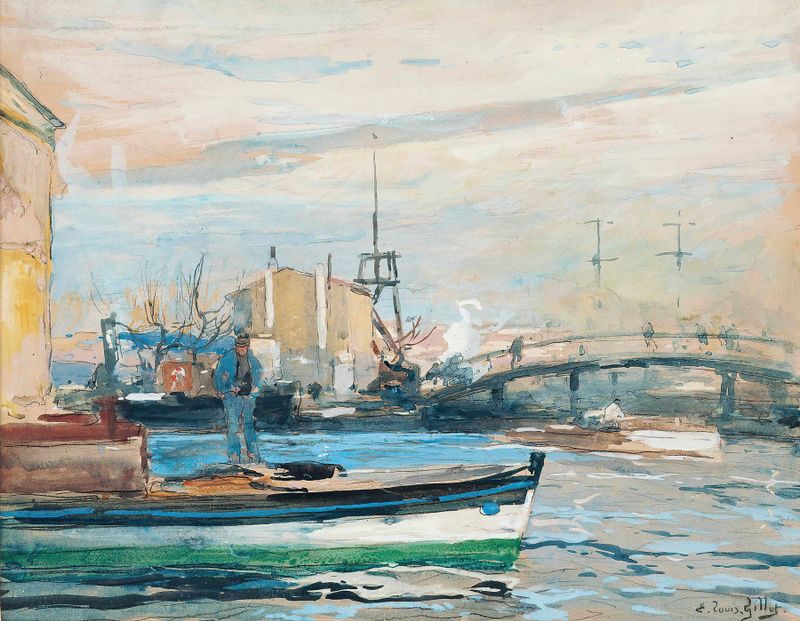
More Artworks by Eugène Louis Gillot
Browse all →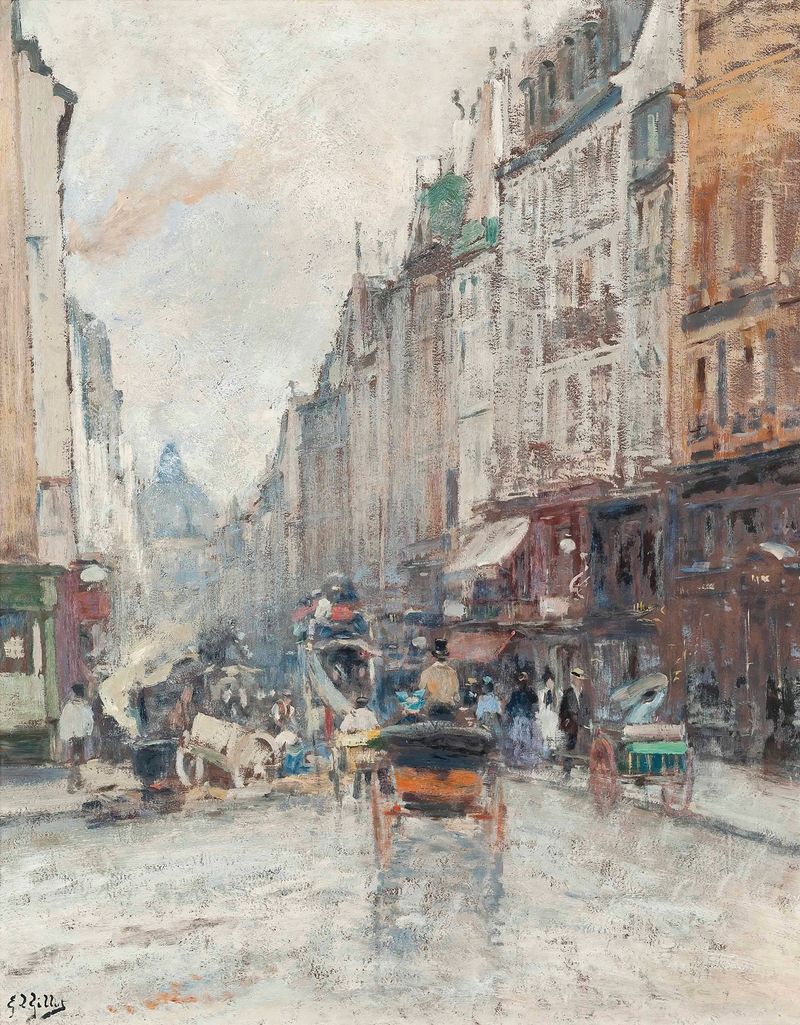
More Architecture Art
Browse all →
The statue of Liberty
Frédéric Auguste Bartholdi

View of Houses in Delft, Known as ‘The Little Street’
Johannes Vermeer

View of Houses in Delft, Known as ‘The Little Street’
Johannes Vermeer

The Cathedral in Rouen. The portal, Grey Weather
Claude Monet

The yellow house
Vincent van Gogh

The Church in Auvers-sur-Oise, View from the Chevet
Vincent van Gogh